

Human Development and Education(Hum Dev & Educ)_人类发展和教育
Time:2026-06-19 Visits:0
Human Development and Education Major
The Human Development and Education Major is dedicated to studying the patterns of individual development across the lifespan and exploring effective pathways to promote cognitive, emotional, and social growth through education, family, and community support. Its curriculum integrates developmental science, educational theory, and research methods, cultivating students' ability to apply professional knowledge in diverse fields such as educational institutions, social services, policy analysis, and child-related industries. Choosing the Human Development and Education Major is the starting point for becoming a professional who supports the development of children, adolescents, and families and drives positive social change.
1. Introduction to the Human Development and Education Major
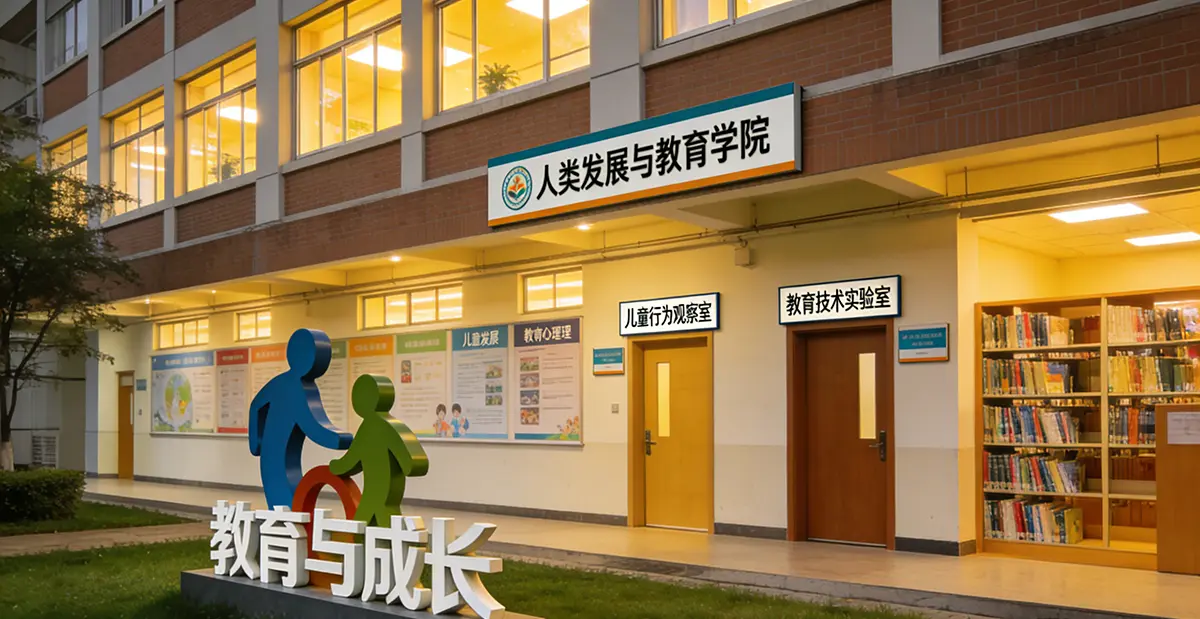
The Human Development and Education Major is an interdisciplinary applied science discipline that systematically investigates the patterns of cognitive, emotional, social, and physical growth across the lifespan—from birth to old age—and explores how to promote optimal human development through education, family, community, and policy interventions. Its core lies in understanding the universal laws of development and individual differences, and in translating scientific knowledge into effective practices and policies that support the development of children, adolescents, and even adults.
2. Core Curriculum of the Human Development and Education Major
| Module Category | Core Courses |
| Foundations of Developmental Science | Developmental Psychology (Child, Adolescent, Adult, Geriatric), Cognitive Development, Social Development, Emotional Development, Lifespan Development Theories |
| Educational Theory and Practice | Educational Psychology, Learning Sciences, Curriculum and Instruction Theory, Educational Environment Design, Family Education |
| Research Methods | Research Methods in Developmental Psychology, Educational Assessment and Measurement, Qualitative Research, Longitudinal Research Design, Statistical Data Analysis |
| Application and Intervention | Early Childhood Education and Development, Adolescent Development Program Design, Adult Learning and Development, Developmental Support for Individuals with Special Needs, Fundamentals of Developmental Counseling |
| Ecology and Policy | Bronfenbrenner's Ecological Systems Theory, Family Dynamics, Community Psychology, Child and Family Policy, Comparative Education and Development |
| Professional Skills | Observation and Assessment Skills, Program Design and Evaluation, Cross-Cultural Communication, Professional Writing and Advocacy |
3. Advanced Study Pathways for the Human Development and Education Major
Master's/Doctorate in Human Development and Family Studies: For careers in academic research, university faculty positions, or senior policy analysis.
Master's/Doctorate in Educational Psychology: To deepen research on the mechanisms of learning and development.
Master's in Early Childhood Education: To specialize in the education and practice for children aged 0-8.
Master of Social Work: To transition into family and child welfare services.
Master of Public Policy/Public Administration: To focus on the formulation and evaluation of policies for children, youth, or families.
Master's in Counseling Psychology: To become a school counselor or developmental consultant.
Master's in Educational Technology: To specialize in technology-supported learning and cognitive development.
4. Career Paths and Positions for the Human Development and Education Major
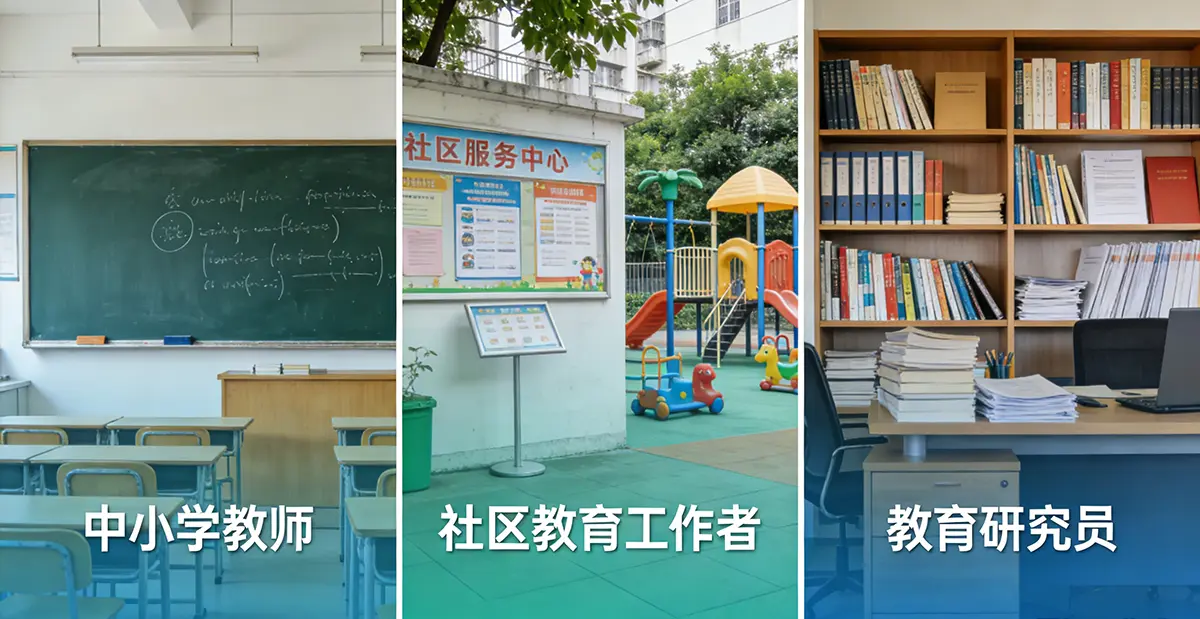
Graduates possess unique advantages in the broad field of “supporting human development,” especially in roles that connect theory with practice and research with service.
Educational Institutions
School Systems: K-12 Schools: School Psychologist (requires certification), Student Development Counselor, Curriculum Development Specialist. Early Childhood Education Institutions: Preschool Teacher, Curriculum Director, Child Development Coordinator.
Higher Education Institutions: University Student Affairs Offices: New Student Orientation Coordinator, Career Planning Advisor, Residential Education Specialist. Educational Research Centers: Researcher, Program Evaluator.
Social Services and Non-Profit Organizations
Community Service Agencies / Non-Profit Organizations: Family Support Specialist, Youth Program Director, Early Childhood Home Visitor, Program Design and Evaluation Manager.
Child and Family Policy Think Tanks: Policy Researcher, Advocacy Specialist.
Corporate Applications
Children's Media and Educational Technology Companies: Product Content Developer, User Experience (UX) Researcher, Educational Product Manager, responsible for designing products aligned with child development principles.
Human Resources and Organizational Development Departments: Designing employee training, leadership development, and family support programs using adult development theories.
Government and International Organizations
Government Departments (e.g., Education, Civil Affairs, Women's Federations): Child and Family Policy Analyst, Program Officer.
United Nations Children's Fund (UNICEF), World Bank, etc.: Program Officer, Research Consultant.
Research and Consulting
Universities and Research Institutes: Faculty Member, Researcher (typically requires a doctoral degree).
Independent Consulting: Providing development program design or evaluation services for schools, communities, or businesses.
5. Employment Rate and Industry Trends for the Human Development and Education Major
Employment Rate Characteristics
“Broad Application Scope but Diverse Job Titles”: There are no positions directly titled “Human Development Specialist,” requiring graduates to proactively translate their professional skills to meet the needs of roles in education, services, policy, or product development.
“Experience and Networks are Important”: In the non-profit and community service sectors, internships and project experience are key to job hunting.
“Moderate Starting Salaries, Driven by Meaning”: Starting salaries in education and social services are typically not high, but job satisfaction is strong; transitioning to corporate applications (e.g., educational technology) may lead to higher compensation.
“Continuous Learning and Certification”: Some positions (e.g., School Psychologist) require additional professional certifications.
Industry Development Trends
Deep Integration of Neuroscience and Education: Designing learning environments and curricula that better align with children's brain development based on findings from cognitive neuroscience.
Widespread Adoption of Social-Emotional Learning: Schools are shifting from solely focusing on academic abilities to systematically cultivating emotional management, interpersonal skills, and decision-making abilities, increasing demand for related curriculum design and teacher training.
Empowerment of Families and Communities: The focus of interventions is shifting from individual children to supporting entire family systems and leveraging community resources to build support networks.
Research on the Impact of Technology and Digital Media on Development: Investigating the effects of screen time, social media, and gamified learning on children's cognitive and social development, and formulating guidance strategies.
Lifespan Development and Gerontological Education: As populations age, fields focusing on mid-adult development, learning in old age, and intergenerational interaction are expanding.
Data-Driven Personalized Support: Utilizing learning analytics and developmental data to provide more personalized growth support plans for students or service recipients.
6. Leading Global Institutions for the Human Development and Education Major
(Selected Institutions - No particular ranking)This major is often housed within universities' Schools of Education, Colleges of Human Ecology, Schools of Health and Human Development, or Psychology Departments.
Country/Region | Representative Institutions (Leading Institutions in Human Development and Education)
United States | Harvard University (Graduate School of Education), Stanford University (Graduate School of Education), University of Michigan, Ann Arbor, University of California, Berkeley, Cornell University (College of Human Ecology)
United Kingdom | University of Oxford (Department of Education), University of Cambridge (Faculty of Education), University College London (Institute of Education)
Canada | University of Toronto (Ontario Institute for Studies in Education), University of British Columbia
Australia | University of Melbourne (Melbourne Graduate School of Education), University of Sydney
China | Beijing Normal University (Institute of Developmental Psychology, Faculty of Education), East China Normal University, South China Normal University
Other | The University of Hong Kong, National University of Singapore
7. DisciplineMajor Recommendations
Ideal Candidates for the Human Development and Education Major
Individuals with a profound and enduring curiosity about “how people grow, learn, and change.”
Those who possess strong empathy, observational skills, systems thinking, and communication abilities.
Individuals who enjoy working in education, service, or policy fields, translating theory into positive social impact.
Those able to collaborate effectively with children, families, and communities of diverse backgrounds.
Core Competencies of the Human Development and Education Major
The ability to apply developmental theories to understand individual behavior and design supportive environments.
The ability to design, implement, and evaluate developmental programs or interventions.
The ability to build trusting relationships and communicate effectively with individuals of all ages and their families.
The ability to make decisions and advocate based on research evidence.
Study Recommendations for the Human Development and Education Major
Specialize in a particular developmental stage or setting: For example, early childhood, adolescence, adult learning, or settings like schools, families, or communities.
Accumulate rich practical experience: Intern at educational institutions, community projects, summer camps, or family service centers.
Master fundamental research and evaluation methods: This is key to distinguishing professional capability from general “compassion.”
Cultivate an interdisciplinary perspective: Proactively learn related knowledge from neuroscience, sociology, public policy, etc.
Build a professional portfolio: Including project design proposals, evaluation reports, curriculum plans, or research papers.
Clarify your professional identity: Consider whether you lean more towards being a researcher, practitioner, advocate, or designer, and develop skills accordingly.
*Note: Some institutions may categorize this major under different disciplines. Please refer to the specific classification used by the institution.*
- The Previous Passage:AI Ethics and Society(AI Ethics & Soc)_人工智能伦理与社会
- The Next Passage:Human Evolution Research(Hum Evol Res)_人类进化研究
Human Geography Major_Geography(Geog.)_人文地理
The Human Geography Major explores the complex relationships between human activities and space, cul···

Atmospheric Sciences(Atmos. Sci.)_大气科学
Atmospheric science is the study of phenomena and evolutionary patterns within Earth's atmospher···

Earth Sciences(Earth Sci.)_地球科学
The Earth Science major focuses on studying the Earth system and its interactions, providing a scien···
Ocean Sciences(Ocean Sci.)_海洋科学
PbootCMS是全新内核且永久开源免费的PHP企业网站开发建设管理系统,是一套高效、简洁、 强悍的可免费商用的···

