

Robotics(Robot.)_机器人学
Time:2026-03-08 Visits:7
The Robotics Major is a highly interdisciplinary field that integrates mechanics, electronics, control, computer science, and artificial intelligence to develop autonomous systems capable of sensing, decision-making, and execution. This Major is central to industrial automation and cutting-edge applications, training key technical talent for fields such as smart manufacturing, autonomous driving, and medical and service robotics.
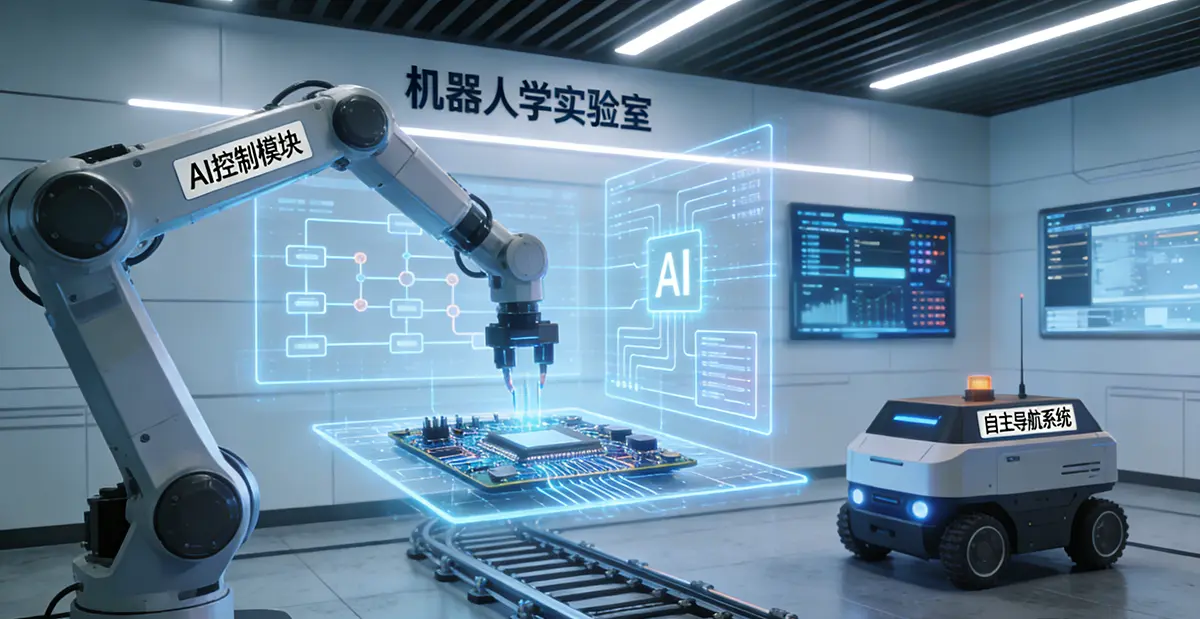
1. Introduction to the Robotics Major
The Robotics Major is a highly integrative interdisciplinary field that merges mechanical engineering, electrical engineering, computer science, control theory, artificial intelligence, and perception technologies. It focuses on the design, modeling, control, and application of autonomous or semi-autonomous systems capable of sensing their environment, making decisions, and executing physical actions. This discipline serves not only as the cornerstone of industrial automation but has also expanded extensively into diverse fields including service, healthcare, agriculture, defense, and consumer applications, representing a convergence of cutting-edge technologies.
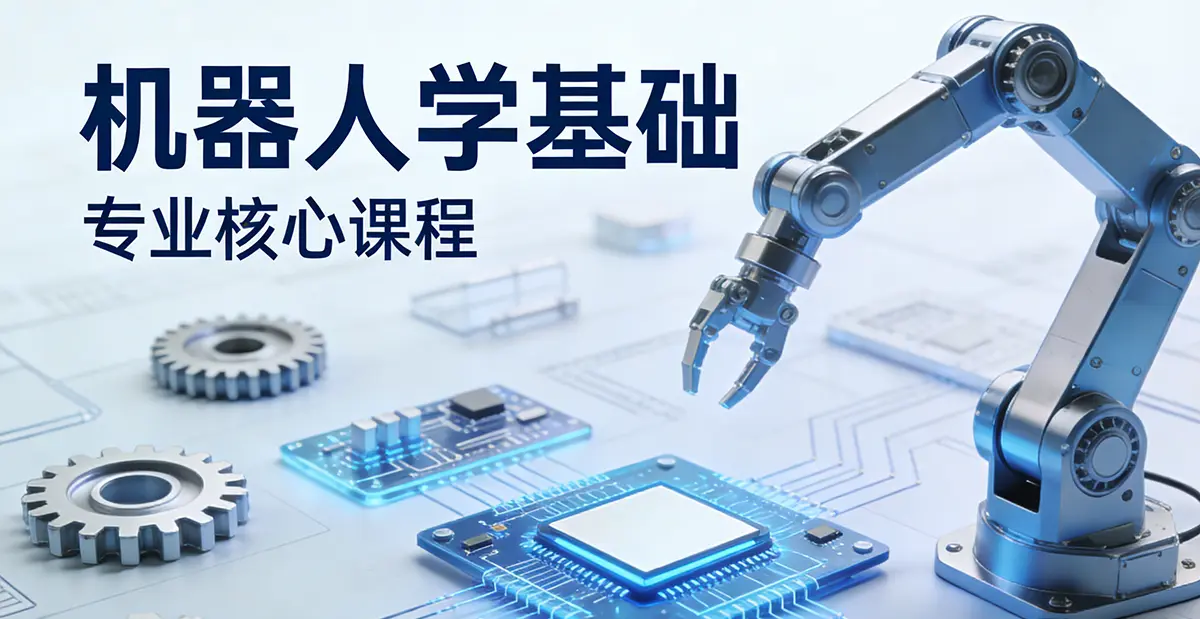
2. Core Courses in the Robotics Major
| Module Category | Core Courses |
| Mechanical and Electronic Fundamentals | Theoretical Mechanics, Fundamentals of Mechanical Design, Engineering Materials, Circuit Theory, Analog/Digital Electronics, Electric Machines and Drives |
| Control and Sensing Core | Principles of Automatic Control, Modern Control Theory, Introduction to Robotics, Robot Kinematics and Dynamics, Sensors and Detection Technology |
| Computing and Artificial Intelligence | Computer Programming (C++/Python), Data Structures and Algorithms, Computer Vision, Fundamentals of Machine Learning/Deep Learning, Robot Operating System (ROS) |
| System Integration and Design | Embedded Systems, Mechatronic System Design, Robotic System Modeling and Simulation, Robot Planning and Decision-Making |
| Mathematics and Theoretical Tools | Linear Algebra, Probability Theory and Mathematical Statistics, Calculus, Optimization Methods, Computational Geometry |
| Applications and Frontiers | Mobile Robotics, Robot Perception and SLAM, Human-Robot Interaction, Introduction to Flexible/Soft Robotics, Medical Robotics |
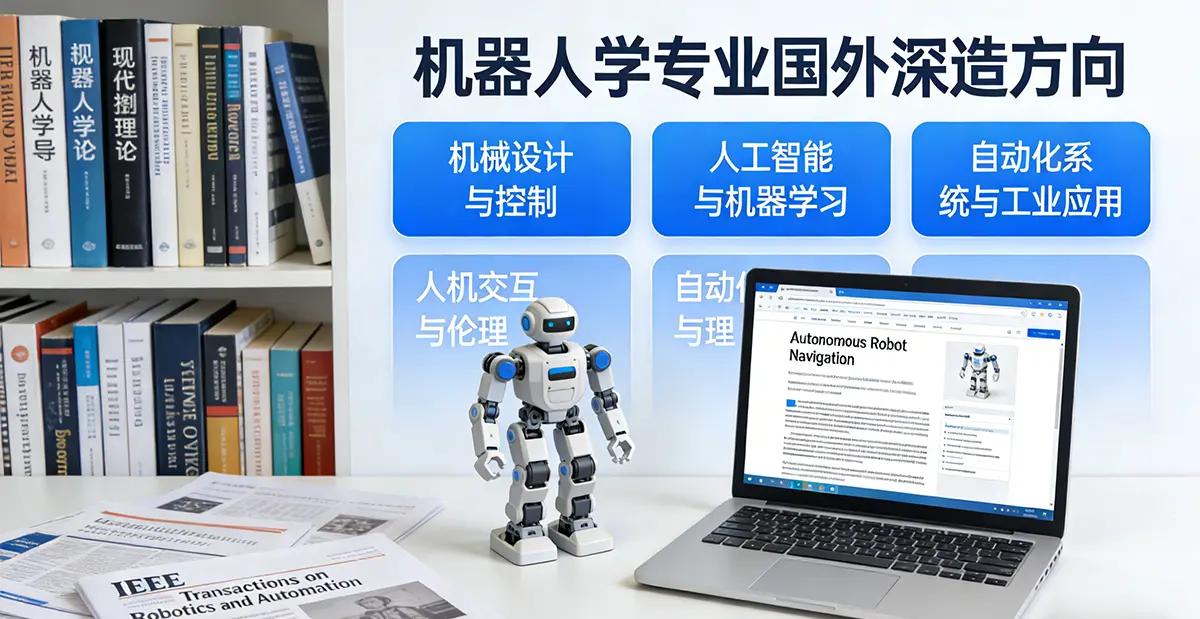
3. Advanced Study Pathways for the Robotics Major
Master's/PhD in Robotics/Mechatronic Engineering/Control Science and Engineering: Conduct in-depth research into core areas of robotics such as perception, control, planning, and learning.
Master's in Artificial Intelligence/Computer Vision: Strengthen expertise in the robot's “brain” (intelligence) and “eyes” (vision).
Master's in Biomedical Engineering: Specialize in medical and rehabilitation robotics.
Master's in Aerospace Engineering: Focus on research related to drones and space robotics.
MBA/Master's in Engineering Management: Transition towards robotics product management or entrepreneurship.
4. Career Paths and Positions for the Robotics Major
As a quintessential interdisciplinary discipline, graduates can pursue opportunities across all segments of the robotics industry value chain and in various sectors that extensively utilize robotics.
Core Research and Development Domains
Robotics Platform and Component Companies:
Industrial Robots (FANUC, ABB, KUKA, Siasun, Estun): Robotics Algorithm Engineer (motion control, trajectory planning), Servo Control Engineer, Mechanical Design Engineer.
Service/Specialized Robots (e.g., robotic vacuums, delivery robots, surgical robots): SLAM/Navigation Algorithm Engineer, Perception Algorithm Engineer (Computer Vision/LiDAR), Embedded Software Engineer.
Autonomous Driving:
Autonomous Driving Companies (Waymo, Cruise, Baidu Apollo, Pony.ai, etc.): Decision Planning Engineer, Control Engineer, Perception Fusion Engineer, High-Precision Mapping and Localization Engineer.
Consumer Electronics and Smart Hardware:
Drone Companies (e.g., DJI): Flight Control Algorithm Engineer, Vision Algorithm Engineer.
Smart Home Appliances/Companion Robots: Relevant research and development positions.
High-End Equipment and Manufacturing:
Automation Integrators: Robotics Application Engineer, responsible for the design, programming, and debugging of robotic workstations or production lines.
Automotive/3C Electronics Manufacturing: Automation Engineer.
Emerging and Cross-Disciplinary Fields
Medical and Rehabilitation Robotics: Research and develop exoskeleton robots for surgical assistance and rehabilitation training.
Agricultural Robotics: Engage in R&D for automated harvesting, plant protection, and inspection robots.
Research Institutes and Universities: Researcher, Faculty Member (typically requires a PhD).
5. Employment Rate and Industry Trends for the Robotics Major
Employment Rate Characteristics
“High Growth, High Interdisciplinary Demand, High Barriers to Entry”: The industry is in a rapid growth phase, creating robust demand for versatile talent with cross-disciplinary expertise. However, the technical barriers are significant, requiring both broad and deep knowledge.
Strong Salary Competitiveness: Especially for core R&D roles in algorithms, perception, and control, starting salaries generally surpass those in traditional engineering disciplines.
Geographic and Industrial Clustering: Positions are primarily concentrated in high-end manufacturing and technological innovation hubs such as the Yangtze River Delta, Pearl River Delta, and the Beijing-Tianjin-Hebei region.
Industry Development Trends
AI Large Models and Embodied Intelligence: Integrating large language/multimodal models with robots to enable natural language instruction comprehension, complex task planning, and generalized manipulation is the most prominent disruptive trend.
Deep Integration of Perception and Decision-Making: Evolution from traditional modular “perception-planning-control” pipelines towards end-to-end learning approaches.
Human-Robot Collaboration and Safety: The proliferation of collaborative robots (Cobots) in factories and daily life necessitates higher safety standards and more natural interaction capabilities.
Robotics-as-a-Service and Cloud Robotics: Leveraging 5G and cloud computing to enable remote robot deployment, swarm intelligence, and skill sharing.
Soft and Bio-Inspired Robotics: Overcoming the limitations of traditional rigid structures to adapt to more complex and compliant environments.
6. Major Global Institutions Offering the Robotics Major
Robotics is typically offered as an independent research center, undergraduate major, or graduate program within the engineering faculties of top universities.
| Country/Region | Representative Institutions (Leading Institutions in Robotics) |
| United States | Massachusetts Institute of Technology (CSAIL), Carnegie Mellon University (Robotics Institute), Stanford University, University of California, Berkeley, Georgia Institute of Technology |
| Germany | Technical University of Munich, RWTH Aachen University |
| Switzerland | ETH Zurich, École Polytechnique Fédérale de Lausanne (EPFL) |
| United Kingdom | Imperial College London, University of Oxford, University of Edinburgh |
| Japan | University of Tokyo, Waseda University |
| China | Harbin Institute of Technology, Shanghai Jiao Tong University, Tsinghua University, Beijing Institute of Technology, Zhejiang University |
| Other | National University of Singapore, Korea Advanced Institute of Science and Technology (KAIST) |
DisciplineMajor Recommendations
Ideal Candidates for the Robotics Major:
Individuals passionate about creating autonomous intelligent machines who enjoy the full-stack development process from hardware to software.
Those with strong hands-on skills, systems thinking, and an interest in interdisciplinary learning (mechanics, electronics, programming, AI).
Individuals who enjoy tackling complex, multi-constraint engineering problems and possess the patience and perseverance for iterative debugging.
Those with a solid understanding and application skills in mathematics (especially linear algebra, geometry, optimization) and physics.
Core Competencies of the Robotics Discipline:
Ability to integrate multidisciplinary knowledge and engineer complete systems (e.g., integrating robotic arms, sensors, controllers, and algorithms into a reliably functioning system).
Solid theoretical foundation in robot kinematics, dynamics modeling, and control.
Strong programming implementation and algorithm debugging skills (C++/Python, ROS).
Engineering intuition and practical experience for solving real-world physical problems.
Study Recommendations for the Robotics Major:
Build a comprehensive knowledge system encompassing “Mechanics + Electronics + Control + Computing,” avoiding knowledge gaps in any one area.
Engage in hands-on projects early: Start with open-source robotics platforms (e.g., TurtleBot) or build simple robots from scratch. Participate in robotics competitions like RoboMaster or Robocon.
Achieve proficiency in the Robot Operating System (ROS): As the de facto standard in both industry and academia, mastery is essential.
Specialize deeply in one area (e.g., Visual SLAM, Motion Control, Path Planning) and aim for project-based mastery in at least one such direction.
Accumulate proficiency with mathematical tools: Become adept at using linear algebra libraries, optimization solvers, and similar tools.
Stay current by following top-tier conferences and journals (e.g., ICRA, IROS, RSS, IEEE T-RO) to keep pace with cutting-edge technologies.
Note: Some institutions may categorize this program under a different discipline. Please refer to the specific classification used by your chosen institution.
- The Previous Passage:Chemical Engineering(Chem. Eng.)_化学工程
- The Next Passage:Mechanical Engineering(Mech. Eng.)_机械工程

Human Geography Major_Geography(Geog.)_人文地理
The Human Geography Major explores the complex relationships between human activities and space, cul···

Atmospheric Sciences(Atmos. Sci.)_大气科学
Atmospheric science is the study of phenomena and evolutionary patterns within Earth's atmospher···
Earth Sciences(Earth Sci.)_地球科学
The Earth Science major focuses on studying the Earth system and its interactions, providing a scien···
Ocean Sciences(Ocean Sci.)_海洋科学
PbootCMS是全新内核且永久开源免费的PHP企业网站开发建设管理系统,是一套高效、简洁、 强悍的可免费商用的···

