

Illustration(Illust.)_插画
Time:2026-03-08 Visits:9
Illustration Major
The Illustration Major is designed to train visual storytellers through a comprehensive curriculum covering drawing, digital media, narrative techniques, and professional practice. This guide explores core courses, advanced study options, global career opportunities, and industry trends for aspiring illustrators, highlighting leading programs worldwide and essential skills for success in this dynamic field.
1. Program Overview
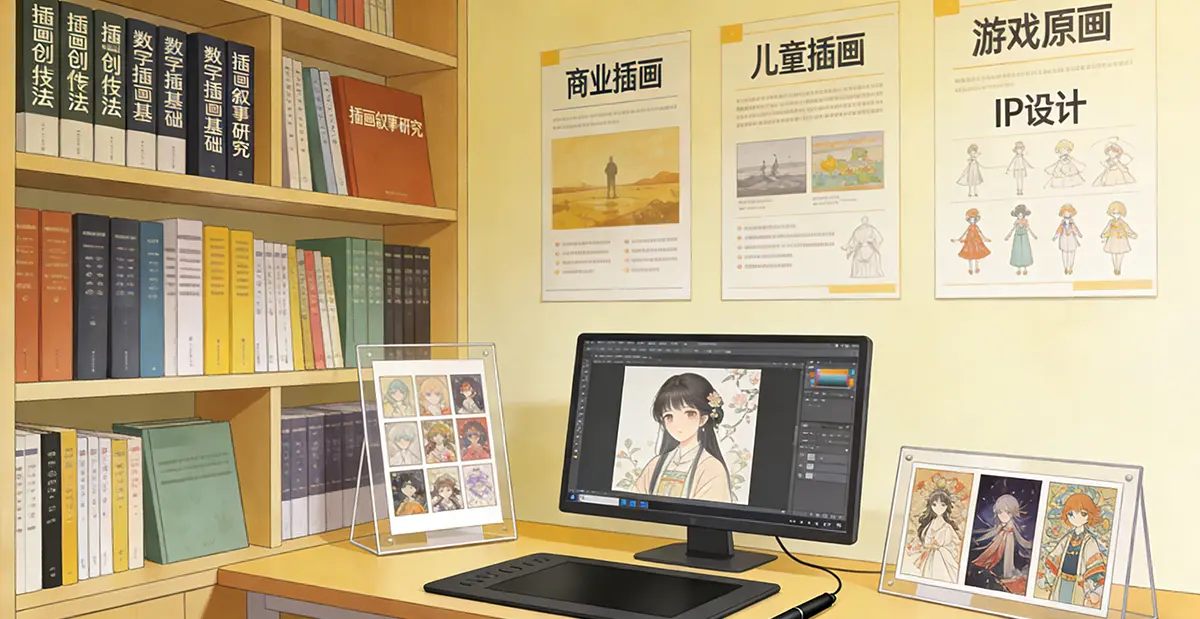
The Illustration Major is an applied art discipline centered on visual storytelling, employing hand-drawn, digital, and mixed media for visual expression and communication. It transcends pure artistic creation by emphasizing the use of distinctive personal styles, narrative techniques, and visual metaphors to convey information, emotions, and ideas to specific audiences within the framework of particular themes, texts, or concepts. Serving as a visual bridge connecting literature, commerce, media, and sociocultural contexts, the Illustration Major prepares graduates for extensive application across diverse fields including publishing, advertising, animation, gaming, and public spaces.
2. Core Curriculum of the Illustration Major
| Module Categories | Core Courses |
| Foundational Drawing and Form | Sketching, Color Theory, Speed Drawing, Human Anatomy and Movement, Perspective, Composition, Drawing Materials and Techniques |
| Core Illustration Skills | Illustration Fundamentals, Narrative Illustration, Character Design, Environment Design, Picture Book Creation, Editorial Illustration (Books, Publications), Commercial Illustration (Advertising, Branding) |
| Style and Media Exploration | Watercolor, Acrylic, Printmaking (Woodcut, Lithography), Mixed Media, Digital Illustration (Procreate, Photoshop, Illustrator), Motion Graphics, Experimental Illustration |
| Narrative and Concept Development | Visual Storytelling Techniques, Storyboarding, Concept Art Fundamentals, Worldbuilding, Text Analysis and Visual Translation |
| Industry Practice and Theory | Illustration History and Contemporary Trends, Copyright and Contract Basics, Personal Branding and Marketing, Portfolio Guidance, Industry Field Trips |
| Expansion and Cross-Media | Graphic Design Fundamentals, UI/UX Illustration, Toy and Merchandise Design, Street Art and Murals, Art Therapy Basics |
3. Advanced Study Pathways
Master's (Creative Specialization): Illustration (MFA/MA): Deepens personal artistic language and explores more complex narratives or conceptual expressions, preparing for careers as independent artists or high-end commercial illustrators. Picture Book Creation: Focuses on narrative techniques, text-image relationships, and child psychology research specific to the picture book format. Concept Art: Involves preliminary visual development for worlds, characters, and environments in the film, television, and gaming industries.
Master's (Interdisciplinary Applications): Visual Communication Design: Integrates illustration as part of visual systems within branding, advertising, or social design projects. Animation: Develops skills toward animation directing, storyboarding, or art direction. Art Therapy: Utilizes drawing and storytelling for psychological healing practices.
Academic Research (Less Common): Illustration Studies/Visual Culture: Focuses on illustration history, theoretical criticism, and cultural analysis.
4. Career Paths and Positions for Illustration Majors
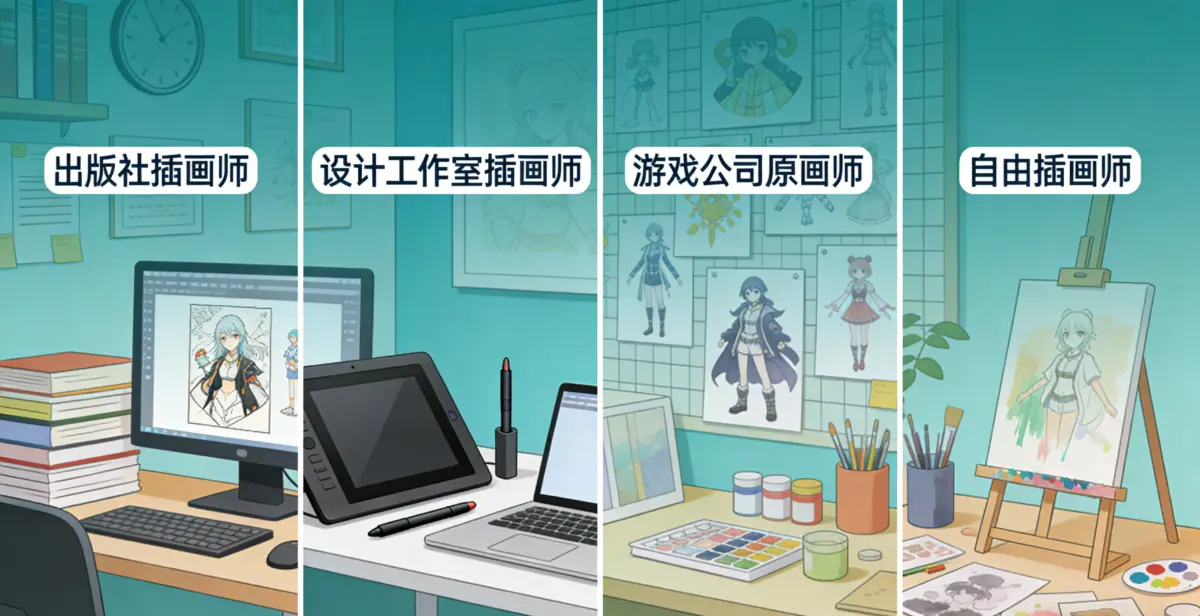
Career trajectories for Illustration Majors are flexible and diverse, highly dependent on individual style and specialized expertise.
Publishing and Media Sector: Publishing houses and magazines: Contract illustrators, book cover designers, art editors. Self-media and online platforms: Content illustrators, column illustrators.
Commercial Applications: Advertising agencies, design firms, and brands: Commercial illustrators, visual designers, brand illustrators. Internet companies: UI/UX illustrators, operations illustrators, in-product illustration designers.
Entertainment & Cultural Industries: Animation & game studios: Concept artists, character designers, environment artists, storyboard artists. Film and television companies: Storyboard artists, art concept designers. Cultural and creative product development: Independent brand founders, merchandise pattern designers, collectible toy designers.
Education and Freelancing: Educational institutions: Illustration instructors, art training mentors. Independent artists/freelance illustrators: Securing commissions and selling artwork through galleries, art fairs, and online platforms—one of the primary employment models for Illustration Major graduates.
5. Employment Rates and Industry Trends for the Illustration Major
Employment Rate Characteristics: “Freelancing and Project-Based Work Dominate”: Over half of Illustration Major graduates launch their careers as freelance illustrators, with income directly tied to project volume, quality, and personal brand influence, leading to initial instability. “Style is the Lifeline”: Possessing a unique, mature, and market-recognizable personal visual style is fundamental, often outweighing mere technical proficiency. “Online Presence and Self-Marketing”: Social media platforms are core channels for showcasing work, attracting clients, and building a brand. “Significant Income Polarization”: Top commercial illustrators command substantial earnings, while many newcomers face intense competition and pressure on fees.
Industry Trends: “Dynamic and 3D Illustration”: Demand for motion graphics and 3D illustrations is surging. “IP and Brand-Driven Operations”: Successful illustrators are evolving to develop themselves or their characters into IPs for cross-media operations. “The Double-Edged Sword of AI Tools”: AI image generation boosts efficiency but disrupts parts of the market, pushing creators to emphasize irreplaceable narrative depth, emotional resonance, and hand-drawn quality. “Social Media Visual Content Explosion”: Demand for customized, serialized illustration content remains robust. “Art Intervention in Public Spaces”: Large-scale murals and public art projects provide new creative platforms for illustrators.
6. Major Global Institutions Offering the Illustration Major
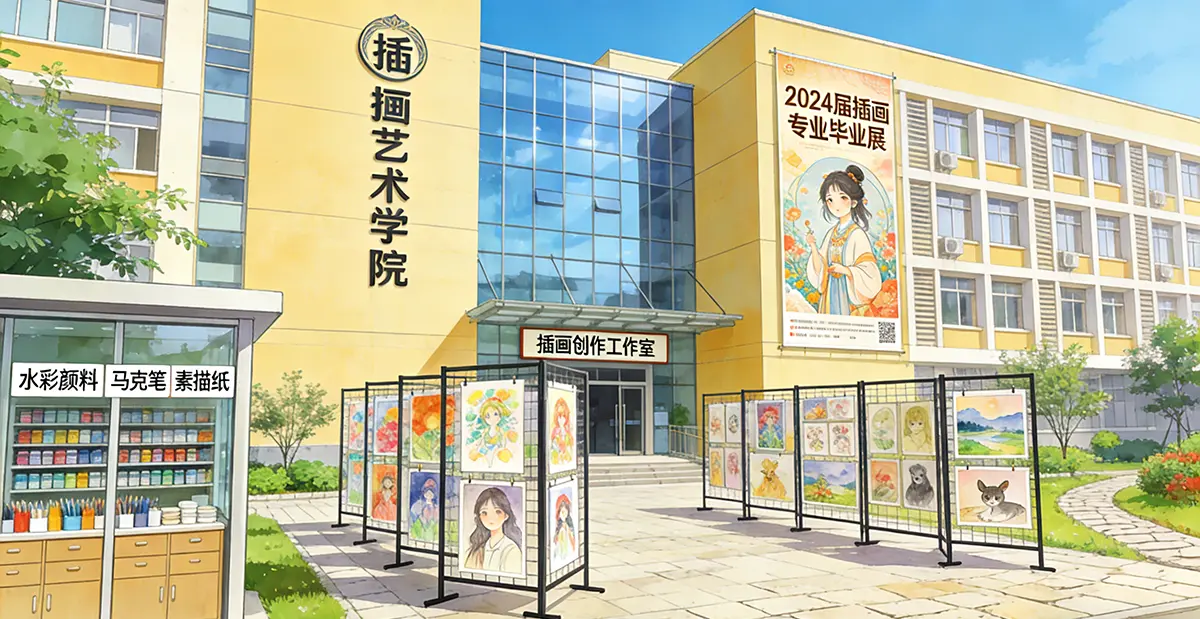
Top programs for the Illustration Major are predominantly found at art and design institutions, though some comprehensive universities also offer them.(Selected Schools - Listed in no particular order)
| Country/Region | Representative Institutions (Leading in Illustration) |
| United States | Rhode Island School of Design, School of Visual Arts, Maryland Institute College of Art, Art Center College of Design, Pratt Institute |
| United Kingdom | Royal College of Art, University of the Arts London (Camberwell College of Arts, London College of Communication), Kingston University, Edinburgh College of Art |
| Europe | Accademia di Belle Arti di Bologna (renowned for children's book illustration), École Supérieure des Arts Décoratifs de Strasbourg, Willem de Kooning Academy |
| Japan | Tama Art University, Musashino Art University, Kyoto Seika University |
| China | Central Academy of Fine Arts, China Academy of Art, Academy of Arts & Design, Tsinghua University, Guangzhou Academy of Fine Arts |
| Other | Hongik University (South Korea), Nanyang Technological University (Singapore) |
Ideal Candidates for the Illustration Major:
Individuals with boundless passion for storytelling, character development, and world-building, coupled with a strong desire for self-expression. Those who possess a distinct personal aesthetic and visual preferences and aspire to develop them into a mature style. Candidates should demonstrate strong self-learning abilities, self-motivation, and project management skills to adapt to freelance rhythms. A broad interest and strong interpretive skills regarding social culture, pop trends, and diverse texts are also key.
Core Competencies for the Illustration Major:
A mature and distinctive personal visual style. Powerful narrative and conceptual development skills to find the most fitting visual metaphors for core ideas. Multi-media expression capabilities (hand-drawn, digital, basic motion graphics). Skills in personal brand management, client communication, and project negotiation.
Learning Recommendations for the Illustration Major:
“Make sketchbooking a lifestyle”: Continuously record observations, inspirations, and ideas—the foundation of all creativity. “Find and refine your visual voice”: After broad experimentation, establish and deepen your stylistic direction through cohesive series of works. “Build complete narrative projects”: Creating full picture books, comics, or graphic novels showcases comprehensive skills better than single pieces. “Think like an entrepreneur”: Learn basic finance, taxation, and copyright law; actively manage your social media; and build a professional portfolio website. “Embrace technology without being defined by it”: Actively learn new tools like AI and 3D software for efficiency, but anchor your core value in unique ideas and the tactile quality of hand-drawn work. “Build your professional network”: Participate in illustration fairs, exhibitions, and online communities to connect with editors, art directors, and peers.
Note: Some illustration programs may be categorized under different disciplines. Please refer to the specific classification used by the institution.
- The Previous Passage:没有了!
- The Next Passage:Product Design(Prod. Des.)_产品设计学
Human Geography Major_Geography(Geog.)_人文地理
The Human Geography Major explores the complex relationships between human activities and space, cul···

Atmospheric Sciences(Atmos. Sci.)_大气科学
Atmospheric science is the study of phenomena and evolutionary patterns within Earth's atmospher···
Earth Sciences(Earth Sci.)_地球科学
The Earth Science major focuses on studying the Earth system and its interactions, providing a scien···
Ocean Sciences(Ocean Sci.)_海洋科学
PbootCMS是全新内核且永久开源免费的PHP企业网站开发建设管理系统,是一套高效、简洁、 强悍的可免费商用的···

