

Journalism and Communication Studies(JCS)_新闻传播学
Time:2026-07-21 Visits:0
Journalism and Communication Studies Major
Journalism and Communication Studies Major is a discipline that examines journalistic activities, communication phenomena, and the patterns of information exchange within human society. It focuses on both the professional practice of news production and explores the profound impact of media on social culture. If management governs “organizations” and Library and Information Science governs “information,” then Journalism and Communication Studies governs ‘meaning’ and “influence,” dedicated to uncovering facts, conveying values, and fostering consensus in a complex and multifaceted world.
Introduction to Journalism and Communication Studies Major: Constructors of Meaning and Influence
At its core, journalism and communication studies seeks to understand and optimize the shared meaning-making processes within human society. It examines how information is produced, transmitted, received, and interpreted, and how these processes shape individual cognition, organizational behavior, and social culture. In the digital age, it further focuses on how technological transformations reshape the communication ecosystem and how new media tools can be leveraged for effective communication.
Its core missions include:
- Discovery and Reporting: Diving into social contexts to uncover facts and truths, delivering news with professional integrity to serve the public interest.
- Understanding and Interpretation: Applying communication theories to analyze media content, audience behavior, and communication outcomes, deciphering the underlying logic of social phenomena.
- Creativity and Connection: Crafting impactful content (short videos, brand narratives, public service announcements) to forge emotional and cognitive bonds between organizations and the public, brands and consumers.
- Guidance and Service: Monitoring public sentiment, steering discourse, providing decision-making references, and delivering valuable information and services to users.
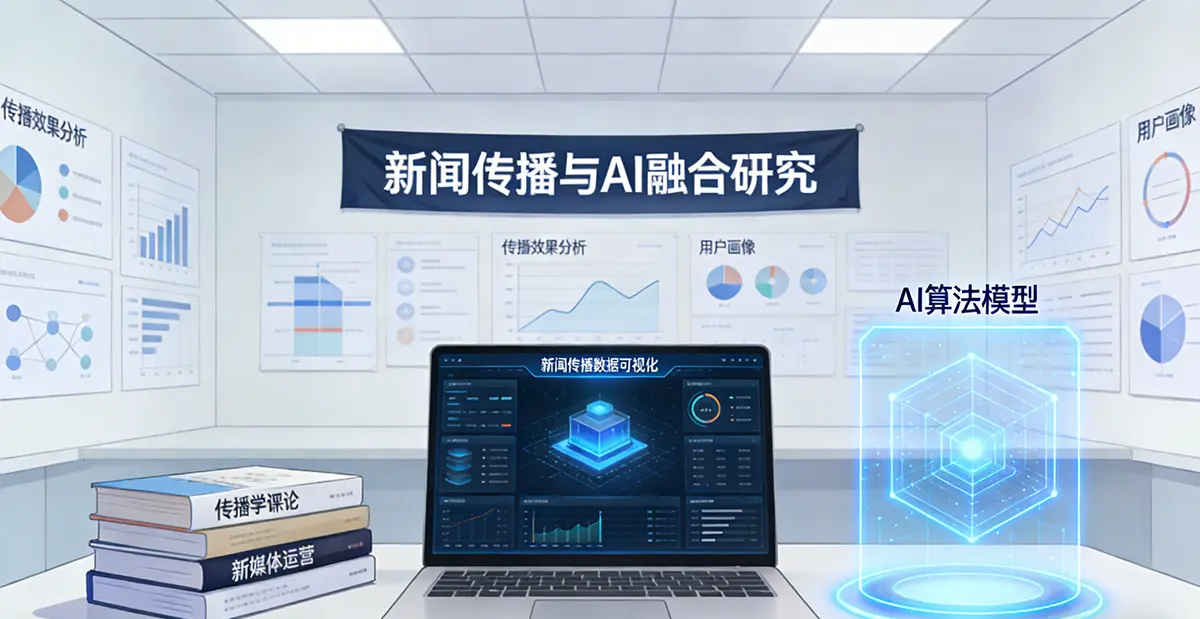
Core Curriculum at International Institutions
The journalism and communication curriculum emphasizes the deep integration of “theory + history + methodology + practice,” aiming to cultivate versatile professionals with profound humanistic literacy, keen social insight, and masterful communication skills.
| Course Module | Core Course Examples | Learning Objectives |
| Theoretical Foundations | Introduction to Journalism, Communication Theory, Marxist Perspectives on Journalism, History of Chinese and International Journalism & Communication, Media Ethics and Regulations | Establish core understanding of the discipline, comprehend media's social role, ethical boundaries, and historical evolution. |
| Research Methods | Communication Research Methods, Quantitative Research Methods (e.g., Communication Statistics), Qualitative Research Methods, Media Data Analysis | Master tools for scientifically analyzing communication phenomena, design and execute research projects, and interpret the meaning behind data. |
| Content Production Practice | News Reporting and Writing, News Editing and Commentary, News Photography, Videography and Editing, Digital Content Creation (Short Videos/Live Streaming) | Master cross-media content gathering, editing, and production skills to become an “omnichannel” content creator. |
| Strategy and Operations | Media Management, Brand PR and Crisis Management, Advertising Creativity and Planning, User Growth and Community Operations | Learn to operate media products or brand accounts, understand audiences/users, and execute effective strategic communication. |
| Frontier & Interdisciplinary | Introduction to New/Digital Media, Online Public Opinion Monitoring & Analysis, Computational Communication Studies, Cross-Cultural Communication, Artificial Intelligence & Information Ethics | Explore technological frontiers, understand their reshaping of the communication ecosystem, and reflect on associated ethical challenges. |
| Integrated Practice | Omni-Media Reporting Workshop, Integrated Media Project Practice, Graduation Design/Thesis, Professional Internship | Apply integrated knowledge and skills to solve complex communication challenges in simulated or real-world projects. |
Advanced Study Directions in Journalism and Communication Major
At the master's or doctoral level, research in journalism and communication closely aligns with industry trends and academic frontiers, offering diverse paths:
- Journalism: Focuses on journalism theory, history, practice, comparative journalism, and convergent journalism. Doctoral studies typically delve into transformations in the news industry, journalistic professionalism, and digital journalism.
- Communication Studies: Covers communication theory, media effects, political communication, health communication, science communication, and cross-cultural communication. Doctoral research often centers on macro-level topics like media technology and social change, communication and public opinion, and international communication.
- New Media/Digital Communication: Studies social media, mobile communication, human-computer interaction, online public opinion, data journalism, computational communication, and more—one of the hottest current research areas.
- Advertising and Public Relations: Focuses on brand communication, integrated marketing communication, crisis management, consumer behavior, digital marketing, and other areas closely tied to industry practice.
- Film, Television, and Audiovisual Communication: Studies the theory and production of film, television, documentaries, and short videos, encompassing film art, audiovisual language, program planning, and production.
- International/Global Communication: Investigates global media, cross-cultural communication, public diplomacy, and national image construction, cultivating communication professionals with a global perspective.
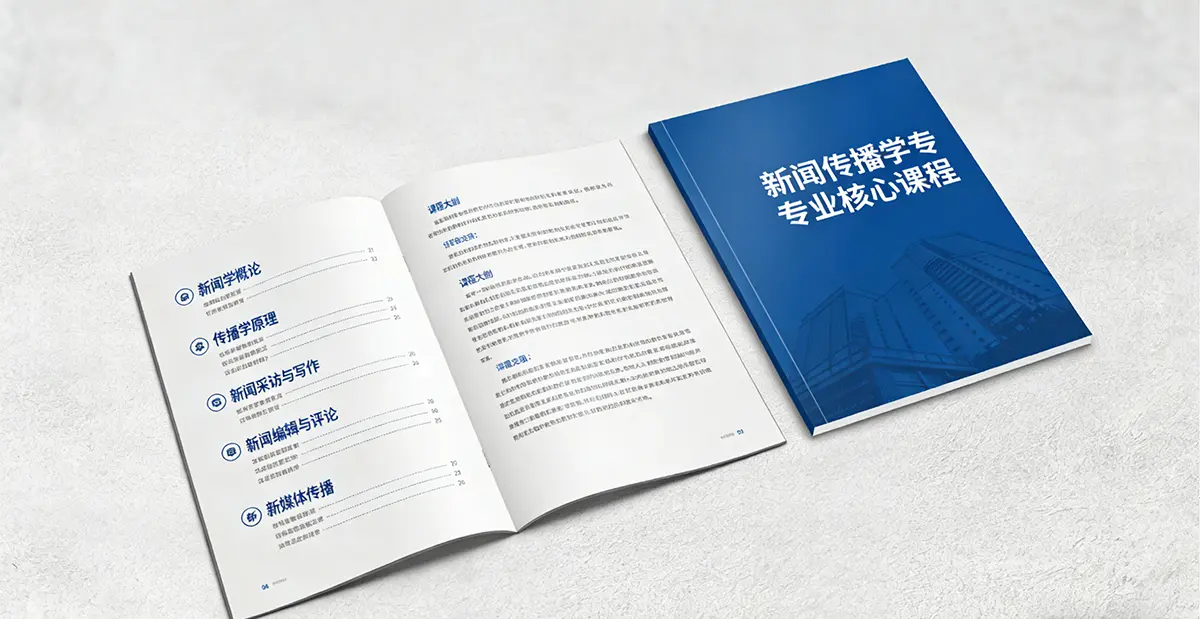
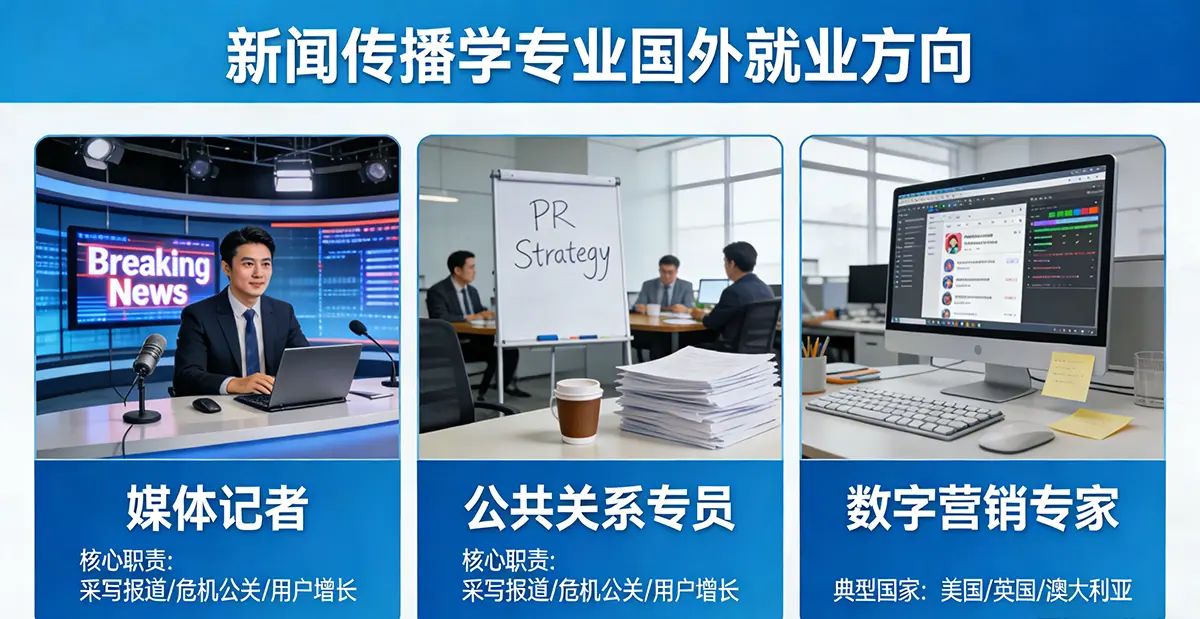
International Career Paths and Positions
Journalism and Communication graduates are versatile professionals in the job market, with core competencies—content creation, user insights, and strategic communication—being indispensable across nearly all industries.
| Industry Sector | Common Positions | Brief Responsibilities |
| News Media | Journalist, Editor, Commentator, On-Camera Reporter, Video Producer | Produce and distribute news content at news agencies (e.g., Xinhua News Agency), newspaper groups, broadcast stations, and news websites. |
| Internet & Tech Companies | Content Operations, New Media Operations, User Operations, Product Manager, Brand PR, Data Analyst | Responsible for content ecosystem development, user growth, and brand image maintenance at platforms like ByteDance, Tencent, and Alibaba. |
| Enterprises and Organizations | PR Specialists/Managers, Corporate Communications Managers, Marketing Specialists, CSR Officers | Within PR or marketing departments of various enterprises (e.g., FMCG, finance, tech), responsible for corporate image, product promotion, and internal/external communication. |
| Advertising & PR Agencies | Account Executives, Copywriters, Media Planners, Creative Designers, PR Consultants | Deliver integrated marketing and PR services to diverse clients at agencies like Ogilvy and Blue Focus. |
| Government & Public Services | Spokespersons, Publicity Officers, Public Opinion Analysts, Policy Researchers | Manage information releases, policy interpretations, and public discourse guidance within government publicity departments, cultural tourism bureaus, and information centers. |
| Film & Production Companies | Directors, Cinematographers, Editors, Producers, Program Planners | Engaged in planning, filming, and producing audiovisual content at film studios, MCN agencies, and independent media studios. |
| Research & Educational Institutions | Researchers, University Professors | Conduct teaching and research in journalism and communication studies at universities or research institutes. |
International Employment Rates and Trends
Employment Rate: Journalism and Communication graduates enjoy broad career prospects with overall strong employment outcomes.
- In the UK, approximately 81.9% of Media, Journalism, and Communication graduates are in stable employment five years after graduation, with an additional 5.3% pursuing further studies—both figures exceed the average across all disciplines.
- Domestic graduates also pursue diverse career paths, spanning news media, internet companies, government departments, and more.
Industry Trends:
- AI Integration and Paradigm Shift: Artificial intelligence is profoundly transforming the entire content production chain (e.g., AI-assisted writing, automated video generation, personalized recommendations), while simultaneously raising new challenges such as information ethics and algorithmic bias. Future communicators must master AI tools while upholding professional ethics.
- Video-Centric and Immersive Communication: Short videos remain the dominant content format, while emerging forms like VR/AR and immersive experiences are rapidly developing. There is strong demand for versatile professionals skilled in audiovisual content creation and innovation.
- Digital Marketing and Brand Narratives: In the digital economy era, businesses increasingly rely on compelling brand stories to forge emotional connections with consumers. Consequently, communicators who deeply understand user psychology and excel in content marketing are highly sought after.
- International Communication Capacity Building: As China assumes a more significant role on the global stage, there is an urgent national and societal need for international communication professionals who are proficient in foreign languages, familiar with international norms, and capable of effectively telling China's story.
- Public Opinion and Data Governance: With the increasingly complex online discourse environment, governments and enterprises continue to seek professionals skilled in public opinion monitoring, analysis, guidance, and crisis public relations.
Ideal Candidates and Core Competencies for Journalism and Communication Studies Major
If you possess the following traits, you may excel in the field of journalism and communication:
- Intense curiosity and social awareness: You are fascinated by the world around you, engaged in public affairs, driven to uncover truths, and committed to amplifying the voices of marginalized groups.
- Exceptional writing and communication skills: You enjoy writing and can express ideas clearly, accurately, and compellingly; you are a skilled listener and communicator, capable of building trust quickly.
- Sharp insight and creativity: You notice details others overlook and discern the essence behind phenomena; you consistently generate novel ideas and can transform them into engaging content or activities.
- Resilience and adaptability: The media industry demands fast-paced, dynamic work. You thrive under pressure and embrace new technologies and platforms with an open, learning mindset.
- Critical thinking and ethical awareness: Amidst information overload, you independently evaluate content authenticity. You recognize communication's power and remain vigilant about ethical implications.
Core Competency: Your core value lies in the integrated ability to harness “meaning” and build “influence.” This encompasses not only solid professional skills in reporting, writing, editing, and commentary, but also a deep understanding of society and humanity, insight into communication principles, and the creative application of diverse media tools. It enables you to achieve effective communication, foster consensus, and serve the public interest within complex environments.
Major Institutions Offering Programs Worldwide
(Selected Institutions Listed - in no particular order)
1.China
The Chinese University of Hong Kong, City University of Hong Kong, Hong Kong Baptist University, Fudan University, Renmin University of China, Shanghai Jiao Tong University, Tsinghua University, Zhejiang University, etc.
2.United Kingdom
University of Oxford, Loughborough University, London School of Economics and Political Science, University of Cambridge
3.Singapore
Nanyang Technological University, National University of Singapore
4.United States
University of Texas at Austin, Pennsylvania State University, Park Campus, Michigan State University, Stanford University
5.Netherlands
University of Amsterdam
6.Austria
University of Vienna
Recommended Pathways for Journalism and Communication Studies Major
1. Undergraduate Stage:
Build a solid theoretical foundation, hone professional skills, and explore diverse practical experiences
- Core: Diligently study foundational courses such as Journalism Theory, Introduction to Communication Studies, History of Chinese and International Journalism, and Communication Research Methods to establish a framework for understanding the discipline. Simultaneously, rigorously develop fundamental skills in reporting, writing, editing, commentary, and photography through practical courses.
- Exploration: Through electives and minors, broaden exposure to sociology, psychology, political science, economics, etc., expanding knowledge horizons to prepare for becoming a specialist journalist or communicator in a specific field.
- Practice: This is the cornerstone of journalism and communication studies! Actively engage with campus media (newspapers, radio stations, TV stations, public accounts), and pursue internships at mainstream media outlets, internet companies, or advertising agencies. Attempt to manage your own social media accounts to gain practical insights into audience engagement and refine your content sensibility.
2. Master's Stage:
Focus on specialization, enhance research/practical skills, and build professional networks
- Academic Master's: If you aspire to pursue theoretical research and teaching, consider an academic master's degree. Emphasis lies on deep involvement in your advisor's research projects, mastering cutting-edge methodologies, and conducting in-depth studies in a specific field (e.g., communication effects, media sociology).
- Professional Master's: For those aiming to become high-level applied professionals in specific fields (e.g., data journalism, brand PR, international communication), a professional master's in journalism and communication is an excellent choice. Programs typically employ a “dual-mentor system” with both academic supervisors and industry experts, while gaining experience through real-world projects.
3. Career Development and Lifelong Learning Phase
- Positioning: Begin in roles like reporter, editor, operations specialist, or planner, honing your skills through practice. You may become a domain expert (e.g., political reporter, data journalism specialist) or advance into comprehensive management as a project lead or content director.
- Future: Communication remains an eternal necessity. Regardless of your role, you must stay attuned to emerging technologies like AI and platform algorithms, discern shifts in social attitudes and media consumption habits, and maintain a human-centered approach with reverence for truth. Your role extends beyond conveying information—you are a meaning-maker and a guardian of society.
- The Previous Passage:Psychology(Psych)_心理学
- The Next Passage:没有了!
Human Geography Major_Geography(Geog.)_人文地理
The Human Geography Major explores the complex relationships between human activities and space, cul···

Atmospheric Sciences(Atmos. Sci.)_大气科学
Atmospheric science is the study of phenomena and evolutionary patterns within Earth's atmospher···

Earth Sciences(Earth Sci.)_地球科学
The Earth Science major focuses on studying the Earth system and its interactions, providing a scien···
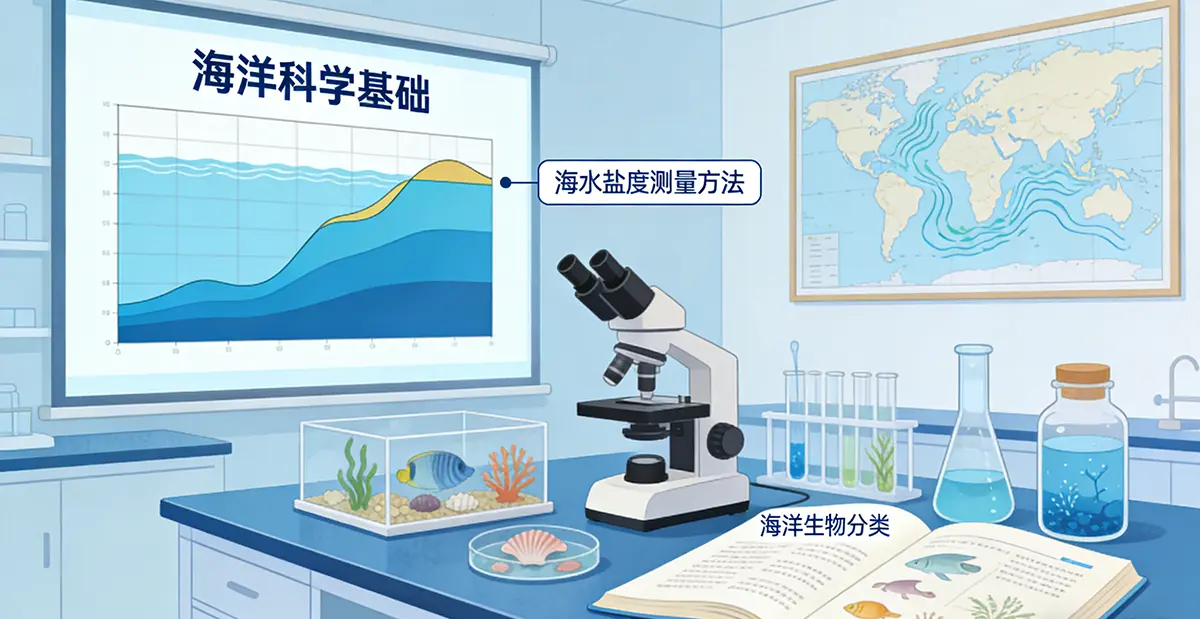
Ocean Sciences(Ocean Sci.)_海洋科学
PbootCMS是全新内核且永久开源免费的PHP企业网站开发建设管理系统,是一套高效、简洁、 强悍的可免费商用的···

