

Human Geography Major_Geography(Geog.)_人文地理
Time:2026-03-07 Visits:26
The Human Geography Major explores the complex relationships between human activities and space, cultivating students’ spatial thinking, critical analysis, and comprehensive research skills. Its curriculum covers a broad range from economic geography to urban studies, providing a solid foundation for advanced study and careers in urban planning, public policy, business consulting, research, education, and more. Exploring the Human Geography Major is key to unlocking the power of a spatial perspective for understanding and shaping society.
1. Introduction to the Human Geography Major
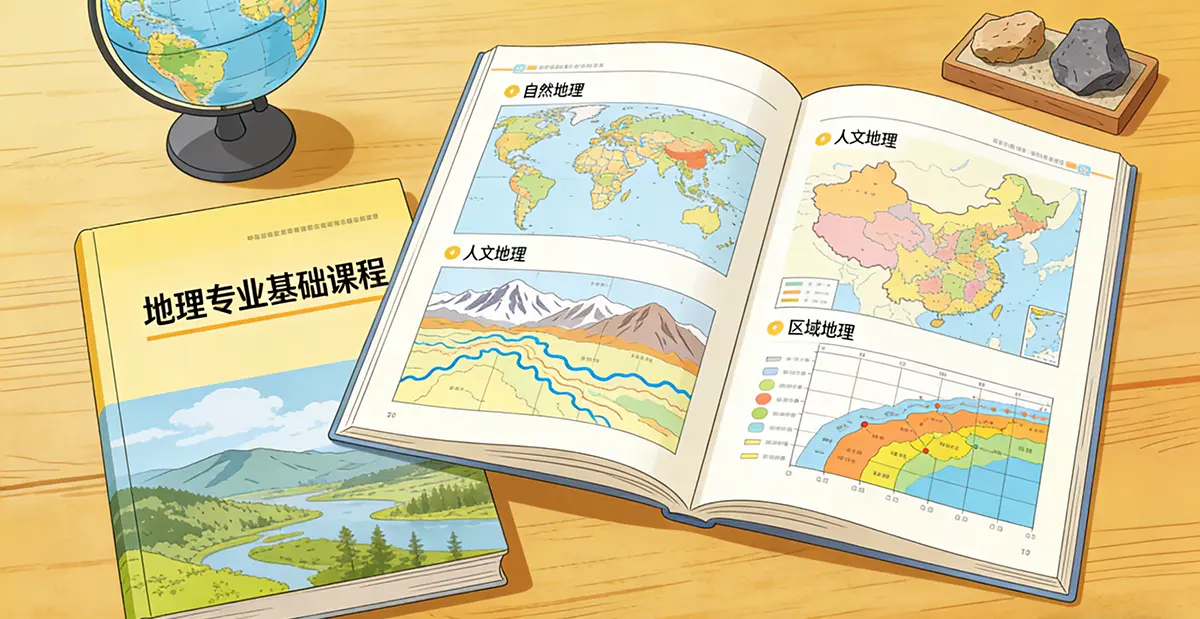
Human Geography is a core branch of the geography discipline that examines the interrelationships between human activities and space, place, and environment. It focuses not on natural landforms per se, but on how humans organize, perceive, and transform space, and how space, in turn, shapes social, cultural, economic, and political processes. Core themes include globalization, urbanization, regional development, place identity, migration and mobility, social inequality, and environmental justice, aiming to provide a spatial lens for deeply understanding the complexities of the human world.
2. Major Courses in the Human Geography Major (Table)
| Module Category | Core Courses |
| Theory and Core | Introduction to Human Geography, Economic Geography, Urban Geography, Social and Cultural Geography, Political Geography |
| Spatial Analysis and Methods | Geographic Information Systems (GIS), Qualitative Research Methods, Social Survey and Statistics, Spatial Analysis and Modeling, Fieldwork and Ethnography |
| Specialized Fields | Globalization Studies, Regional Development and Planning, Population Geography, Transportation Geography, Consumption Geography, Tourism Geography |
| Urban and Environmental Issues | Urban Social Geography, Housing Studies, Rural Geography, Environmental Perception and Behavioral Geography, Resource Geography |
| Philosophy and Critical Theory | Spatial and Social Theory, Postmodern Geography, Feminist Geography, Critical Geography |
| Skills and Applications | Professional Writing and Cartography, Planning Principles, Policy Analysis, Geographical Research Design |
3. Advanced Study Pathways for the Human Geography Major
| Master's/PhD in Human Geography/Urban Studies/Regional Planning | The primary route into academia or high-level research institutions. |
| Master's in Urban Planning | Shifts focus to urban design and physical spatial planning. |
Master of Public Policy/Public Administration | Emphasizes spatial policy and social policy formulation. |
| Master of International Development Studies | Concentrates on development issues in the Global South or specific regions. |
| Master of Real Estate/Land Management | Leads to careers in land economics and real estate development. |
| Master of Data Science/Business Analytics | Strengthens GIS and spatial data analysis skills for industrial applications. |
| Master of Education | Prepares to become a geography or social sciences teacher. |
4. Career Paths and Positions for Human Geography Majors
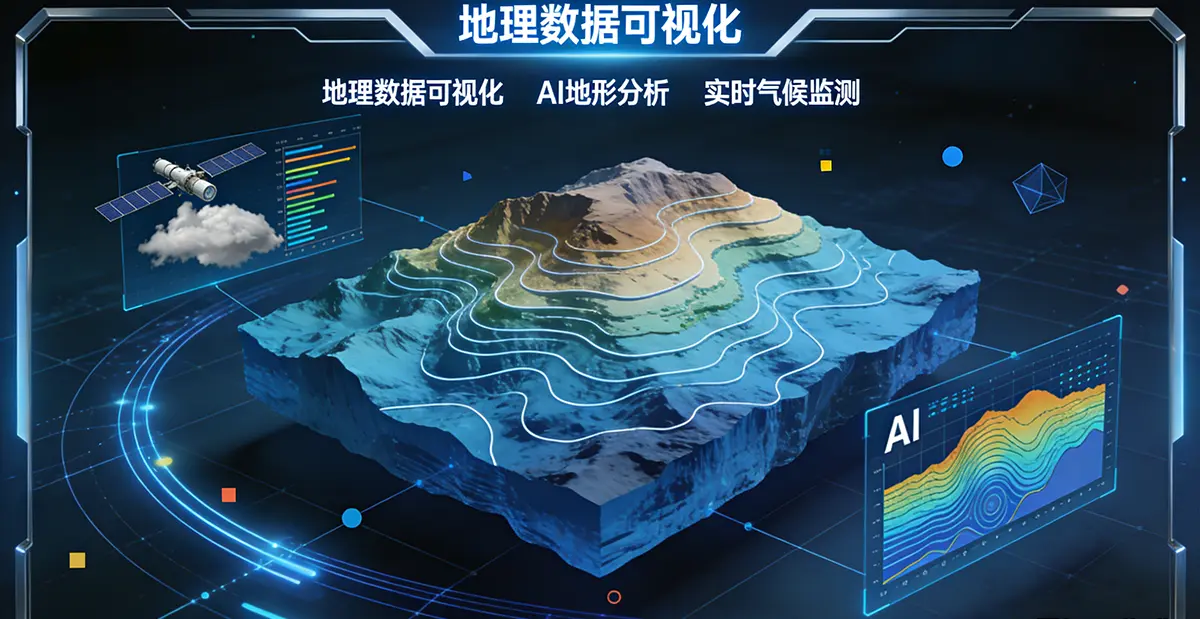
The spatial thinking, comprehensive analysis, and critical abilities cultivated in the Human Geography Major are widely applicable across multiple fields.
| Public Sector and Planning Agencies | Government Planning Departments | Planner, Policy Analyst, engaged in territorial spatial planning, regional planning, and socio-economic development planning. |
| Urban Design and Research Institutions | Urban Researcher, Community Planner. | |
| Statistical and Census Agencies | Spatial Data Analyst. | |
| Private Enterprises and Consulting | Real Estate Consulting and Development Firms | Market Analyst, Investment Analyst, Strategist, responsible for location assessment and market research. |
| Business Consulting and Market Research Firms | Site Selection Analyst, Consumer Spatial Behavior Researcher. | |
| Technology Companies (e.g., mapping, mobility, logistics platforms) | GIS Data Analyst, Product Strategist (focus on spatial services). | |
| Non-Governmental Organizations and Social Enterprises | Project Evaluator, Community Development Officer. | |
| Education and Research | Colleges and Secondary Schools | Geography Teacher, Researcher (typically requires a Ph.D.). |
| Think Tanks and Research Institutions | Conduct policy research on urbanization, regional economics, and sustainable development. | |
| Media and Communication | Publishing Houses, Media, Cultural Institutions | Geography Editor, Documentary Producer, Cultural Heritage Interpreter. |
5. Employment Rate and Industry Trends for Human Geography Majors
Employment Rate Characteristics
“Broad Application Scope, Differentiated Competition”: While there is no standard “human geographer” position, graduates can enter multiple industries by leveraging spatial analysis and comprehensive research skills. Employment success depends on the ability to translate geographic thinking into solutions for business and societal problems.
“GIS and Quantitative Skills as Significant Advantages”: Proficiency in spatial analysis technologies like GIS significantly broadens career options and enhances competitiveness.
“Stable Public Sector, Flexible Compensation in Private Sector”: Positions in planning departments offer high stability; roles in business consulting and tech companies provide greater flexibility in starting salaries and career progression.
A relatively high proportion of graduates pursue advanced studies: Particularly among students aiming for academia, senior research, or planning roles.
Industry Trends
Smart Cities and Urban Digital Transformation: Utilizing big data, IoT, and AI to analyze urban dynamics and participate in planning and optimizing applications like smart transportation, public safety, and community governance.
Carbon Neutrality and Sustainable Urban Development: Researching low-carbon urban forms, 15-minute living circles, urban climate adaptation, and green infrastructure planning to support “dual carbon” goals and ecological civilization.
Social Equity and Spatial Justice: Focusing on issues like housing inequality, accessibility of public service facilities, gentrification in urban renewal, and spatial rights of vulnerable groups to promote inclusive planning.
Mobility Transformation and Regional Reshaping: Studying how high-speed rail networks, logistics systems, and remote work reshape regional economic structures and population mobility patterns.
Global Reconfiguration and Local Responses: Analyzing the impact of global supply chain adjustments and geopolitical changes on local economies, as well as regional innovation and resilience strategies.
Cultural Geography and Place-Making: Activating local economies and cultural identity through methods like cultural heritage preservation, place branding, and creative district development.
6. Major Institutions Globally
Human Geography is a core discipline within geography departments or schools of urban and environmental studies at comprehensive universities.(Some universities displayed - ranking not in order)
| Country/Region | Representative Institutions |
| United Kingdom | University of Oxford, University of Cambridge, London School of Economics and Political Science (LSE), University College London (UCL), Durham University |
| United States | University of California, Berkeley, University of California, Los Angeles, University of Wisconsin–Madison, Ohio State University |
| Canada | University of British Columbia, University of Toronto |
| Australia | Australian National University, University of Sydney |
| China | Peking University (College of Urban and Environmental Sciences), Nanjing University (School of Geography and Oceanography), Sun Yat-sen University (School of Geography and Planning), East China Normal University |
| Europe | Utrecht University (Netherlands), Lund University (Sweden), University of Zurich (Switzerland) |
7. DisciplineMajor Recommendations
Ideal Candidates for the Human Geography Major
Possess a keen sensitivity and curiosity about “what makes places unique and how space shapes lives.”
Have systematic thinking, critical thinking skills, and strong social engagement.
Enjoy interpreting complex socio-spatial phenomena by combining quantitative data with qualitative insights.
Are willing to conduct fieldwork and immerse themselves in communities to understand real-world complexities.
Core Competencies of the Human Geography Major
Spatial Thinking and Sense of Place: The ability to analyze social phenomena within their geographical context.
Proficient Social Science Research Methods: Including GIS spatial analysis, qualitative interviews, and questionnaire surveys.
Policy Analysis and Planning Proposal Development.
Excellent Integrated Writing and Visual Communication Skills (e.g., maps, charts, reports).
Study Recommendations for the Human Geography Major
Master GIS and at least one statistical software: This is foundational for quantitative spatial analysis and a key hard skill for job-seeking.
Accumulate diverse field research experience: Cultivate a “sense of geography” through course projects and internships that involve deep engagement with communities, businesses, or rural areas.
Stay informed about major national spatial strategies: Understand the policy context of initiatives like “New Urbanization,” “Coordinated Regional Development,” and “Rural Revitalization.”
Develop interdisciplinary dialogue skills: Proactively learn relevant knowledge from economics, sociology, and environmental science.
Clarify career interests: Explore early which subfield—urban, regional, social, or cultural geography—interests you most, and tailor your learning accordingly.
Build a portfolio: Systematically organize course papers, research reports, planning proposals, and map works as tangible proof of your capabilities.
Note: Some institutions may categorize this major under different disciplines. Please refer to the specific classification used by your target university.
- The Previous Passage:Earth Sciences(Earth Sci.)_地球科学
- The Next Passage:Atmospheric Sciences(Atmos. Sci.)_大气科学
-
Human Geography Major_Geography(Geog.)_人文地理
The Human Geography Major explores the complex relationships between human activities and space, cul···

Atmospheric Sciences(Atmos. Sci.)_大气科学
Atmospheric science is the study of phenomena and evolutionary patterns within Earth's atmospher···
Earth Sciences(Earth Sci.)_地球科学
The Earth Science major focuses on studying the Earth system and its interactions, providing a scien···
Ocean Sciences(Ocean Sci.)_海洋科学
PbootCMS是全新内核且永久开源免费的PHP企业网站开发建设管理系统,是一套高效、简洁、 强悍的可免费商用的···

