

Control Science and Engineering(Control Sci. Eng.)_控制科学与工程
Time:2026-04-14 Visits:0
Control Science and Engineering
If chemical engineering focuses on “processes” and transportation engineering focuses on “systems,” then control science and engineering focuses on endowing systems and processes with ‘intelligence’ and “autonomy.” It is the science and technology of studying how to enable machines, production processes, and even complex systems to operate automatically according to predetermined objectives.
This discipline is often referred to as the “brain” and “nervous system” of modern industry. It serves not only as the cornerstone of industrial automation but also as the core foundation for cutting-edge fields like artificial intelligence, robotics, and unmanned systems.
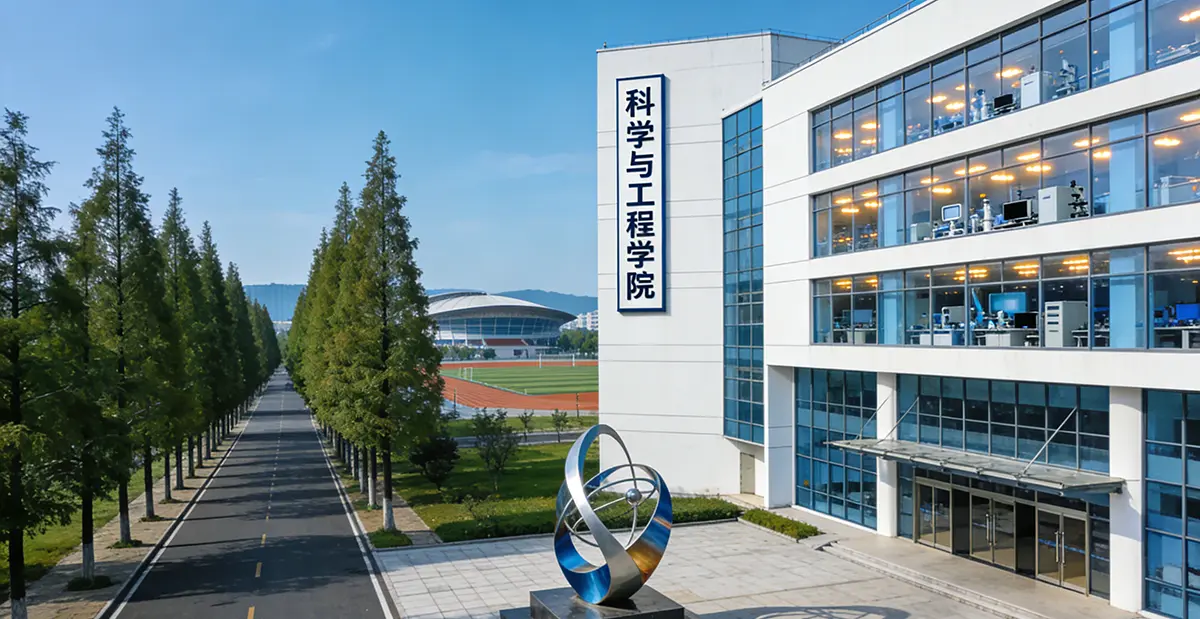
Introduction to Control Science and Engineering Major: The Science of Endowing Systems with Intelligence and Autonomy
The core concept of control science and engineering is feedback. By continuously measuring a system's actual output, comparing it to the desired target, and making corrections based on deviations, systems can operate with precision even in uncertain environments. From thermostats maintaining constant room temperatures to autonomous vehicles navigating complex road conditions, control theory underpins these capabilities.
Its core missions include:
- Modeling: Describing the behavioral patterns of dynamic systems using mathematical language.
- Analysis: Investigating fundamental system properties such as stability, controllability, and observability.
- Synthesis/Design: Developing controllers to achieve desired performance metrics.
- Implementation: Deploying control algorithms in real systems via hardware (e.g., chips, PLCs) and software (e.g., embedded systems).
Core Courses at International Institutions
The curriculum in Control Science and Engineering features a strong mathematical foundation and emphasizes “hardware-software integration”—requiring both deep mathematical skills for modeling and analysis, and solid hardware knowledge for implementation.
| Course Stage | Core Course Examples | Learning Objectives |
| Theoretical Foundation | Automatic Control Theory, Modern Control Theory, Signals and Systems, Linear System Theory | Master core control concepts—feedback—and learn to analyze and design control systems using transfer functions, state-space methods, etc. |
| Core Support | Circuit Theory, Analog/Digital Electronics, Microprocessors and Embedded Systems, Sensors and Detection Technology | Understand the physical implementation foundations of control systems; design circuits and write programs enabling controllers to interact with the real world. |
| Modeling and Decision-Making | System Identification, Optimal Control, Adaptive Control, Robust Control, Operations Research and Optimization | Learn to establish system models from data and design optimal controllers under various constraints. |
| Practice and Application | Fundamentals of Motors and Drives, Process Control Systems, Motion Control Systems, Robotics | Apply control theory to specific industrial scenarios such as motor speed regulation, chemical process control, and robotic motion planning. |
| Frontier Interdisciplinary Areas | Artificial Intelligence, Machine Learning, Computer Vision, Multi-Agent Systems, UAV Principles and Applications | Explore the deep integration of control and AI, researching the realization of autonomous intelligent systems. |
Advanced Study Directions in Control Science and Engineering Major
Control Science and Engineering covers a broad spectrum, with highly diversified research directions at the master's or doctoral level:
- Control Theory and Control Engineering: Delve into cutting-edge control theory, including nonlinear control, distributed control, and networked control, while exploring the mathematical foundations of control algorithms.
- Detection Technology and Automation Devices: Focus on the research and development of novel sensors, precision measurement techniques, intelligent instrumentation, and automation systems.
- Pattern Recognition and Intelligent Systems: A highly interdisciplinary field with computer science and artificial intelligence, studying image recognition, speech processing, machine learning algorithms, and their applications in intelligent systems (e.g., robotics, autonomous driving).
- Navigation, Guidance, and Control: Primarily oriented toward aerospace, researching navigation positioning, trajectory planning, and precision control technologies for aircraft, missiles, and spacecraft.
- Robotics: Investigates motion planning, dynamic control, human-robot interaction, and environmental perception—core components for achieving robotic autonomy.
- Systems Engineering: Emphasizes modeling, optimization, and decision-making for complex large-scale systems (e.g., transportation networks, power grids, supply chains).
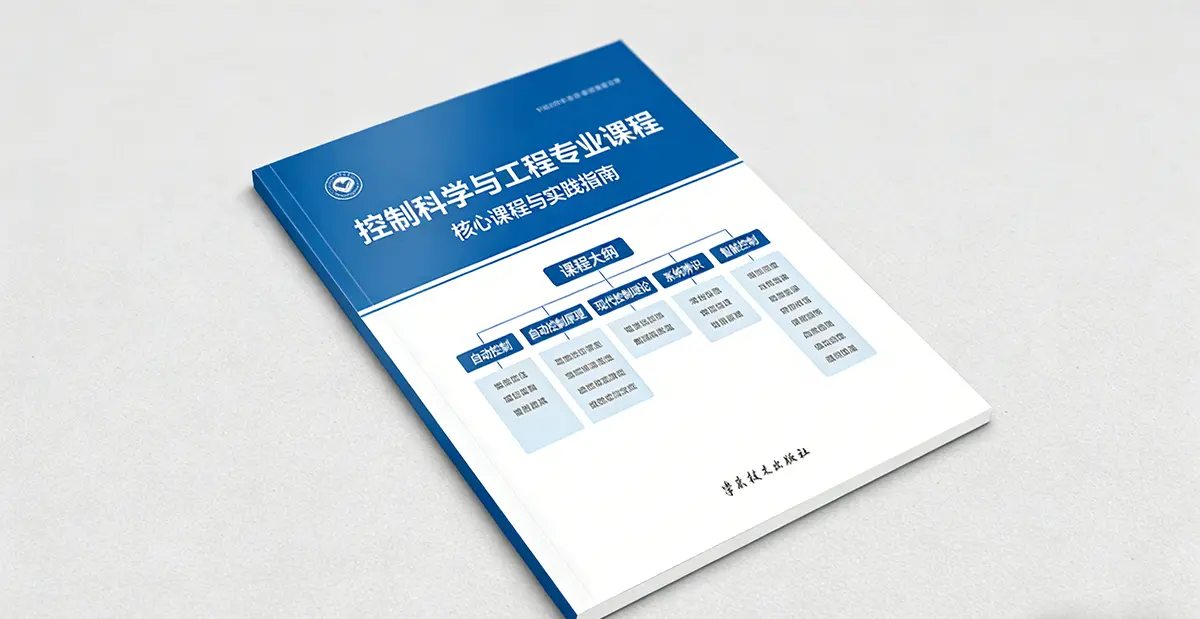
International Career Paths and Positions
Graduates in Control Science and Engineering are highly sought-after professionals in the job market, finding applications across virtually all fields related to automation and intelligent systems.
| Industry Sector | Common Positions | Brief Job Responsibilities |
| Smart Manufacturing & Industrial Automation | Control Engineer, Automation Engineer, Process Control Engineer | Design and debug automated production lines, PLC control systems, and DCS systems for factories to achieve automated industrial processes. |
| Robotics Industry | Robot Control Algorithm Engineer, Motion Planning Engineer, Robot System Integration Engineer | Develop underlying control algorithms for industrial and service robots, enabling smooth, precise movement and task execution. |
| Aerospace and Defense | GNC Engineer, Flight Control Engineer, Guidance System Designer | Design and simulate navigation, guidance, and control systems for aircraft, satellites, and missiles. |
| Automotive Electronics and Autonomous Driving | Autonomous Driving Algorithm Engineer, Vehicle Dynamics Control Engineer, ADAS Engineer | Develop adaptive cruise control, lane-keeping, automatic emergency braking, and higher-level autonomous driving decision-making and control systems. |
| Consumer Electronics & Semiconductors | Servo Control Engineer, Embedded Software Engineer | Design high-precision motion control algorithms for devices like hard drives, optical drives, drones, and smartphone gimbals. |
| Energy & Power Systems | Grid Control Engineer, Renewable Energy Generation Control Engineer | Optimize grid stability and regulate output from wind turbines and photovoltaic inverters. |
| Research & Academia | Researcher, University Professor | Conduct cutting-edge control theory or interdisciplinary applied research in laboratories. |
Global Employment Rate & Development Trends
Employment Rate: Control Science and Engineering maintains exceptionally high and stable employment rates worldwide. Graduates remain scarce resources in the talent market due to the field's high technical barriers and broad applications. Particularly driven by the Industrial 4.0 and AI waves, demand for hybrid talents with control backgrounds and AI expertise continues to surge.
Industry Trends:
- Intelligence and Autonomy: This is the dominant current trend. Traditional control systems are deeply integrating with AI, giving rise to autonomous intelligent systems. Future control systems will no longer passively execute commands but will perceive environments, learn autonomously, and make independent decisions.
- Networking and Collaboration: With the advancement of 5G/6G technology, control systems are becoming increasingly networked. Multi-robot collaboration, vehicle-infrastructure coordination, and drone swarm control have emerged as key research areas.
- Deep Hardware-Software Synergy: Control algorithm implementation increasingly relies on high-performance computing platforms and specialized chips (e.g., FPGA, ASIC). Co-designing hardware and software has become crucial for enhancing system performance.
- Cross-disciplinary Integration with Emerging Fields: Control science and engineering is deeply converging with biomedicine (e.g., smart prosthetics, precision drug delivery), quantum engineering (quantum state control), and socio-economic systems.
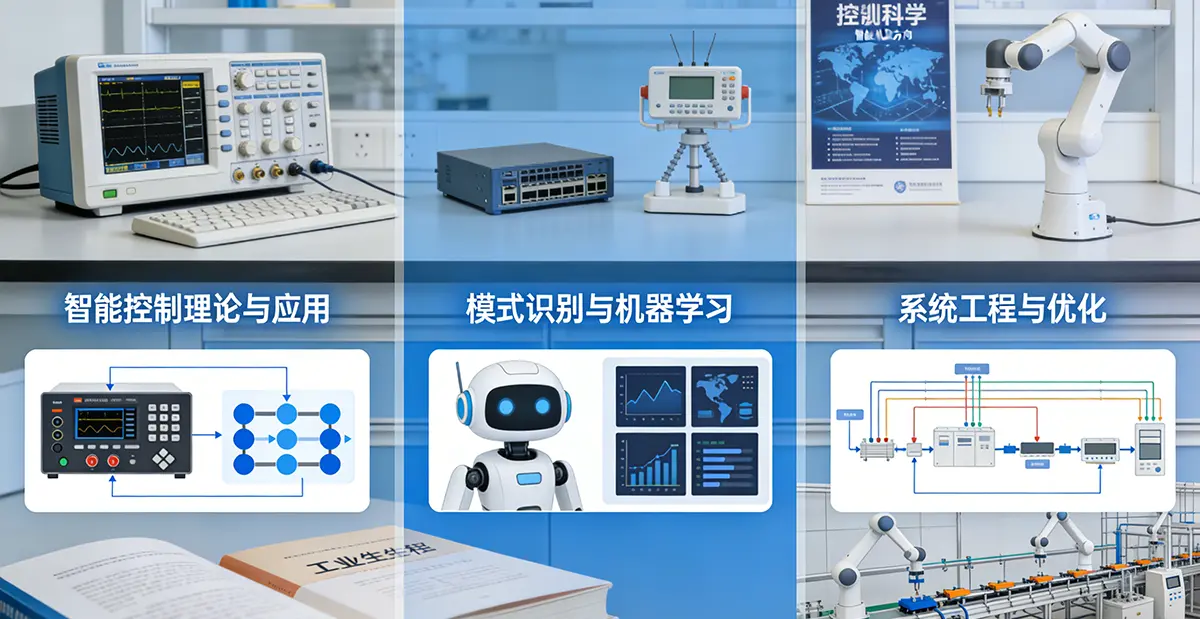
Ideal Candidates and Core Competencies for Control Science and Engineering Major
If you possess the following traits, you may excel in control science and engineering:
- Strong mathematical foundation: Control theory is fundamentally applied mathematics. You must be comfortable with complex differential equations, linear algebra, and optimization theory.
- Systems thinking: You excel at analyzing problems holistically and dynamically, understanding how system components interact.
- Dual aptitude for software and hardware: You enjoy both delving into abstract algorithms and hands-on coding/circuit debugging, deriving satisfaction from seeing your programs bring hardware to life.
- Problem solver: When faced with an unstable system, your first instinct is to analyze the cause and design a solution, not to feel helpless.
Core Competency: Your core value lies in your ability to master dynamic systems—using mathematical tools and engineering methods to make complex, uncertain systems operate stably, precisely, and efficiently according to human intent. You are the one who breathes “life” into machines.
Leading Institutions Worldwide
Control Science and Engineering is typically housed within departments of Electrical Engineering, Mechanical Engineering, or Computer Science. Based on their influence in the field of control(Selected Schools - Listed in no particular order), the world's leading institutions include:
| Country/Region | Representative Institutions |
| United States | Massachusetts Institute of Technology, Stanford University, University of California, Berkeley, University of Illinois at Urbana-Champaign, University of Michigan, Ann Arbor |
| China | Tsinghua University, Harbin Institute of Technology, Zhejiang University, Shanghai Jiao Tong University, Beihang University |
| United Kingdom | Imperial College London, University of Cambridge, University of Oxford, University of Manchester |
| Continental Europe | ETH Zurich, Delft University of Technology, Technical University of Munich, Royal Institute of Technology (KTH) |
| Singapore | National University of Singapore, Nanyang Technological University |
| Canada | University of Toronto, University of Waterloo, University of British Columbia |
Recommended Learning Path for Control Science and Engineering Major
1. Undergraduate Stage: Build a solid foundation in mathematics and physics, and gain hands-on experience
- Core: Master advanced mathematics, linear algebra, and complex analysis. These are the keys to understanding control theory. Simultaneously, gain a solid grasp of automatic control principles, modern control theory, circuits, and embedded systems.
- Practical Application: Go beyond theory. Purchase a development board (e.g., Arduino or STM32) and build a simple control system, such as a self-balancing robot or water temperature control system. Participating in robotics competitions or electronics design contests provides excellent hands-on experience.
2. Master's Level: Specialize in a Focus Area, Enhance Software-Hardware Integration
- Objective: Select a field of interest (e.g., robotics, autonomous driving, process control) for in-depth study. Master one programming language (Python/C++) and one simulation tool (MATLAB/Simulink is essential).
- Advancement: Join a lab to participate in real research projects, or intern at relevant companies (e.g., robotics firms, automotive manufacturers, automation equipment suppliers). Hone your ability to solve complex problems in practical settings.
3. Doctoral & Postdoctoral Stages: Challenging Theoretical Frontiers, Driving Technological Transformation
- Positioning: If you possess a strong interest in mathematics and theory, seek to explore the boundaries of existing control theory, or aspire to achieve breakthroughs in cutting-edge application domains (e.g., drone swarms, brain-computer interfaces), the doctoral stage is the ideal choice.
- Future Path: PhD graduates typically join research institutes at high-tech companies (e.g., Google X, Huawei 2012 Lab), top defense research institutions, or university faculty positions, becoming core forces driving generational technological transformations.
- The Previous Passage:Transportation Engineering(Transp. Eng.)_交通运输工程
- The Next Passage:Mining Engineering(Min. Eng.)_矿业工程

Human Geography Major_Geography(Geog.)_人文地理
The Human Geography Major explores the complex relationships between human activities and space, cul···

Atmospheric Sciences(Atmos. Sci.)_大气科学
Atmospheric science is the study of phenomena and evolutionary patterns within Earth's atmospher···

Earth Sciences(Earth Sci.)_地球科学
The Earth Science major focuses on studying the Earth system and its interactions, providing a scien···
Ocean Sciences(Ocean Sci.)_海洋科学
PbootCMS是全新内核且永久开源免费的PHP企业网站开发建设管理系统,是一套高效、简洁、 强悍的可免费商用的···

