

Astronomy(Astron.)_天文学
Time:2026-05-20 Visits:1
Astronomy Major
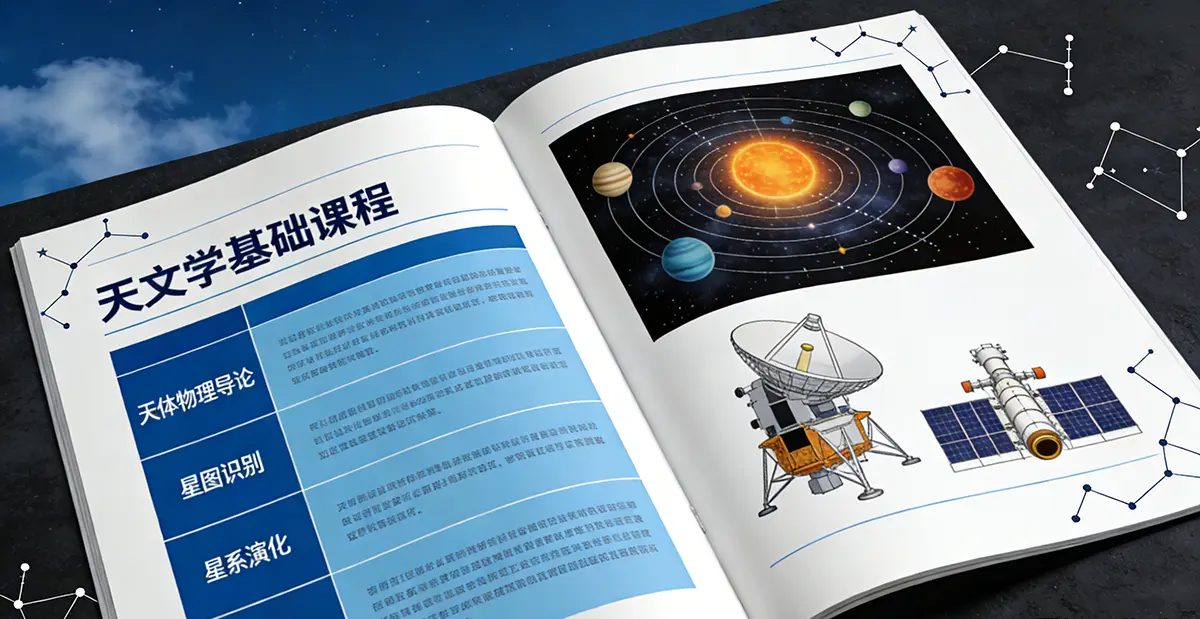
The Astronomy Major is a foundational natural science studying the structure, motion, and evolution of celestial bodies in the universe. Integrating physics and mathematics, it explores mysteries from the solar system to the entire cosmos through observation and theoretical modeling. This major cultivates top-tier quantitative reasoning, data processing, and scientific modeling skills, forming a cornerstone for cutting-edge research and high-tech industries. This article systematically outlines the core curriculum, advanced study pathways, diverse career prospects, and leading global institutions for the Astronomy Major.

1. Introduction to the Astronomy Major
The Astronomy Major is a foundational natural science dedicated to studying the structure, properties, motion, and evolutionary laws of celestial bodies within the universe. Leveraging theories and methodologies from physics, mathematics, and chemistry, it explores the origin, composition, and destiny of everything from our solar system and stars to galaxies and the cosmos at large, through both observation and theoretical modeling. As one of the oldest scientific disciplines, the Astronomy Major also represents a continuously evolving frontier of exploration, perpetually challenging the boundaries of human understanding of the universe and driving the development of cutting-edge technologies.
2. Core Curriculum of the Astronomy Major
| Module Category | Core Courses |
| Physics & Mathematics Foundations | General Physics (Mechanics, Thermodynamics, Electromagnetism, Optics, Atomic Physics), Theoretical Mechanics, Electrodynamics, Thermodynamics & Statistical Physics, Quantum Mechanics, Advanced Mathematics, Mathematical Methods in Physics |
| Astronomy Core | General Astronomy, Celestial Mechanics, Astrophysics, Stellar Structure & Evolution, Galactic Astronomy, Cosmology |
| Observational & Experimental Techniques | Observational Astrophysics, Astronomical Observation Techniques & Methods, Optical & Infrared Astronomical Instrumentation, Radio Astronomy, Data Processing & Astronomical Software, Observatory Internship |
| Computational Methods | Computational Physics, Numerical Analysis, Scientific Programming (Python/IDL/C++), Astronomical Data Processing & Visualization |
| Special Topics Electives | Planetary Science, High-Energy Astrophysics, Interstellar Medium, Stellar Atmospheres, Fundamentals of General Relativity |
3. Advanced Study Pathways for the Astronomy Major
Pursuing a Master’s or PhD in Astronomy or Astrophysics is the standard and most common path for graduates of the Astronomy Major aiming for a career in academic research. The strong foundation in physics modeling and data analysis also enables successful transition into a PhD in Physics in fields like condensed matter or particle physics. Other advanced pathways for the Astronomy Major include Space Science/Planetary Science, focusing on solar system exploration; Data Science, applying analytical skills to finance or tech; and Optics/Instrumentation Science, specializing in the design of advanced astronomical and optical equipment.
4. Career Paths for Astronomy Major
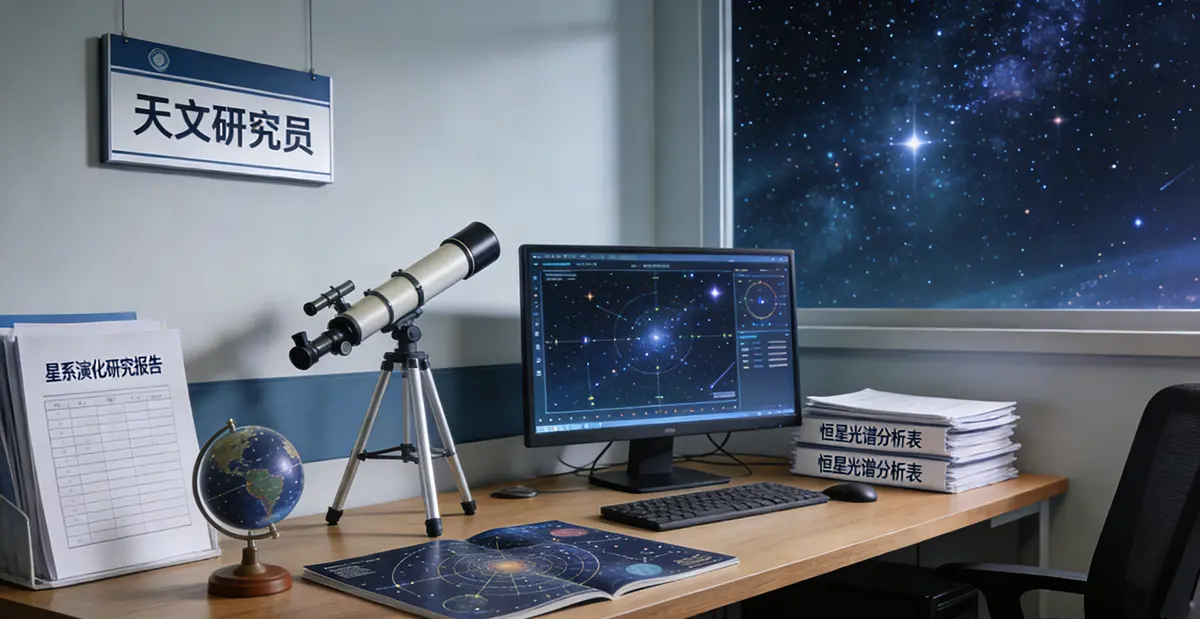
Given its highly foundational and research-oriented nature, direct entry-level positions for bachelor’s graduates in astronomy are rare; most enter specialized fields through advanced study. The core path is in Academia and Research, becoming professors, researchers at observatories, or scientists within national space agencies. However, the powerful quantitative and programming skills developed in the Astronomy Major are highly valued in High-Tech Industries, leading to careers as data scientists, machine learning engineers, quantitative researchers in finance, or engineers in aerospace and defense. The Astronomy Major also leads to roles in Education and Science Communication as teachers or museum educators, and in Professional Services like tech policy or patent law.
5. Employment and Industry Trends for the Astronomy Major
The Astronomy Major is an “elite, research-intensive” discipline where undergraduate employment rates are less indicative than graduate school placement and research output. Career paths are concentrated, with intense competition for academic roles offering modest initial salaries, while high-tech and finance sectors offer competitive pay for those with strong transferable skills.
Key industry trends shaping opportunities for Astronomy Majors include: the era of multi-messenger astronomy integrating diverse data streams; the big data revolution driven by next-generation observatories (e.g., SKA, LSST), increasing demand for data science skills; the commercial and governmental space exploration boom; the growing translational potential of astronomical techniques in other fields; and the deepening synergy between cosmology and fundamental physics.
6. Leading Global Institutions Offering the Astronomy Major
The Astronomy Major is a flagship foundational discipline at the world’s top comprehensive universities and institutes of technology.
| Country/Region | Representative Institutions (Leading in Astronomy/Astrophysics) |
| United States | California Institute of Technology, Princeton University, MIT, Harvard University, University of California, Berkeley |
| United Kingdom | University of Cambridge, University of Oxford, Imperial College London |
| Germany | Heidelberg University, Ludwig Maximilian University of Munich (close collaboration with Max Planck Society) |
| Other Countries | ETH Zurich (Switzerland), Perimeter Institute (affiliated institutions, Canada), Australian National University |
| China | Nanjing University, University of Science and Technology of China, Peking University, Tsinghua University, Beijing Normal University |
DisciplineMajor Recommendations
Ideal Candidates for the Astronomy Major:
This major is ideal for individuals with an almost instinctive curiosity and passion for the vastness and mysteries of the cosmos, deriving deep intrinsic satisfaction from this pursuit. They must possess top-tier aptitude in mathematics and physics, exceptional perseverance, and resilience. They thrive on abstract thinking, theoretical derivation, and modeling complex problems, and are prepared to accept the high uncertainty and long training arc characteristic of an academic career.
Core Competencies of the Astronomy Major:
The Astronomy Major cultivates strong physical intuition and a rigorous foundation in theoretical physics. It develops exceptional proficiency in handling complex datasets and executing large-scale numerical simulations. Graduates gain skilled scientific programming and algorithm implementation abilities, alongside outstanding academic writing and international collaboration skills, essential for modern astrophysical research.
Learning Recommendations for Astronomy Majors:
Strive for excellence in mathematics and physics courses, as this forms the critical foundation for graduate school applications. Engage deeply in research as early as possible (e.g., sophomore/junior year) by joining a professor’s research group, aiming for publication or independent project experience. Master at least one scientific programming language (Python is highly recommended) and become proficient with standard astronomical software and databases. Seek practical observational experience through internships at professional observatories. Even for those committed to research, consciously develop transferable data science skills to maintain career flexibility. Actively cultivate an international perspective by following major global research collaborations and seeking opportunities for overseas research experience.
*Note: Program classification may vary by institution; always verify the specific structure at your chosen university.*
- The Previous Passage:Mathematics(Math)_数学
- The Next Passage:Physics(Phys.)_物理学

Human Geography Major_Geography(Geog.)_人文地理
The Human Geography Major explores the complex relationships between human activities and space, cul···

Atmospheric Sciences(Atmos. Sci.)_大气科学
Atmospheric science is the study of phenomena and evolutionary patterns within Earth's atmospher···
Earth Sciences(Earth Sci.)_地球科学
The Earth Science major focuses on studying the Earth system and its interactions, providing a scien···
Ocean Sciences(Ocean Sci.)_海洋科学
PbootCMS是全新内核且永久开源免费的PHP企业网站开发建设管理系统,是一套高效、简洁、 强悍的可免费商用的···

