

Water Resources Engineering(Water Resour. Eng.)_水资源工程
Time:2026-05-22 Visits:2
Water Resources Engineering Major
Water Resources Engineering Major is a core discipline addressing the global water crisis and supporting sustainable development. In 2026, amid intensifying climate change and water scarcity, it is entering a strategic window of opportunity for profound transformation—shifting from traditional water conservancy toward digitalization, intelligent systems, and ecological approaches.
Introduction to Water Resources Engineering Major
Water Resources Engineering is a comprehensive engineering discipline that studies the survey, assessment, development, utilization, protection, and management of water resources, as well as the prevention and control of water-related disasters. Grounded in hydrology, hydraulics, and environmental science, it employs both engineering methods and non-engineering technologies to achieve sustainable water resource utilization and effectively safeguard water security.
If the Earth's water cycle were likened to a vast living system, water resources engineers would be the physicians diagnosing and prescribing solutions for this system—calculating how much runoff rainfall generates, designing reservoirs and pipelines to channel water flow, assessing groundwater sustainability, and restoring rivers through pollution remediation. The core mission of this discipline is “maximizing the value of every drop of water while keeping water disasters at bay.”
Professional Characteristics from an International Perspective: Water resources engineering prioritizes different focuses in arid/semi-arid nations (e.g., Australia, Middle East), high-rainfall/flood-prone regions (e.g., Netherlands, Bangladesh), and areas with complex transboundary rivers (e.g., Amazon Basin). Developed nations emphasize precision management, ecological restoration, and digitalization; developing countries focus on infrastructure construction and water supply security; while international organizations concentrate on transboundary coordination and capacity building. This is a highly internationalized discipline closely tied to national strategies and public welfare.
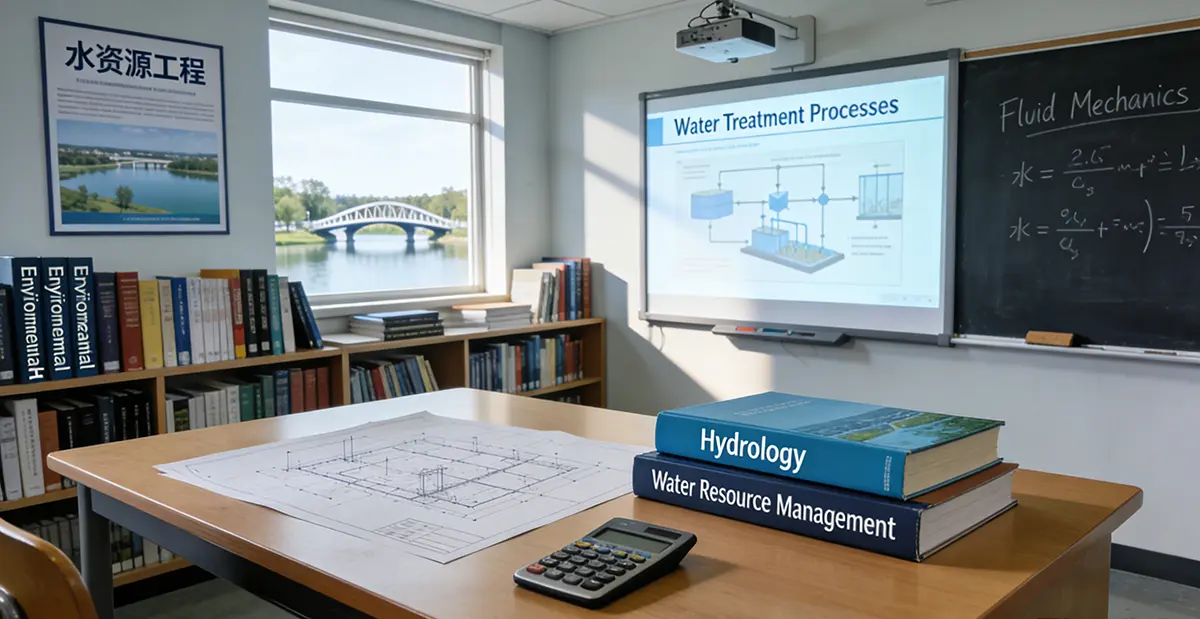
Core Courses at International Institutions
Water Resources Engineering programs at top global universities emphasize “integrating theory with practice, balancing engineering with management,” typically adopting a modular structure of “core fundamentals + specialized tracks + comprehensive practice.”
Core Fundamentals Module:
- Mathematical and Scientific Foundations: Advanced Mathematics, Numerical Methods, Fluid Mechanics, Hydraulics, Environmental Chemistry
- Earth System Fundamentals: Principles of Hydrology, Geology Fundamentals, Meteorology, Hydrogeology
Core Modules for Water Resources Engineering:
| Course Category | Representative Courses | Example Institutions |
| Hydrology | Engineering Hydrology, Hydrological Surveying & Statistics, Groundwater Hydrology | University of Melbourne, University of Stuttgart |
| Hydraulics | Civil Hydraulics, Open Channel Hydraulics, Pipe Flow & Network Hydraulics | University of Melbourne, Rensselaer Polytechnic Institute |
| Water Resources Management | Water Resources Utilization, Water and Wastewater Management, Water-Sensitive Urban Design | University of Melbourne, University of Stuttgart |
| Water Environment | Water Environmental Protection, Water Quality Management, Water Environmental Chemistry | Yangtze University |
| Geotechnical & Geology | Engineering Site Characterization, Groundwater Hydrodynamics, Hydrogeological Investigation | University of Melbourne, Yangtze University |
Featured Frontier Modules (Using the University of Stuttgart's WAREM Program as an Example):
- Hydrological System Modeling: Integrated Watershed Management, Hydrological Modeling & Stochastic Simulation
- Groundwater & Environmental Remediation: Groundwater Management, Pollutant Migration Modeling
- Industrial Water & Wastewater Technologies: Industrial Water Treatment, Recycling Technologies
- Transboundary Water Resources Management: International River Coordination Mechanisms, Water Policy & Regulations
Integrated Practice Modules:
- Design Projects: Interdisciplinary engineering design, e.g., water supply system design, flood control structure design
- Laboratory Practice: Hydraulic model experiments, water quality analysis experiments
- Industry Internships: Practical experience through collaborations with water authorities, consulting firms, and international organizations
- Comprehensive Thesis/Project: 1-2 semester research topics addressing real-world water resource challenges
Advanced Study Pathways in Water Resources Engineering Major
Research directions at the master's and doctoral levels are highly specialized and cutting-edge, primarily covering:
Traditional Core Areas:
- Hydrological Processes and Modeling: Rainfall-runoff processes, land surface processes, hydrological model development, climate change impacts
- Groundwater Science and Engineering: Groundwater hydrodynamics, groundwater pollution and remediation, geothermal hydrogeology
- Hydraulics and River Dynamics: Open-channel unsteady flow, sediment transport, riverbed evolution, dam-break floods
- Water Resources Systems Analysis: Optimal water resource allocation, reservoir cluster scheduling, water resources planning
Emerging Frontier Areas (Intelligent & Ecological):
- Smart Water Management & Big Data: AI-assisted hydrological forecasting, digital twin basins, remote sensing hydrology, hydrological big data analysis
- Water Ecology and Environment: Eutrophication control, ecological flow, aquatic habitat restoration, wetland rehabilitation
- Sponge Cities and Green Infrastructure: Urban stormwater management, low impact development, permeable paving, green roofs
- Water-Energy-Food Nexus: Tripartite optimization, regional sustainable development
Interdisciplinary Directions:
- Climate Change Adaptation: Impacts of climate change on the hydrological cycle, adaptive strategies, extreme hydrological events
- Water Policy and Water Economics: Water rights systems, water pricing mechanisms, resolution of transboundary water disputes
- Environmental Fluid Mechanics: Pollutant transport and dispersion, thermal pollution, saline intrusion
- Polar and Cold Region Hydrology: Snowmelt and glacial runoff, permafrost hydrology, cold region water cycle
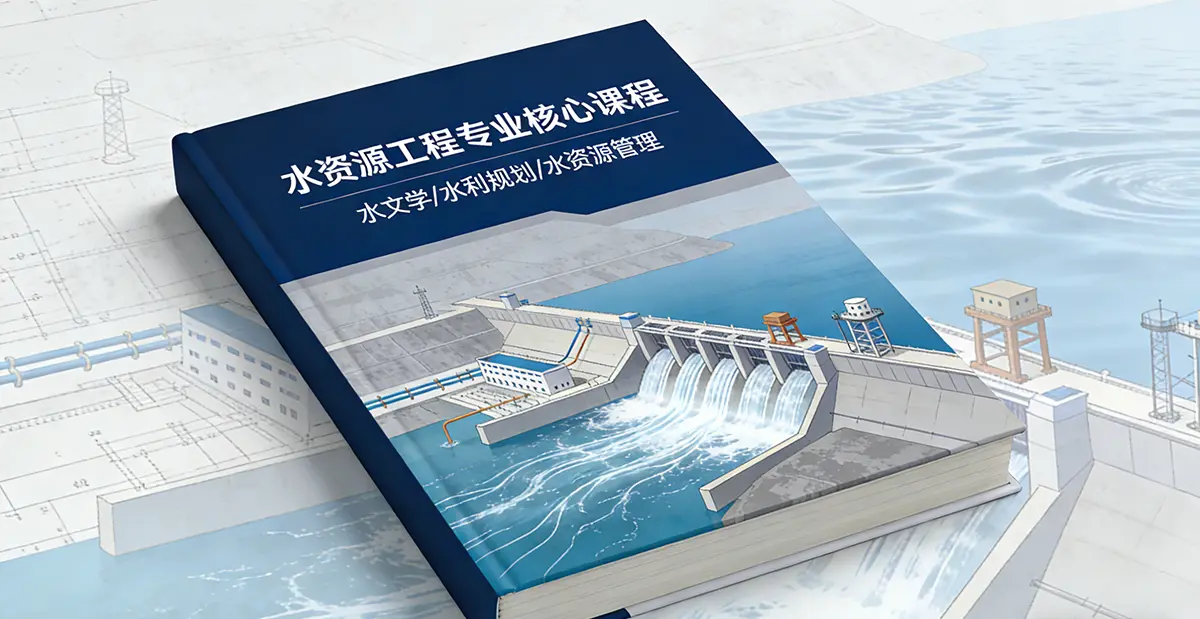
International Career Pathways and Positions
Graduates in Water Resources Engineering are in high demand globally, with career opportunities spanning government agencies, corporations, international organizations, and research institutions.
Core Employment Sectors:
| Sector | Typical Employers | Representative Positions |
| Government/Public Sector | National water/environment ministries, river basin authorities, hydrological agencies | Hydrologist, Water Resources Planner, Water Policy Analyst |
| Engineering Consultancies | AECOM, Jacobs, Arcadis, Mott MacDonald | Water Resources Consultant, Hydraulic Engineer, Hydraulic Designer |
| International Development Organizations | World Bank, UNDP, SPC, ACTO | Water Project Engineer, Water Resources Specialist, Technical Advisor |
| Utilities | Water Groups, Power Companies, Irrigation District Authorities | Water Supply Engineer, Water Treatment Specialist, Operations Manager |
| Research & Education Institutions | Universities, Research Institutes | Researcher, Postdoctoral Fellow, University Lecturer |
| High-Tech Enterprises | Hydrological Instrumentation Companies, Water Information Software Firms, Environmental Tech Startups | Hydrological Model Development, Water Information Engineer, Data Analyst |
Representative Global Positions (Based on Latest Job Postings):
1. Water Project Engineer (SPC, Vanuatu): Responsible for climate-resilient water infrastructure development, updating engineering standards, and training local communities in operations & maintenance. Requires 7-8 years of experience, proficiency in GIS/CAD.
2. Water Resources Specialist (Amazon Cooperation Treaty Organization ACTO, Brazil): Conduct hydrological monitoring at Amazon regional observatories; develop integrated water resources management platforms. Requires R/Python programming and database experience. Monthly salary: R$15,000 + benefits
3. Hydrologist (National Hydrological Services/Consulting Firms): Collect and analyze hydrological data; perform flood forecasting and water resource assessments. Proficient in hydrological modeling
4. Water Resources Planner (Basin Management Agencies): Develop integrated basin plans, water allocation schemes, and drought contingency plans
5. Hydraulic Engineer (Design Institutes/Consulting Firms): Design hydraulic structures including reservoirs, canals, pumping stations, and flood embankments
6. Groundwater Specialist (Environmental Agencies/Mining Companies): Assess groundwater resources, design monitoring networks, and remediate contaminated sites
7. Climate Adaptation Consultant (International Development Agencies): Assess climate change impacts on water resources and design adaptation measures
Salary Levels (International Reference):
- United States: Water resources engineers start at approximately $60,000–75,000, with senior positions reaching $100,000+.
- Canada: Alberta offers strong employment prospects for civil engineers (including water resources), with 75% year-round work and 86% requiring a bachelor's degree or higher.
- Europe: German engineers start at approximately €45,000–55,000, with positions in international organizations offering greater competitiveness
- International Organizations: SPC Vanuatu positions offer monthly salaries of approximately $4,270–5,274, tax-free + housing allowance + international benefits
Global Employment Rates & Industry Trends
Employment Rates & Talent Shortages:
- UK Water Sector 2025 Report reveals 49% of engineers worry about talent shortages (up sharply from 26% in 2024), 66% consider career changes, and 23% plan to retire within 5 years
- Alberta, Canada: Civil engineers (including water resources) face strong employment prospects from 2024-2026, with new positions driven by job growth and retirement replacements
- China: Yangtze University's Hydrology and Water Resources Engineering program maintains over 95% employment rates annually. The 2025 cohort achieved a 68.8% postgraduate admission rate, with graduates primarily joining hydrological bureaus, geological teams, and state-owned water conservancy enterprises
Industry Development Trends:
1. Climate Change Exacerbates Supply-Demand Tensions: Frequent extreme hydrological events (floods, droughts) drive surging demand for hydrological forecasting, disaster early warning, and adaptive planning. The latest IPCC report highlights water resources as a core climate risk domain.
2. Digital and Intelligent Revolution: Digital twin river basins, AI flood forecasting, remote sensing hydrology, and hydrological big data are reshaping the industry. Approximately 45% of water management institutions have adopted AI and digital twin technologies. Programming (R/Python) and GIS have become essential skills.
3. Green Infrastructure and Ecological Restoration: Shifting from “gray” hard engineering to ‘green’ soft measures. Sponge cities, rain gardens, wetland restoration, and ecological revetments are emerging investment hotspots. Urban water management is transitioning from “rapid drainage” to “retention and infiltration.”
4. Water-Energy-Food Nexus Intensifies: Conflicts escalate between agricultural water use (70% share), energy production water demand, and ecological water needs. Cross-sectoral coordination and optimization emerge as research and policy priorities.
5. Transboundary Water Cooperation and Governance: 263 international rivers globally affect 40% of the population. Growing demands for resolving transboundary water disputes, joint monitoring, and data sharing fuel robust talent needs within international organizations.
6. “Perfect Talent Storm”: A UK report describes the water sector's talent shortage as a “perfect storm”—retirement wave + career shift wave + insufficient new entrants—severely threatening AMP8 asset investment delivery capacity. The industry urgently needs to tell compelling “water resource stories” to attract young talent.
Ideal Candidates for Water Resources Engineering Major
If you possess the following traits, you'll gain a competitive edge internationally:
1. Strong mathematical and physical foundations: Requires solid math and physics skills, especially in fluid mechanics and hydrology. Basic understanding of chemistry and geography is also essential.
2. Systems thinking and engineering perspective: Ability to analyze water issues at basin, regional, and global scales, understanding the coupling between natural, social, and engineering systems.
3. Commitment to Environmental Sustainability: Concerned about water scarcity, pollution, and climate change, with a desire to contribute to society through your expertise.
4. Data Analysis and Programming Skills: Proficiency in data processing and programming (R/Python) is essential for hydrological modeling, big data analysis, and AI applications.
5. International Perspective and Adaptability: Water is a global issue requiring knowledge of national water policies, technical standards, and market mechanisms; fluent English is a fundamental requirement.
6. Problem-Solving and Practical Skills: Willingness to engage in fieldwork, construction sites, and community frontlines to translate theoretical knowledge into practical solutions.
7. Cross-Cultural Communication Skills: Essential for effective collaboration with governments, communities, and multinational colleagues—particularly within international organizations and development sectors.
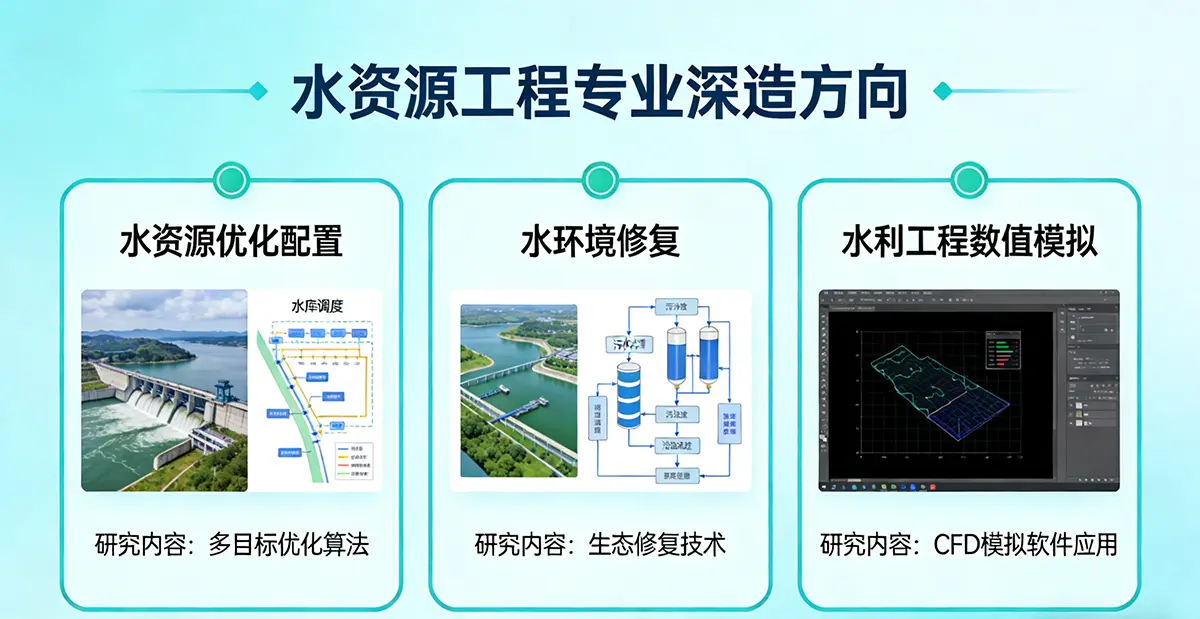
Core Competencies of Water Resources Engineering Major
The core strength of this discipline lies in its multi-scale systems capability spanning from “a single drop of water” to “entire river basins”:
Systematic Understanding of the Hydrological Cycle: Deep comprehension of the interconversion patterns between precipitation, runoff, evapotranspiration, and groundwater, enabling basin-scale analysis of all water cycle components.
Hydraulic Modeling and Analysis: Proficient application of hydraulic principles to analyze flow dynamics in pipelines, rivers, and groundwater, utilizing specialized software like HEC-RAS and MIKE for simulation.
Water Resource System Optimization: Ability to employ systems analysis methods (optimization, simulation, multi-criteria decision-making) for planning, scheduling, and managing complex water systems.
Data Science and Programming Skills: Proficient in R/Python for hydrological data processing, statistical analysis, and model development; skilled in GIS for spatial analysis.
Engineering Design and Code Application Skills: Mastery of design methodologies for hydraulic structures including water supply, drainage, and flood control; familiarity with international engineering codes and standards.
Policy and Economic Evaluation Capabilities: Understanding water rights, water pricing, and water market mechanisms; capable of evaluating water resource projects from economic, social, and environmental dimensions.
Multidisciplinary Integration and Innovation: Capable of integrating cutting-edge knowledge in AI, remote sensing, ecology, economics, and other fields with water engineering to solve complex water challenges.
Major Global Institutions Offering Programs
(partial list - listed in no particular order)
1. China
Hohai University, Tsinghua University, Wuhan University, Northwest A&F University, Beijing Normal University, China University of Geosciences (Wuhan), Sun Yat-sen University, China Agricultural University, Nanjing University, Southern University of Science and Technology, Tianjin University, Sichuan University, Tongji University, Zhejiang University, Harbin Institute of Technology, Xi'an University of Technology, Huazhong University of Science and Technology, Jilin University, Zhengzhou University
2. United Kingdom
Imperial College London, University of Bristol
3. Switzerland
École Polytechnique Fédérale de Lausanne (EPFL)
4. United States
Texas A&M University, University of California, Davis, University of Illinois at Urbana-Champaign, University of California, Berkeley, University of Colorado Boulder, University of Arizona, Purdue University-West Lafayette, Princeton University, Cornell University, Stanford University, Georgia Institute of Technology, Pennsylvania State University, University of California-Los Angeles, University of Florida
5. Netherlands
Delft University of Technology, Utrecht University
6. Australia
University of New South Wales
7. Austria
Vienna University of Technology
8. Europe
University of Stuttgart (Germany), University of Twente (Netherlands), University of Exeter (UK), University of Leeds (UK)
9. Asia
National University of Singapore, Nanyang Technological University, The Hong Kong Polytechnic University, The University of Hong Kong
Recommended Learning Path for Water Resources Engineering Major
1. Build a Solid Foundation (Undergraduate Stage): Focus on core subjects like mathematics, mechanics, and geology. Master advanced mathematics, fluid mechanics, hydraulics, hydrology principles, and geology—these form the bedrock for all subsequent specialized courses. Simultaneously, become proficient in Python/R programming and GIS tools to lay the groundwork for future hydrological modeling and data analysis.
2. Build Professional Framework (Mid-to-Late Undergraduate): Delve into core courses like Engineering Hydrology, Groundwater Hydrodynamics, Water Resources Utilization, and Water Environmental Protection. Select a specialization based on your interests (e.g., hydrological modeling, groundwater, water environment). Actively participate in course design projects and fieldwork, and pursue internships at hydrological bureaus, design institutes, or environmental protection companies.
3. Focus and Deepen (Master's Stage): Select a research direction aligned with your interests, such as hydrological modeling, groundwater, smart water management, or water policy. Actively seek internships in industry, particularly at consulting firms, international organizations, or research institutions. For your master's thesis, prioritize topics closely linked to industry applications or cutting-edge research. Note application deadlines for international programs like the University of Stuttgart's WAREM (typically February).
4. Future Planning and Internationalization (Throughout):
- Language and Perspective: Obtain IELTS or TOEFL certification. Water resources is a highly international field where fluent English is essential. Learning the local language is beneficial if targeting German-, French-, or Spanish-speaking regions.
- Professional Certification: Research engineer certification systems in target countries, such as UK Chartered Engineer, US Professional Engineer (PE), or Canadian Professional Engineer (P.Eng). International organization positions typically require a master's degree or higher plus several years of experience.
- Skill Map: Identify industry needs and strategically develop complementary skills. Hydrological modeling requires proficiency in specialized software like HEC-RAS, MIKE, or SWAT; data analysis demands expertise in R/Python hydrology packages; GIS roles require proficiency in ArcGIS/QGIS.
- Monitor global water issues: Stay informed about UN-Water mechanisms, World Water Forums, IPCC reports, and other international water topics to track cutting-edge developments.
- Gain international exposure: Pursue international exchanges, overseas lab research, or internships at international organizations. UN agencies, the World Bank, and national development agencies frequently recruit interns.
- The Previous Passage:Food Science and Engineering(Food Sci. Eng.)_食品科学与工程
- The Next Passage:Communication Engineering(Commun. Eng.)_通信工程
Human Geography Major_Geography(Geog.)_人文地理
The Human Geography Major explores the complex relationships between human activities and space, cul···

Atmospheric Sciences(Atmos. Sci.)_大气科学
Atmospheric science is the study of phenomena and evolutionary patterns within Earth's atmospher···
Earth Sciences(Earth Sci.)_地球科学
The Earth Science major focuses on studying the Earth system and its interactions, providing a scien···
Ocean Sciences(Ocean Sci.)_海洋科学
PbootCMS是全新内核且永久开源免费的PHP企业网站开发建设管理系统,是一套高效、简洁、 强悍的可免费商用的···

