

Transportation Engineering(Transp. Eng.)_交通运输工程
Time:2026-04-12 Visits:2
Transportation Engineering
Similar to how chemical engineering focuses on “processes,” transportation engineering concentrates on “systems.” It is a quintessential interdisciplinary field whose core objective is to achieve safe, efficient, convenient, and environmentally sustainable movement of people and goods through the scientific planning, design, and operation of transportation infrastructure and service systems.
If chemical engineers are the “magicians” of production processes, then transportation engineers are the ‘planners’ and “designers” of society's arteries.
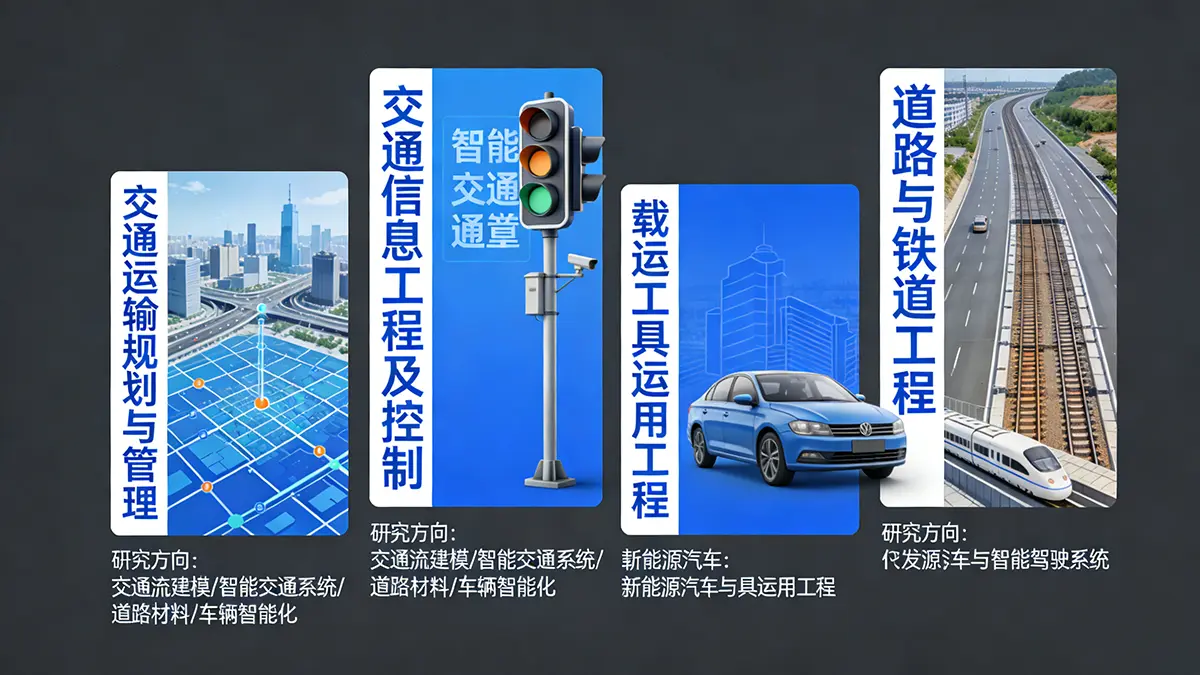
Transportation Engineering Overview: The Arterial System of Socioeconomics
Transportation engineering extends beyond individual vehicles (cars, planes, ships) to encompass the integrated system comprising these vehicles, infrastructure (roads, bridges, ports, airports), and regulations (traffic laws, signal systems).
Its core missions include:
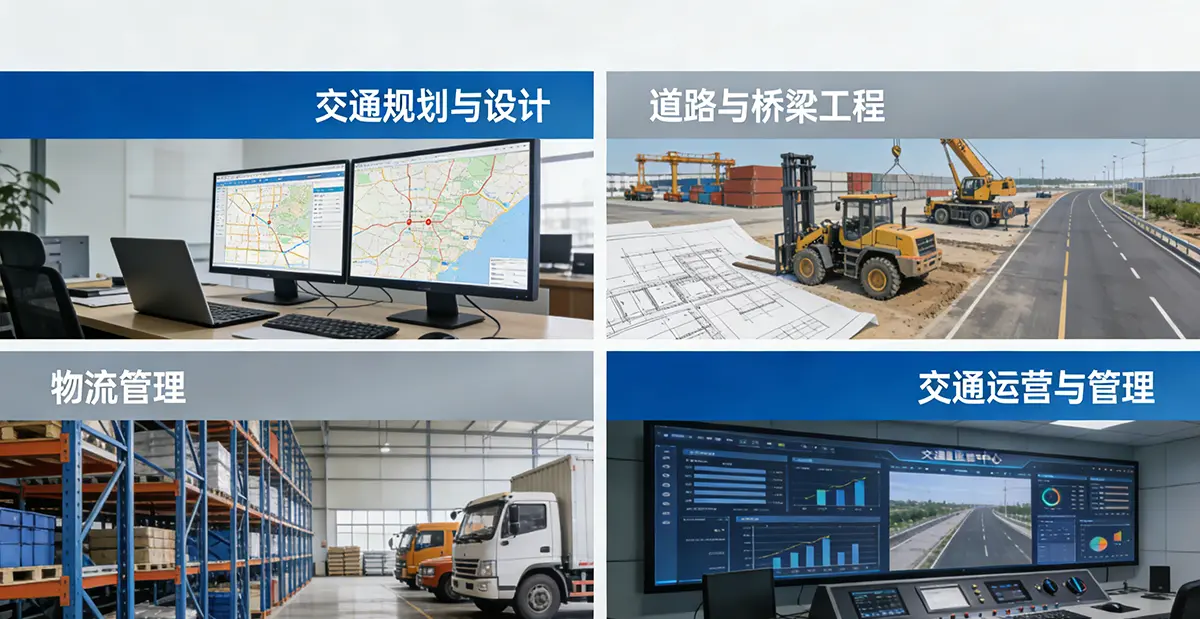
Planning & Design: Forecasting future traffic demands to plan urban road networks, subway lines, and high-speed rail systems.
Operation and Management: Optimizing traffic signal timing through Intelligent Transportation Systems (ITS), managing congestion, and ensuring traffic safety.
Infrastructure Engineering: Designing and maintaining the materials and structures of physical facilities like roads, railways, and runways.
Logistics and Supply Chain: Optimizing cargo transportation routes and methods to reduce costs and improve timeliness.
Core Courses at International Institutions
The transportation engineering curriculum balances macro-level planning with micro-level design, emphasizing modeling analysis and system optimization.
| Course Phase | Core Course Examples | Learning Objectives |
| Core Foundations | Traffic Flow Theory, Transportation Engineering, Transport Economics, Probability and Statistics | Master fundamental principles of transportation system operation; learn to analyze problems through mathematical and economic lenses. |
| Planning and Design | Transportation Planning, Road Geometric Design, Urban Rail Transit Planning and Design, Airport Planning and Design | Learn to plan transportation networks from scratch and execute detailed physical designs. |
| Operations and Management | Traffic Management and Control, Intelligent Transportation Systems (ITS), Traffic Safety Engineering, Public Transportation Operations | Master managing and optimizing existing systems to enhance efficiency and safety. |
| Tools and Practice | Transportation Simulation Software (VISSIM, TransCAD), Geographic Information Systems (GIS), Data Analysis and Programming (Python/R) | Utilize specialized software to simulate traffic scenarios and process/analyze massive transportation datasets. |
| Logistics and Supply Chain | Supply Chain Management, Logistics System Planning, Freight Forwarding and Multimodal Transport | Focus on efficient goods movement and understand global supply chain operations. |
Advanced Study Pathways in Transportation Engineering Major
Undergraduate studies cover broad foundations, while master's or doctoral programs allow specialization in:
- Transportation Planning and Policy: Focuses on macro-level land use-transport interactions, travel demand forecasting models, and economic/social impact assessments of transportation policies.
- Transportation Engineering and Management: Focuses on micro-level traffic flow theory, intersection design and signal control, traffic simulation, and road safety improvements.
- Intelligent Transportation Systems (ITS): A highly interdisciplinary field with strong ties to computer science and communications, studying vehicle-infrastructure coordination, autonomous driving, traffic big data analysis, and mobility services.
- Infrastructure Engineering and Management: Emphasizes materials science, structural design, maintenance management, and full-life-cycle analysis for transportation facilities like roads, bridges, and airport pavements.
- Logistics and Freight Systems: Focuses on applying operations research to logistics, including vehicle route optimization, warehouse layout, multimodal network design, and reverse logistics.
- Rail Transportation Engineering: Emphasizes system integration, traction power supply, line standards, and operational safety for high-speed rail and metro systems.
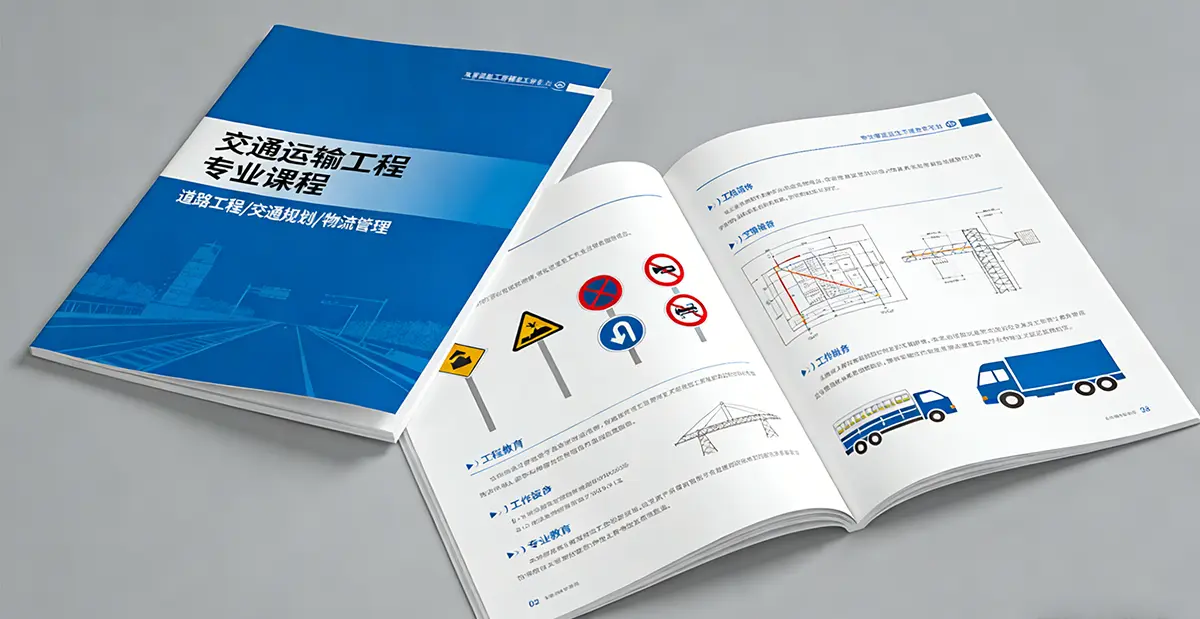
International Career Paths and Positions
Graduates in Transportation Engineering enjoy broad employment prospects, spanning traditional government agencies and design institutes to tech companies and consulting firms in the digital age.
| Industry Sector | Common Positions | Brief Job Responsibilities |
| Government Agencies/Public Institutions | Transportation Planner, Transportation Engineer, Project Approval & Management | Responsible for urban transportation planning, project approvals, and policy research within transportation bureaus, planning departments, or affiliated institutions. |
| Design & Consulting Firms | Transportation Design Engineer, Traffic Modeling Analyst, Traffic Impact Assessment Consultant | At multinational design firms like AECOM, ARUP, or WSP, undertake road design, signal optimization, or provide traffic impact assessments for developers. |
| Technology & Internet Companies | Mobility Product Managers, Map Data Engineers, Algorithm Engineers | At companies like Didi, Uber, Google Maps, and AutoNavi, utilize big data to optimize dispatch algorithms, plan navigation routes, and predict supply-demand patterns. |
| Logistics & Transportation Enterprises | Logistics Planners, Transportation Dispatchers, Network Optimization Analysts | At companies like SF Express, DHL, and Maersk, optimize warehouse layouts, design transportation routes, and enhance supply chain efficiency. |
| Automotive and Equipment Manufacturers | Autonomous Driving Engineer, Vehicle-Road Coordination System Engineer, Smart Cockpit Experience Designer | At companies like Tesla, Huawei, and Bosch, participate in R&D and testing of future mobility technologies. |
| Research and Educational Institutions | Researcher, University Professor | Conduct cutting-edge theoretical research at universities or institutes, nurturing the next generation of engineers. |
Global Employment Rates and Trends
Employment Rate: Transportation engineering maintains stable and high employment rates worldwide. Its relevance to urban development, international trade, and public safety makes demand relatively resilient to economic cycles. The dual drivers of accelerated urbanization and digital transformation ensure a persistent shortage of specialized talent.
Industry Trends:
- Automation: Autonomous driving represents a disruptive force reshaping the industry. This requires not only vehicle technology but also redesigning traffic regulations, road infrastructure, and insurance systems—creating vast innovation opportunities for transportation engineers.
- Electrification: The proliferation of electric vehicles and buses demands new approaches to charging infrastructure planning, grid load management, and urban energy distribution.
- Mobility-as-a-Service (MaaS): Shifting from vehicle ownership to purchasing mobility services. Integrating buses, subways, shared bikes, and ride-hailing into seamless, one-stop travel experiences is a key focus.
- Big Data and Artificial Intelligence (AI): Leveraging mobile signaling, GPS trajectories, and other data, AI enables more accurate traffic demand forecasting, dynamic pricing, and intelligent management.
- Sustainability and Resilience: Addressing climate change by developing low-carbon and slow-moving transportation (walking, cycling) while enhancing the resilience of transportation systems against extreme weather events (flooding, blizzards).
Ideal Candidates and Core Competencies for Transportation Engineering Major
If you possess the following traits, you may excel in the field of transportation engineering:
- Systems Thinker: View cities, regions, and even the globe as interconnected networks, understanding how local adjustments impact the whole.
- Data Analysis Enthusiast: Enjoy uncovering patterns in vast datasets and solving problems through data-driven approaches.
- Curious About the Real World: Care about how cities function—why traffic jams occur, why subway lines are routed as they are—and want to improve them firsthand.
- Communication and coordination skills: Transportation projects involve diverse stakeholders—public, government, developers—requiring strong negotiation abilities to balance and harmonize interests.
Core Competency: Your core value lies in mastering complex systems—using mathematical models, simulation tools, and data to understand and optimize vast, dynamic, random systems influenced by human behavior.
Leading Institutions Worldwide
(Selected Schools - Listed in no particular order)Based on the reputation of transportation engineering and related disciplines (such as civil and environmental engineering, urban planning), the world's top institutions include:
| Country/Region | Representative Institutions |
| United States | Massachusetts Institute of Technology, University of California, Berkeley, University of Michigan, Ann Arbor, University of Texas at Austin |
| United Kingdom | Imperial College London, University College London, University of Leeds, University of Southampton |
| Continental Europe | Delft University of Technology, ETH Zurich, Royal Institute of Technology (KTH) |
| Singapore | National University of Singapore, Nanyang Technological University |
| China | Tsinghua University, Tongji University, Southeast University, Beijing Jiaotong University |
| Japan | University of Tokyo, Kyoto University |
Recommended Learning Path for Transportation Engineering Major
1. Undergraduate Stage: Build a strong foundation in mathematics and physics, establish a systematic conceptual framework
- Core: Master operations research, statistics, and programming. These will be your analytical tools. Study traffic flow theory and transportation planning principles to build foundational understanding of transportation systems.
- Practical Application: Experiment with professional software like TransCAD or VISSIM. Participate in traffic surveys or volunteer activities to experience data collection firsthand. Analyze transportation challenges in your city using acquired knowledge.
2. Master's Level: Focus on Specialization, Enhance Skills
- Objective: Select a specialization aligned with your interests (e.g., planning, big data, logistics). Deepen your knowledge by mastering at least one programming language (Python/R) and one specialized software tool.
- Enhancement: Participate in your advisor's real-world projects to understand the full project lifecycle from inception to delivery. Seek internships at internet companies, design institutes, or logistics firms to gain industry experience.
3. Doctoral & Postdoctoral Stages: Explore the Unknown, Drive Transformation
- Positioning: If you aspire to tackle core theoretical challenges in the industry—such as traffic flow theory in autonomous driving environments or AI-based demand forecasting models—the doctoral stage is the appropriate choice.
- Future Path: Doctoral graduates typically join research institutes at major tech companies, top consulting firms, or academia, becoming core forces driving technological transformation in the industry.
- The Previous Passage:Computational Science and Engineering(Comput. Sci. Eng.)_计算科学与工程
- The Next Passage:Control Science and Engineering(Control Sci. Eng.)_控制科学与工程

Human Geography Major_Geography(Geog.)_人文地理
The Human Geography Major explores the complex relationships between human activities and space, cul···

Atmospheric Sciences(Atmos. Sci.)_大气科学
Atmospheric science is the study of phenomena and evolutionary patterns within Earth's atmospher···

Earth Sciences(Earth Sci.)_地球科学
The Earth Science major focuses on studying the Earth system and its interactions, providing a scien···

Ocean Sciences(Ocean Sci.)_海洋科学
PbootCMS是全新内核且永久开源免费的PHP企业网站开发建设管理系统,是一套高效、简洁、 强悍的可免费商用的···

