

Biomedical Engineering(Biomed. Eng.)_生物医学工程
Time:2026-05-12 Visits:2
Biomedical Engineering Major
Biomedical engineering is a cutting-edge discipline at the intersection of engineering technology and life sciences, dedicated to improving human health. By 2026, amid rapid advancements in AI-driven healthcare, precision diagnostics, and regenerative medicine, this field is evolving from an “enabler” to a “pioneer” in medical wellness.
Introduction to Biomedical Engineering Major
Biomedical engineering is an interdisciplinary field that applies engineering principles and methodologies to medicine and biology. Integrating engineering, physics, chemistry, computer science, and life sciences, it aims to understand, repair, replace, or enhance human functions, providing new technologies, devices, and materials for disease prevention, diagnosis, treatment, and rehabilitation.
If modern medicine were likened to a skyscraper, biomedical engineers would be its designers and builders—developing surgical robots that enable doctors to perform intricate procedures, designing biomaterials that allow burn victims to “regenerate” skin, and creating imaging technologies that track cancer cells in real time. The core mission of this field is “to harness technology for human health.”
Characteristics from an International Perspective: Biomedical engineering is a highly interdisciplinary and rapidly evolving field. In developed countries like the US and Europe, the discipline typically collaborates closely with top medical schools and industry, offering students exposure to cutting-edge medical technologies and clinical needs. Nations such as the US, UK, and Germany lead globally in this sector, hosting world-class research institutions and medical technology companies.
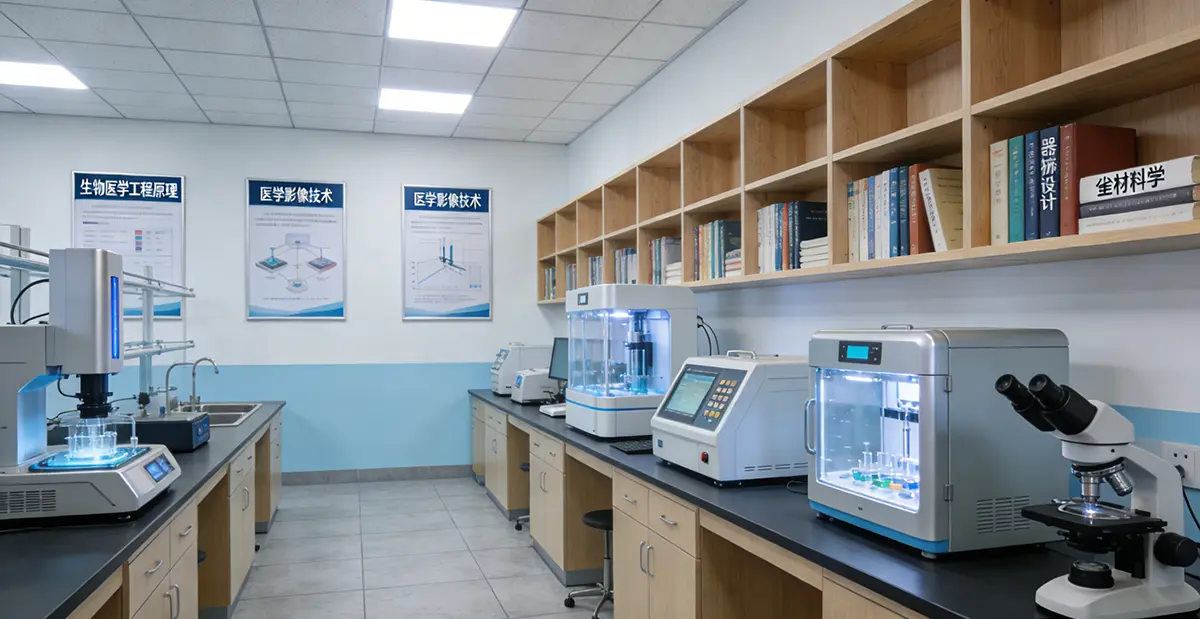
Core Courses at International Institutions
Biomedical engineering programs at top international universities emphasize “the integration of theory and practice, and the intersection of engineering and medicine,” typically adopting a modular structure of “core fundamentals + specialized tracks + comprehensive practice.”
Core Fundamentals Module (Example: Imperial College London):
- Engineering Mathematics and Computing: Mathematical foundations, computational thinking, programming skills, statistical and data analysis methods
- Engineering Science Foundations: Fundamentals of electrical engineering, fundamentals of mechanical engineering, physics
- Biomedical Core: Principles of biomedical imaging, fundamentals of biomechanics, introduction to biomaterials
Specialized Deepening Module (e.g., Duquesne University):
- Biomedical Optics: Applications of optical imaging technologies in medical diagnostics
- Orthopedic Biomechanics: Mechanical analysis and repair of the musculoskeletal system
- Biomedical Imaging: Principles and Applications of MRI, CT, PET, and Other Imaging Technologies
- Biomedical Microdevices: Micro Medical Devices like MEMS and Microfluidic Chips
- Tissue Engineering: Constructing Functional Tissues Using Cells and Scaffold Materials
- Biomaterials: Design and Performance Evaluation of Materials for Human Implantation
Integrated Practice Module (Example: University of Twente):
- Research Projects: Month-long investigations into cutting-edge topics under faculty supervision
- Interdisciplinary Teamwork: Collaborative problem-solving with chemists, physicists, mathematicians, and other specialists
- Industry Internships: Hands-on product development within medical technology companies
Advanced Study Pathways in Biomedical Engineering Major
Master's and doctoral research focuses on highly specialized and cutting-edge areas, primarily covering:
Imaging and Diagnostics:
- Medical imaging technologies: MRI, CT, PET, ultrasound, optical imaging, and novel imaging methods
- Molecular imaging: Visualizing diseases at molecular and cellular levels
- In vitro diagnostics: Microfluidic chips, biosensors, point-of-care testing
- Image Processing and Analysis: AI-assisted diagnosis, radiomics, image segmentation and registration
Biomaterials and Tissue Engineering:
- Biomedical Materials: Design and modification of metals, ceramics, polymers, and composites
- Tissue Engineering: Constructing functional tissues using cells, scaffolds, and growth factors
- Regenerative Medicine: Stem cell technologies, 3D bioprinting, organ-on-a-chip
- Drug delivery systems: Nanocarriers, targeted delivery, controlled-release systems
Biomechanics and mechanobiology:
- Musculoskeletal mechanics: Joint biomechanics, fracture fixation, prosthetic joint design
- Cardiovascular mechanics: Hemodynamics, vascular stents, artificial hearts
- Cellular mechanics: Cellular responses to mechanical stimuli, force transmission mechanisms
- Rehabilitation Engineering: Prosthetics, exoskeletons, rehabilitation robots
Neural Engineering:
- Brain-Computer Interfaces: Brain signal decoding, neural prosthesis control, mind-controlled devices
- Neuromodulation: Deep brain stimulation, transcranial magnetic stimulation, optogenetics
- Neuroimaging: Electroencephalography, magnetoencephalography, functional near-infrared spectroscopy
Medical Instruments and Systems:
- Medical device R&D: Surgical robots, smart monitors, therapeutic devices
- Embedded Medical Systems: Wearable Devices, Implantable Electronic Systems
- Medical IoT: Telemedicine, Mobile Health, Smart Hospitals
Computational Biology and Systems Biology:
- Bioinformatics: Genomics, Proteomics Data Analysis
- Systems Biology: Biological Network Modeling, Multiscale Simulation
- AI in Medicine: Machine Learning Applications in Diagnosis, Prognosis, and Drug Discovery

International Career Paths and Positions
Graduates in biomedical engineering are in high demand globally, with career opportunities spanning the entire medical technology industry chain.
Core Employment Sectors:
| Sector | Typical Employers | Representative Positions |
| Medical Technology Giants | Johnson & Johnson, Siemens Healthineers, Philips, GE Healthcare | R&D Engineer, Systems Designer, Clinical Application Specialist |
| Medical Device Companies | Medtronic, Boston Scientific, Stryker | Product Development Engineer, Quality Assurance Engineer, Regulatory Affairs Specialist |
| Pharmaceutical & Biotech | Pfizer, Novartis, Roche | Bioprocess Engineer, Drug Delivery R&D, Biomaterials Specialist |
| Hospitals/Clinical | Major Medical Centers, UPMC | Clinical Engineer, Medical Physicist, Equipment Management Specialist |
| Research Institutions/Universities | Universities, Research Institutes | Researcher, Postdoctoral Fellow, Lab Director |
| Consulting/Finance | McKinsey, Deloitte, Healthcare Investment Firms | Healthcare Technology Consultant, Investment Analyst |
| Startups | Various Healthcare Tech Startups | Co-Founder, Chief Technology Officer |
| Regulatory Agencies | FDA, EMA, National Drug Regulatory Authorities | Reviewer, Policy Analyst |
Representative Global Positions (Based on Latest Industry Data):
1. R&D Engineer: Designs, develops, and tests new medical devices, instruments, or materials, participating in the entire process from proof-of-concept to market launch
2. Clinical Engineer: Works in hospitals managing, maintaining, and optimizing medical equipment, collaborating with clinicians to resolve technical issues
3. Regulatory Affairs Specialist: Manages global registration and approval of medical products, ensuring compliance with regulatory requirements
4. Medical Physicist: Performs quality control, dose calculations, and treatment plan optimization for equipment in radiation therapy, nuclear medicine, and related fields
5. Biomaterials Engineer: Develops materials for implantation or interaction with biological systems, such as artificial joints and drug-coated stents
6. Clinical Application Specialist: Provides device training and technical support to healthcare institutions, collects clinical feedback for product improvement
7. Quality Engineer: Ensures product design and manufacturing processes comply with quality management system standards
Salary Levels for Biomedical Engineering (International Reference):
- United States: Median annual salary for biomedical engineers is $106,950 (approximately RMB 770,000), with the lowest 10% earning below $71,860 and the highest 10% exceeding $165,060
- Industry variations: Engineering services $125,010, R&D $108,990, Medical device manufacturing $103,020
- Europe: R&D positions in Germany earn approximately €50,000–70,000 annually; Dutch medical technology companies offer competitive salaries
- China: Master's graduates start at approximately ¥150,000–250,000/year, with higher salaries in foreign enterprises and leading domestic companies
International Employment Rates and Industry Trends
Employment Rates and Talent Shortages:
- The U.S. Bureau of Labor Statistics projects a 5% increase in biomedical engineer employment from 2024 to 2034, outpacing the average for all occupations
- Approximately 1,300 job vacancies annually, primarily driven by job replacement and new demand
- Imperial College London data indicates around 60% of master's graduates enter direct employment, with over one-third pursuing further studies
Industry Development Trends:
1. Precision Medicine Drives Personalized Diagnostics and Treatment: The integration of genomics, proteomics, and engineering technologies is advancing personalized medical devices, companion diagnostics, and targeted therapies.
2. AI Empowering the Entire Healthcare Chain: Artificial intelligence is permeating medical imaging, disease diagnosis, drug discovery, and health management. AI-assisted diagnostic systems, intelligent image analysis, and clinical decision support systems are emerging as key areas.
3. Widespread Adoption of Minimally Invasive and Robotic Surgery: Surgical robots like the Da Vinci system are now widely used in clinical settings, with new generations of smaller, smarter, and more specialized surgical robots continuously emerging.
4. Explosion of Wearables and Telemedicine: Driven by sensor technology and IoT advancements, demand is surging for wearable health monitors, telemedicine systems, and home care devices.
5. Regenerative Medicine Advances to Clinical Trials: Technologies like tissue engineering, stem cell therapy, and 3D bioprinting are transitioning from laboratories to clinical trials, offering new hope for organ repair and replacement.
6. Intelligent and Networked Medical Devices: Medical equipment is evolving from single-function devices toward integrated, intelligent, and networked systems, with interconnectivity and data sharing becoming the norm.
7. Aging Population Drives New Demands: Accelerating global population aging fuels sustained growth in demand for orthopedic implants, cardiovascular stents, artificial joints, and rehabilitation equipment.
Ideal Candidates for Biomedical Engineering Major
If you possess the following traits, you'll gain a competitive edge internationally:
1. Strong Foundations in Math and Physics: Requires solid math and physics skills, coupled with a deep interest and basic understanding of biology and medicine.
2. Interdisciplinary Thinking: Ability to seamlessly transition between engineering and medical domains—applying engineering principles to solve medical problems while using clinical needs to drive engineering innovation.
3. Hands-on and practical skills: Enjoy conducting experiments, designing equipment, and debugging instruments; willing to gain hands-on experience in frontline settings like hospitals and laboratories.
4. Problem-solving orientation: Focus on real clinical needs, adept at identifying issues and proposing solutions rather than merely pursuing technological advancement.
5. Ethical awareness and humanistic care: Medical products directly impact patient health and lives, requiring a strong sense of responsibility and ethical consciousness.
6. Teamwork: Frequently collaborate with multidisciplinary teams including physicians, scientists, engineers, and administrators.
7. Continuous learning: Rapidly evolving technology and clinical knowledge necessitate ongoing mastery of new techniques, methodologies, and standards.
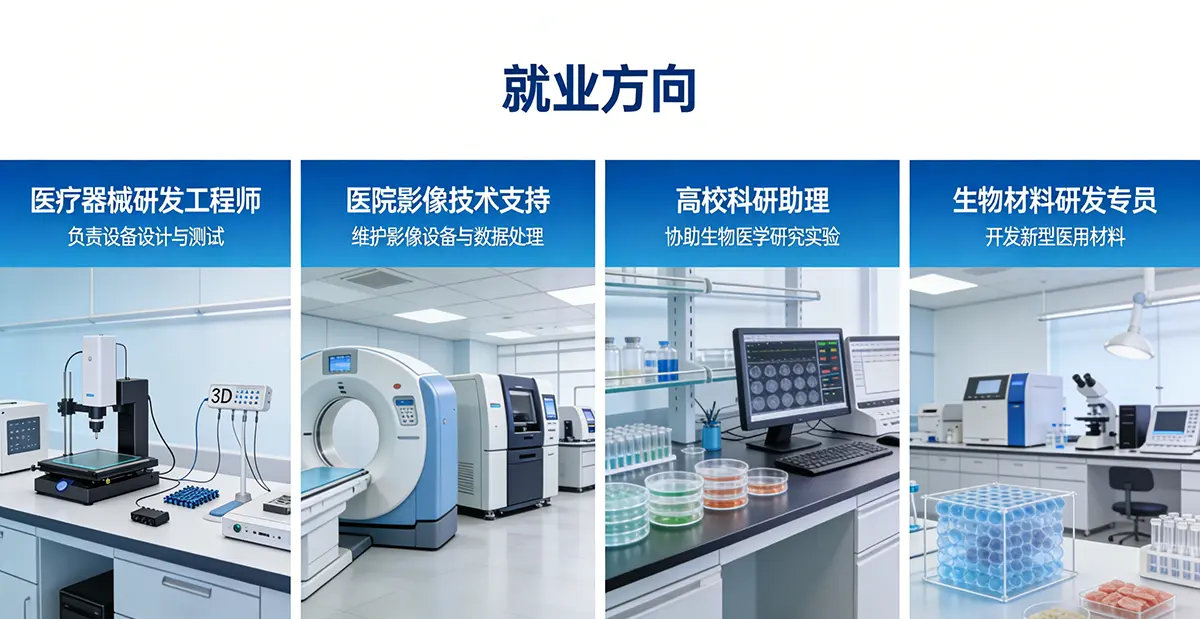
Core Competencies of Biomedical Engineering Major
The core strength of this discipline lies in its end-to-end innovation capability spanning “clinical needs” to “technical solutions”:
Interdisciplinary systems thinking: The ability to understand problems from both medical and engineering perspectives, translating clinical requirements into technical specifications and applying technological advancements to clinical practice.
Multiscale Modeling and Analysis: Capability to comprehend and solve problems across multiple levels—from molecular scale (drug design), cellular scale (tissue engineering), organ scale (mechanical modeling), to systems scale (physiological modeling).
Design and R&D Capabilities: Ability to complete the full product development cycle for clinical challenges—from conceptual design and prototype development to performance testing and optimization.
Regulatory and Quality Standards Awareness: Deeply understand the unique requirements of medical products, considering regulatory compliance, quality standards, and ethical norms from the initial design phase.
Cutting-Edge Technology Integration Capability: Integrate frontier technologies such as AI, micro/nano technology, new materials, and 3D printing with medical needs to develop innovative solutions.
Experimental and Validation Capability: Master biological experimental methods, animal study design, and clinical trial protocols to scientifically evaluate product safety and efficacy.
Major Institutions Offering Programs
(partial list, no ranking order)
1. China
Shanghai Jiao Tong University, Tsinghua University, Peking University, Fudan University, Zhejiang University, Huazhong University of Science and Technology, Sichuan University, South China University of Technology, Beihang University, Guangzhou Medical University, etc.
2. United Kingdom
Imperial College London
3. Switzerland
ETH Zurich
4. United States
Harvard University, Massachusetts Institute of Technology, Stanford University, Johns Hopkins University, Duke University, Duquesne University, University of California, Berkeley, University of California, San Diego, University of Pennsylvania, Northwestern University, Case Western Reserve University
5. Canada
University of Toronto
6. Netherlands
University of Twente
7. Germany
Technical University of Munich
8. Europe
University College London (UK), University of Cambridge (UK), École Polytechnique Fédérale de Lausanne (Switzerland), Karolinska Institutet (Sweden), KU Leuven (Belgium)
9. Other Asia
National University of Singapore, Nanyang Technological University, University of Tokyo, Korea Advanced Institute of Science and Technology
Recommended Learning Path for Biomedical Engineering Major
1. Build a Solid Foundation (Undergraduate Stage): Focus on core mathematics, physics, and biology fundamentals. Master advanced calculus, linear algebra, university physics, biology, and physiology—these form the bedrock for all subsequent specialized courses. Simultaneously, become proficient in programming languages (Python/MATLAB) and data analysis tools. Take introductory biomedical engineering courses early to gain a comprehensive overview of the field.
2. Build Your Professional Framework (Mid-to-Late Undergraduate): Delve into core courses like biomechanics, biomaterials, medical imaging, and biomedical signal processing. Select a specialization based on your interests (e.g., medical devices, biomaterials, medical imaging). Actively participate in course design and practical projects, and strive to join a research lab.
3. Focus and Deepen (Master's Stage): Select a research direction aligned with your interests, such as imaging and diagnostics, biomaterials and tissue engineering, or neural engineering. Actively seek industrial internships, particularly at medical technology companies or hospital clinical engineering departments. For your master's thesis, prioritize topics closely linked to industry or cutting-edge research.
4. Future Planning and Internationalization (Throughout):
- Language and Perspective: Obtain IELTS or TOEFL certification. Biomedical engineering is a highly international field where fluent English is essential. Monitor top international journals (e.g., Nature Biomedical Engineering) and conferences (e.g., IEEE EMBC).
- Professional Certification: Research credentialing requirements in target countries, such as the American Board of Clinical Engineering or European Medical Physicist certification.
- Skill Mapping: Identify industry needs and strategically develop complementary competencies. Medical device engineers require expertise in embedded systems and signal processing; biomaterials specialists should master material characterization techniques and cellular experiments; medical imaging professionals must excel in image processing algorithms and AI modeling.
- Expand international experience: Pursue international exchanges, overseas lab research, or internships at international organizations. Medical technology hubs like Pittsburgh, Boston, and Munich are ideal destinations.
- Dual degree options: Some students concurrently pursue an MD or MBA to broaden career pathways.
- The Previous Passage:Biological Engineering(Biol. Eng.)_生物工程
- The Next Passage:Acoustics(Acoust.)_声学

Human Geography Major_Geography(Geog.)_人文地理
The Human Geography Major explores the complex relationships between human activities and space, cul···

Atmospheric Sciences(Atmos. Sci.)_大气科学
Atmospheric science is the study of phenomena and evolutionary patterns within Earth's atmospher···

Earth Sciences(Earth Sci.)_地球科学
The Earth Science major focuses on studying the Earth system and its interactions, providing a scien···

Ocean Sciences(Ocean Sci.)_海洋科学
PbootCMS是全新内核且永久开源免费的PHP企业网站开发建设管理系统,是一套高效、简洁、 强悍的可免费商用的···

