

Biochemical Engineering(Biochem. Eng.)_生化工程
Time:2026-05-05 Visits:0
Biochemical Engineering Major
The Biochemical Engineering Major integrates biology, chemistry, and engineering to scale up bio-based production. This guide details its curriculum in bioprocessing, career paths in biopharma and sustainable manufacturing, and key industry trends like synthetic biology and continuous biomanufacturing.
1. Introduction to the Biochemical Engineering Major
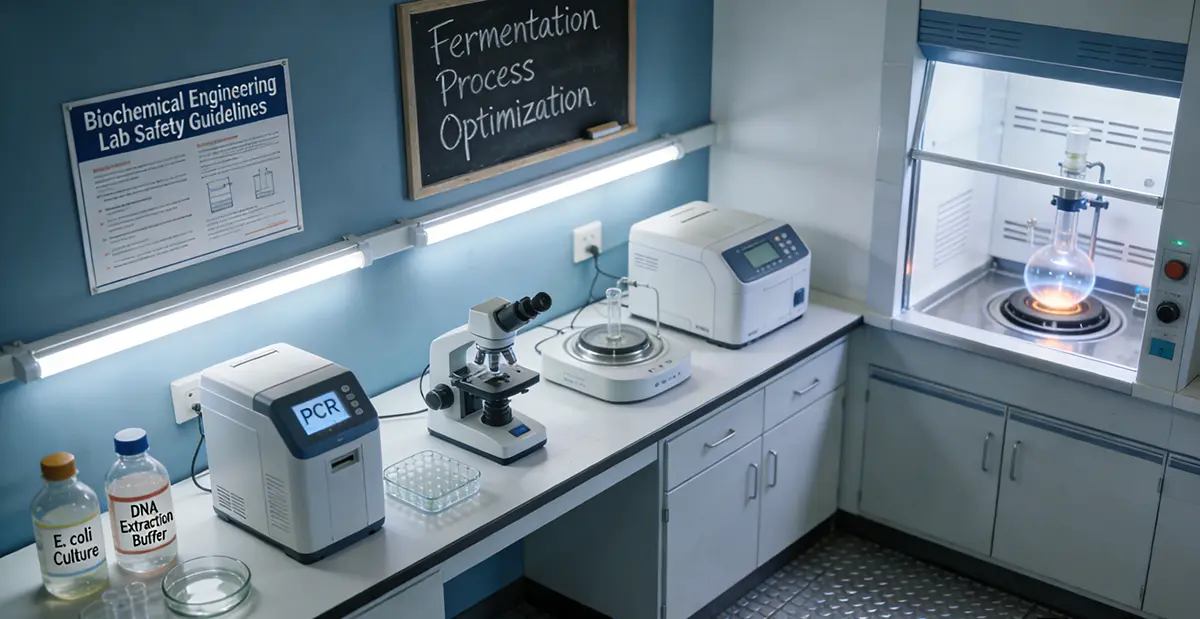
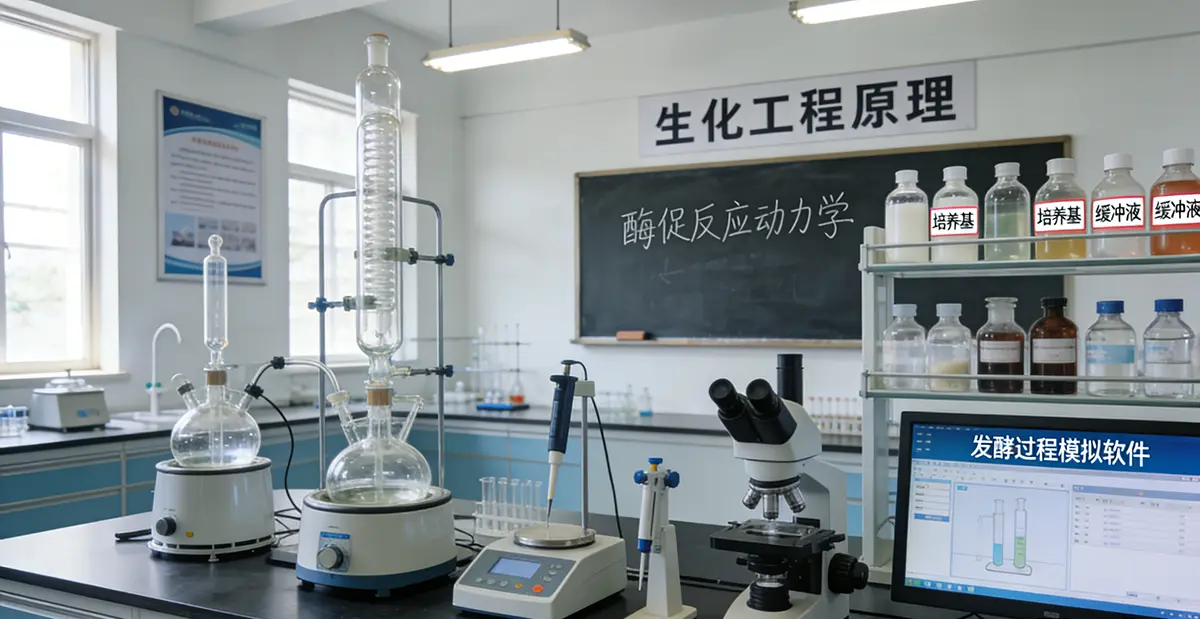
The Biochemical Engineering Major is an interdisciplinary frontier discipline that integrates principles from biology, chemistry, and engineering. It employs engineering methodologies to combine biotechnology (involving cells, enzymes, and microorganisms) with chemical processes, aiming to design, optimize, and scale up the production of diverse bio-based products such as pharmaceuticals, vaccines, biofuels, and specialty chemicals. Its core mission is to translate laboratory biological discoveries into safe, economical, and sustainable industrial-scale processes, addressing significant challenges in health, environment, and energy sectors.
2. Core Curriculum of the Biochemical Engineering Major
| Module Category | Core Courses |
| Fundamental Sciences | Biochemistry, Microbiology, Molecular and Cell Biology, Organic Chemistry, Physical Chemistry, Analytical Chemistry |
| Engineering Core | Chemical Engineering Principles (Momentum, Heat, and Mass Transfer), Reaction Engineering, Separation Engineering, Process Control and Instrumentation |
| Professional Core | Biochemical Engineering (Fermentation Engineering, Enzyme Engineering, Bioreactor Engineering), Bioseparation Engineering, Bioprocess Engineering, Metabolic Engineering and Fundamentals of Synthetic Biology |
| Process Design and Analysis | Process Design and Simulation (Aspen Plus, etc.), Biochemical Plant Design, Engineering Economics, Bioprocess Development and Scale-up |
| Interdisciplinary and Frontier Areas | Introduction to Bioinformatics, Biomaterials, Drug Delivery Systems, Biocatalysis, Environmental Biotechnology, GMP and Pharmaceutical Quality Management |
| Tools and Skills | Biological Experimental Techniques, Engineering Drawing and CAD, Data Analysis and Statistics, Scientific Programming (Python/MATLAB) |
3. Advanced Study Pathways for the Biochemical Engineering Major
PhD in Biochemical Engineering / Biological Engineering / Chemical Engineering: Conduct advanced research in frontier areas like metabolic engineering, synthetic biology, biomanufacturing, and biomaterials, leading to careers in academia or top-tier industrial R&D.
Master’s in Biotechnology / Pharmaceutical Engineering: Specialize in biopharmaceutical process development and production.
Master’s in Bioinformatics / Computational Biology: Employ computational methods to analyze and design biological processes.
Master’s in Environmental Engineering / Energy Engineering: Transition to fields such as environmental bioremediation or bioenergy.
Master’s in Food Science and Engineering: Apply expertise to food fermentation and processing.
MBA / Master of Engineering Management: Move into management or business development roles within the biotechnology industry.

4. Career Pathways and Positions for Biochemical Engineering Graduates
| Sector | Specific Positions and Directions |
| Biopharmaceuticals & Biotechnology (Primary Destination) | Process Development Engineer (Upstream/Downstream), Production Engineer/Technician, Validation Engineer, Quality Control/Assurance Engineer, Technology Transfer Engineer |
| Fermentation & Food Industry | Process Engineer, Production Supervisor (amino acids, enzymes, etc.); R&D or Production roles in food/beverage companies |
| Bioenergy & Environmental Protection | Process Development Engineer in biofuel companies; Biological Treatment Engineer in environmental firms |
| Fine Chemicals & Materials | R&D Engineer for bio-based chemicals and biodegradable materials |
| Bioprocess Equipment & Consumables Companies | Application Scientist, Sales Engineer (providing bioprocess solutions) |
| Research Institutes & Universities | Researcher, Faculty Member (typically requires a PhD) |
5. Employment Rates and Industry Trends for the Biochemical Engineering Major
Employment Rate Characteristics: “High Technical Barriers, Steady Growth”: The specialized nature of the industry, coupled with a limited talent pool, leads to stable long-term demand growth. Core positions predominantly require master’s degrees or higher. “Increasing Value of Experience”: Mastering scale-up expertise from laboratory to industrial scale is a core competitive advantage, making experienced engineers and scientists highly sought-after. Geographic Clustering: Employment is concentrated in biopharmaceutical industrial parks.
Industry Development Trends: The “Cell Factory” Revolution Driven by Synthetic Biology: Designing and constructing efficient microbial cell factories via genetic editing. Continuous and Intelligent Biopharmaceutical Manufacturing: Shift towards continuous biomanufacturing integrated with Process Analytical Technology and digital twins. Industrialization of Novel Therapeutics like mRNA: Significant talent demand for lipid nanoparticle delivery systems and large-scale production processes. Carbon Neutrality and Sustainable Development: Utilizing biomass resources to produce fuels, chemicals, and materials. AI-Empowered Biomanufacturing: Application of AI in enzyme design, metabolic pathway optimization, and process control.
6. Major Global Institutions Offering the Biochemical Engineering Major
| Country/Region | Representative Institutions (Leading in Biochemical/Biological Engineering) |
| United States | Massachusetts Institute of Technology, University of California, Berkeley, Stanford University, University of Delaware, California Institute of Technology |
| United Kingdom | University of Cambridge, Imperial College London, University of Manchester |
| Denmark | Technical University of Denmark (DTU) |
| Netherlands | Delft University of Technology |
| Switzerland | ETH Zurich, EPFL |
| China | East China University of Science and Technology, Tianjin University, Tsinghua University, Zhejiang University, Jiangnan University |
| Other | National University of Singapore, University of British Columbia (Canada) |
DisciplineMajor Recommendations
Ideal Candidates for the Biochemical Engineering Major
Individuals fascinated by using living systems to “manufacture” products ranging from pharmaceuticals to materials, blending a scientist’s curiosity with an engineer’s pragmatic approach. They should possess a solid foundation in chemistry and biology, along with a strong aptitude for engineering design and systems thinking. Attention to detail, process adherence, and safety (where biosafety and production regulations are paramount) are essential. They should aspire to develop industrial-scale solutions to grand challenges in health, energy, and the environment.
Core Competitiveness of the Biochemical Engineering Major
An integrated knowledge framework and mindset spanning biology, chemistry, and engineering. Core engineering capabilities in bioprocess development, scale-up, and optimization. Profound understanding and design proficiency in key unit operations such as bioreactors and separation/purification processes. Familiarity with industry regulations (e.g., GMP) and quality systems within the biotechnology sector.
Study Recommendations for the Biochemical Engineering Major
Strengthen the Dual Pillars of Chemical Engineering and Biology: Excelling in both chemical engineering principles and biochemistry is crucial. Actively Engage in Production Internships and Plant Tours: Gain deep, practical insight into the constraints and details of industrial-scale manufacturing. Learn Process Simulation Software: Gain proficiency in tools like SuperPro Designer or Aspen Plus’s biochemical modules. Follow Frontier Developments: Stay updated on fields like synthetic biology and metabolic engineering, which are key future drivers. Cultivate Rigorous Documentation and Data Analysis Habits: Essential for meeting industry compliance standards. Consider Business/Project Management Knowledge: A minor or self-study in these areas can enhance effectiveness in technology commercialization.
Note: Some institutions may classify this major under different academic disciplines. Please refer to the specific categorization used by the institution.
- The Previous Passage:Software Engineering(Softw. Eng.)_软件工程
- The Next Passage:Biological Engineering(Biol. Eng.)_生物工程

Human Geography Major_Geography(Geog.)_人文地理
The Human Geography Major explores the complex relationships between human activities and space, cul···

Atmospheric Sciences(Atmos. Sci.)_大气科学
Atmospheric science is the study of phenomena and evolutionary patterns within Earth's atmospher···

Earth Sciences(Earth Sci.)_地球科学
The Earth Science major focuses on studying the Earth system and its interactions, providing a scien···

Ocean Sciences(Ocean Sci.)_海洋科学
PbootCMS是全新内核且永久开源免费的PHP企业网站开发建设管理系统,是一套高效、简洁、 强悍的可免费商用的···

