

Software Engineering(Softw. Eng.)_软件工程
Time:2026-05-03 Visits:0
Software Engineering Major
The Software Engineering Major is dedicated to applying systematic and standardized engineering principles to guide software development, operation, and maintenance. It teaches not only programming but emphasizes building reliable, efficient, and scalable software products within time, budget, and quality constraints, serving as a core technological force underpinning digital transformation across all industries.
1. Introduction to the Software Engineering Major
The Software Engineering Major is a discipline that applies engineering principles, methodologies, and techniques to guide the development, operation, and maintenance of software systems. It extends beyond mere programming, placing greater emphasis on constructing reliable, efficient, and maintainable software products through systematic, standardized, and quantifiable approaches within the constraints of time, budget, and quality. The core of this Major lies in managing the entire software development lifecycle as an engineering project.
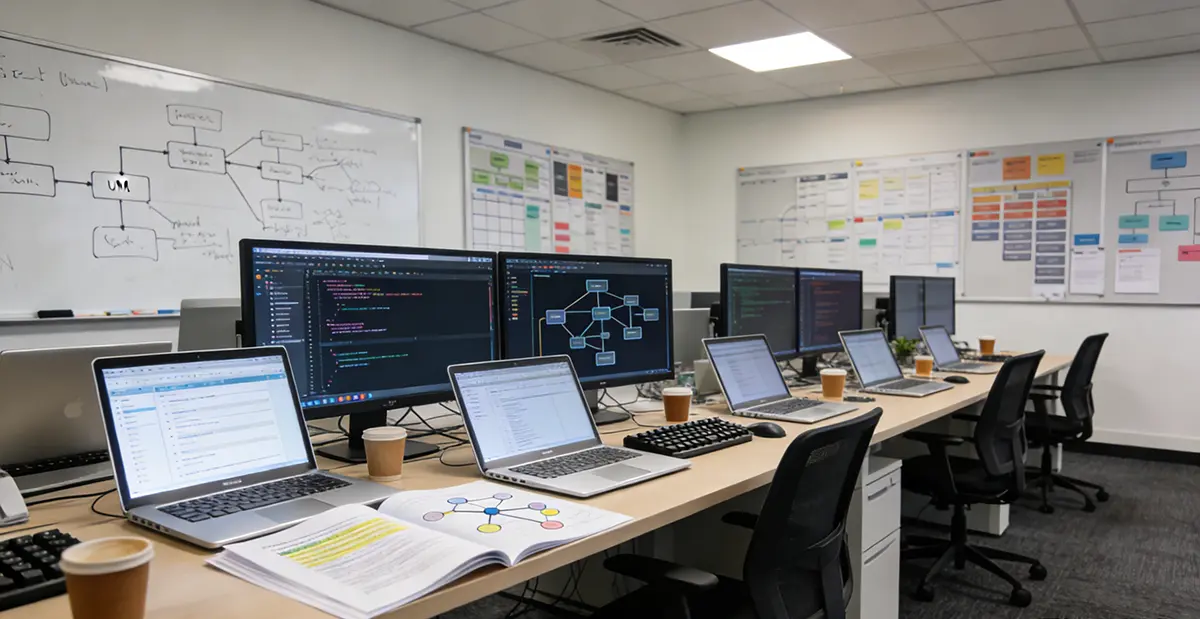
2. Major Courses in the Software Engineering Major
| Module Category | Core Courses |
| Programming and Algorithm Fundamentals | C/C++/Java Programming, Data Structures, Algorithm Design and Analysis, Discrete Mathematics |
| Software Engineering Core | Introduction to Software Engineering, Requirements Engineering, Software Design Patterns, Software Architecture, Software Testing and Quality Assurance, Software Project Management |
| Systems and Networks | Computer Organization, Operating Systems, Database Systems, Computer Networks |
| Platforms and Development Technologies | Web Front-End Development Technologies, Back-End Development Technologies, Mobile Application Development, Human-Computer Interaction Design |
| Engineering Methods and Tools | Unified Modeling Language (UML), Agile Development Methods, DevOps and Continuous Integration, Version Control (Git) |
| Mathematics and Theory | Advanced Mathematics, Linear Algebra, Probability Theory and Mathematical Statistics |
| Frontiers and Extensions | Cloud Computing and Distributed Systems, Fundamentals of Artificial Intelligence and Machine Learning, Big Data Processing Technologies, Fundamentals of Information Security |
3. Advanced Study Pathways for the Software Engineering Major
Master of Software Engineering (MSE): Deepen expertise in software architecture, project management, and domain-specific software technologies.
Master's/Doctorate in Computer Science and Technology: Transition to more fundamental research in algorithms, systems, and artificial intelligence theory.
Master's in Information Security/Cybersecurity: Specialize in software security and system protection.
Master's in Data Science/Artificial Intelligence: Combine software engineering capabilities with data and AI application development.
Master's in Human-Computer Interaction/Design: Move towards user experience (UX) and product design.
Master's in FinTech/Quantitative Finance: Enter the software development field within the financial industry.
MBA/Master's in Engineering Management: Transition into technology management, product management, or entrepreneurship.
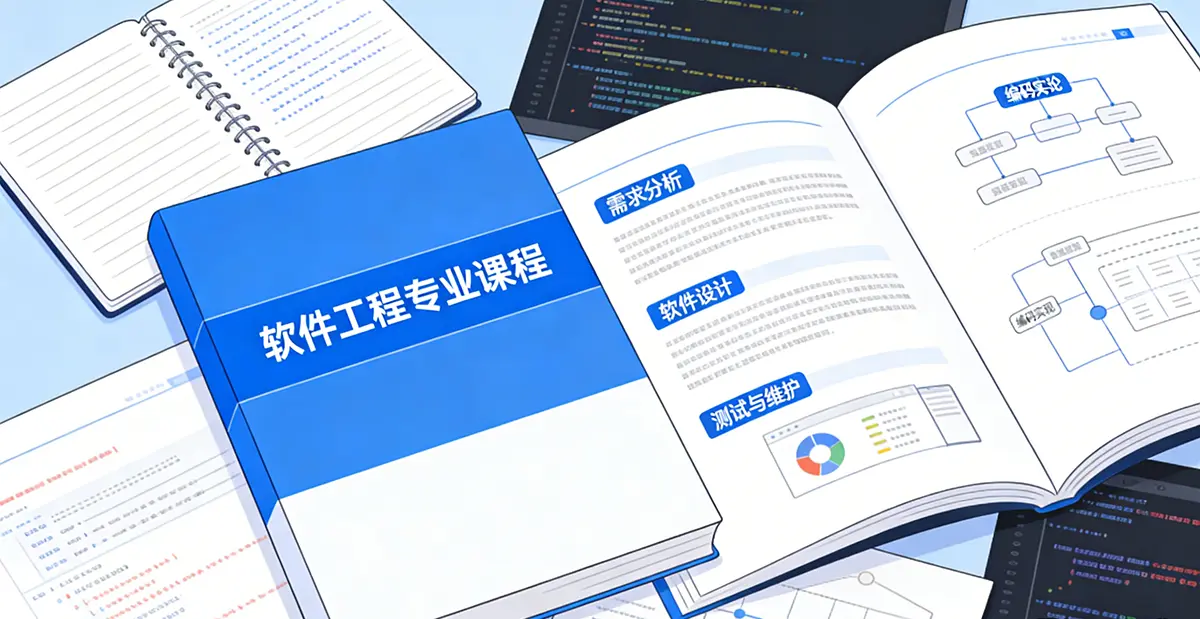
4. Career Paths and Positions for the Software Engineering Major
Employment prospects are exceptionally broad, representing a fundamental requirement across all industries undergoing digital transformation.
Core Employment Sectors
Internet and Technology Companies:
Backend Development Engineer: Responsible for server-side business logic, database, and API development.
Frontend Development Engineer: Responsible for implementing user interfaces and interactions.
Full-Stack Development Engineer: Handles both frontend and backend development.
Mobile Development Engineer (Android/iOS).
Software Development Engineer in Test (SDET): Develops testing tools and automated testing frameworks.
DevOps Engineer: Manages the integration of development and operations, focusing on continuous delivery.
Traditional Industry IT Departments/Software Companies:
Enterprise Application Development Engineer: Develops internal management systems such as ERP, CRM, and OA.
Embedded Software Engineer: Writes control software for hardware devices.
FinTech and Quantitative Trading:
Financial Software Development Engineer: Develops trading systems, risk management systems, etc.
Quantitative Development Engineer (Quant Developer).
Game Development:
Game Client/Server Development Engineer.
Government and Public Services:
Government System Development and Maintenance.
Research Institutes: Researcher (typically requires a Master's or Doctoral degree).
5. Employment Rate and Industry Trends for the Software Engineering Major
Employment Rate Characteristics
“High Demand, High Salaries, High Mobility”: Talent demand remains consistently robust, especially within the internet and emerging technology sectors. Starting salaries are competitive, but rapid technological iteration necessitates continuous learning for career advancement. The industry experiences relatively high talent mobility.
“Skills Over Academic Credentials”: Companies place a premium on practical programming ability, project experience, and alignment with specific technology stacks. A strong portfolio (e.g., on GitHub) and relevant internship experience are crucial.
High Geographic Concentration: Premium job opportunities are predominantly concentrated in first-tier cities (Beijing, Shanghai, Shenzhen, Hangzhou, Guangzhou) and select major second-tier cities (Chengdu, Wuhan, Nanjing, Xi'an).
Industry Development Trends
AI Engineering: The large-scale deployment of AI models into production environments requires close collaboration between software engineers and algorithm engineers, fostering new roles like MLOps.
Cloud-Native and Microservices Architecture: Technologies such as containerization (Docker/Kubernetes), service meshes, and Serverless are becoming the new standard for enterprise application development.
Low-Code/No-Code Platforms: These platforms enhance development efficiency and transform certain application development paradigms, simultaneously creating new roles in platform development and citizen developer enablement.
Digitalization and the Industrial Internet: The digital transformation of traditional industries (manufacturing, energy, agriculture, healthcare) generates substantial demand for industry-specific (B2B) software.
Open Source and Domestic Substitution: The open-source ecosystem continues to flourish, while domestic substitution initiatives (e.g., China's IT application innovation) present new market opportunities.
Software-Defined Everything (SDx): From networking (SDN) and storage to automobiles (software-defined vehicles), the central role of software is becoming increasingly prominent.

6. Major Global Institutions Offering the Software Engineering Major
(Selected Institutions - No particular ranking)
As a vital branch of computer science, the Software Engineering Major is offered by leading universities worldwide.
| Country/Region | Representative Institutions |
| United States | Carnegie Mellon University (a pioneer in software engineering), Massachusetts Institute of Technology, Stanford University, University of California, Berkeley |
| United Kingdom | University of Oxford, University of Cambridge, Imperial College London |
| Canada | University of Waterloo (renowned for its co-operative education program), University of Toronto |
| Asia | Tsinghua University, Peking University, Shanghai Jiao Tong University, Zhejiang University, National University of Singapore |
| Europe | ETH Zurich (Swiss Federal Institute of Technology Zurich), Technical University of Munich (Germany) |
DisciplineMajor Recommendations
Ideal Candidates for the Software Engineering Major:
Individuals who are passionate about programming and creation, enjoying the process of building products and solving problems through code.
Those who possess strong logical thinking, abstraction skills, and a self-driven motivation for continuous learning.
Candidates able to adapt to fast-paced, high-intensity work environments, with excellent team communication and collaboration skills.
Individuals who are detail-oriented, value quality, and have a desire to pursue elegant code and sound architecture.
Core Competencies of the Software Engineering Discipline:
Solid programming skills and algorithmic proficiency.
System design and architecture capabilities (understanding how to build scalable, maintainable large-scale systems).
Mastery of modern software development processes and toolchains (e.g., version control, CI/CD, containerization).
The ability to quickly learn new technologies and solve complex technical problems.
Study Recommendations for the Software Engineering Major:
Write a significant amount of code: Practice continuously through personal projects, open-source contributions, and online coding challenge platforms (e.g., LeetCode).
Gain a deep understanding of computer systems (operating systems, networking, databases), moving beyond just the application of frameworks.
Engage in real team projects early: Gain experience with the complete software lifecycle through internships, industry-academia collaboration projects, or major course assignments.
Achieve proficiency in at least one technology stack (e.g., Java Spring ecosystem, JavaScript React/Vue ecosystem, Python Django/Flask ecosystem) and understand its underlying principles.
Establish a personal technical blog and GitHub profile to showcase your thinking and work.
Develop soft skills: including communication, technical writing, time management, and project management abilities.
Note: Some institutions may categorize this Major under different academic disciplines. Please refer to the specific classification used by your chosen institution.
- The Previous Passage:Energy Science and Engineering(Energy Sci. Eng.)_能源科学与工程
- The Next Passage:Biochemical Engineering(Biochem. Eng.)_生化工程

Human Geography Major_Geography(Geog.)_人文地理
The Human Geography Major explores the complex relationships between human activities and space, cul···

Atmospheric Sciences(Atmos. Sci.)_大气科学
Atmospheric science is the study of phenomena and evolutionary patterns within Earth's atmospher···

Earth Sciences(Earth Sci.)_地球科学
The Earth Science major focuses on studying the Earth system and its interactions, providing a scien···

Ocean Sciences(Ocean Sci.)_海洋科学
PbootCMS是全新内核且永久开源免费的PHP企业网站开发建设管理系统,是一套高效、简洁、 强悍的可免费商用的···

