

Arts Management(Arts Mgmt.)_艺术管理
Time:2026-08-06 Visits:0
Arts Management Major
The Arts Management Major bridges art and business, preparing professionals to lead cultural institutions. This overview details its curriculum in arts administration and marketing, explores careers in museums, galleries, and nonprofits, analyzes industry trends like digital transformation, and lists top universities worldwide for arts management studies.
1. Introduction to the Arts Management Major
The Arts Management Major is an interdisciplinary discipline that bridges art and business, designed to cultivate professionals capable of planning, operating, marketing, and ensuring the sustainable development of arts institutions and cultural organizations. This major explores how management principles and business practices can be applied to the arts sector, balancing artistic value with social impact while promoting the effective allocation of cultural resources and the successful execution of artistic programs. Graduates of the Arts Management Major serve as both interpreters of art and operators of institutions.
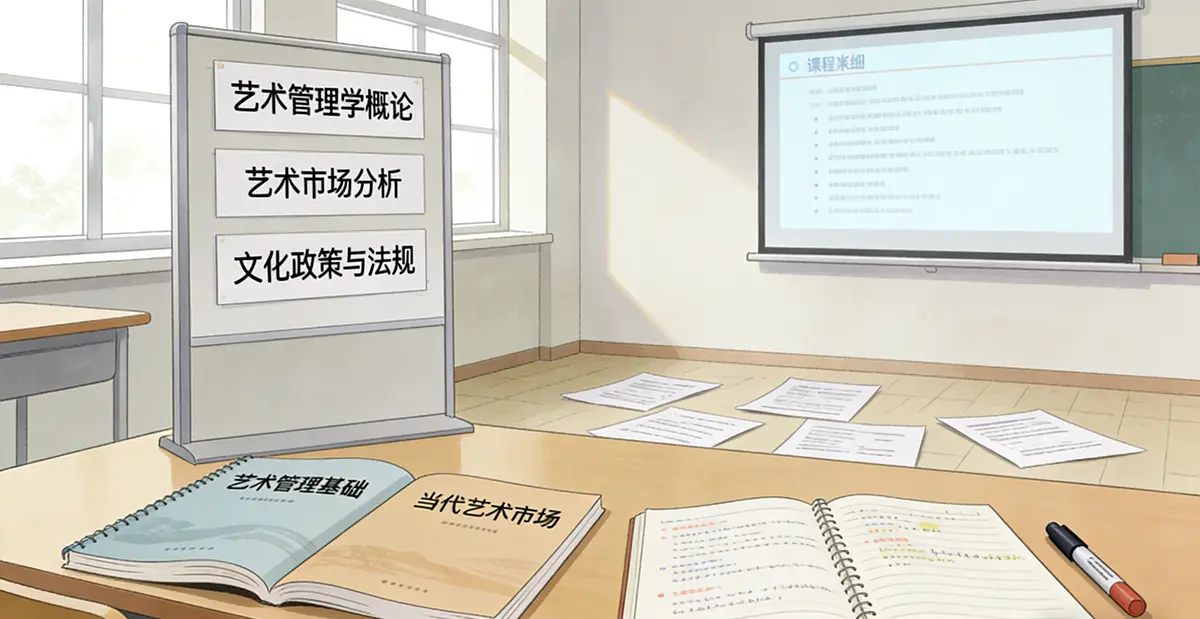
2. Core Curriculum of the Arts Management Major
| Module Category | Core Courses |
| Arts Foundation | Art History (Western/Chinese/Contemporary), Art Criticism & Theory, Visual Culture Studies |
| Management Core | Arts Institution Management, Cultural Policy & Law, Arts Fundraising & Philanthropy, Financial Management & Budgeting, Cultural Marketing & Audience Development |
| Operations & Practice | Exhibition Planning & Execution, Fundamentals of Art Collection & Conservation, Cultural Event Management, Arts Education & Public Programs, Digital Technology & Arts Law |
| Practice & Research | Art Market Analysis, Cultural Economics, Thesis/Capstone Project, Industry Internship |
3. Advanced Study Pathways for the Arts Management Major
Academic Advancement:
* Master of Arts Management: Deepens specialized knowledge and industry networks.
* Master of Museum/Curatorial Studies: Specializes in museum or curatorial fields.
* Master of Cultural Policy/Cultural Heritage Management: Leads to careers in the public sector or international organizations.
* MBA (Nonprofit Management/Arts & Culture Track): Enhances comprehensive management skills.
Entrepreneurship: Founding galleries, art spaces, or cultural consulting firms.

4. Career Paths for Arts Management Graduates
Graduates of the Arts Management Major find employment across diverse institutions within the cultural and artistic ecosystem.
* Public & Nonprofit Institutions: Museums/Art Galleries (Curatorial Assistant, Exhibition Project Manager, Public Education Specialist, Development Officer); Theaters/Performing Arts Centers (Program Planner, Marketing); Art Festivals/Foundations (Project Coordinator, Policy Researcher).
* Commercial Institutions: Galleries/Auction Houses (Gallery Manager, Art Consultant, Client Relationship Manager); Art Media/Publishing (Art Editor, Journalist); Art Consulting Firms; Corporate Art Departments.
* Emerging & Freelance: Independent Curator; Art & Technology (Digital Art Project Management); Cultural Entrepreneurship (Operating Art Spaces, Cultural Product Development).
5. Employment and Industry Trends for the Arts Management Major
Employment Characteristics: The Arts Management Major leads to a niche field with high resource dependency. Core positions are concentrated in major cultural capitals, resulting in intense competition. Practical experience and networking are critical. Compensation structures vary, with public institutions offering lower but stable starting salaries, while commercial entities provide higher but more volatile pay. Career advancement requires long-term passion and dedication.
Industry Trends:
* Digital Transformation & Online Presence: Virtual exhibitions, digital collectibles (NFTs), and social media marketing have become standard.
* Community Engagement & Social Inclusion: Arts organizations increasingly prioritize audience development, public education, and community connections.
* Sustainable Operations & Diversified Funding: Developing multi-channel revenue streams such as membership programs, commercial partnerships, and cultural merchandise.
* Cross-Sector Integration: Deepening collaborations between art and technology, business, education, and other fields.
* Cultural Policy & Urban Renewal: The role of art in shaping city identities and driving regional development is increasingly prominent.
6. Leading Global Institutions
(Selected Institutions - Rankings Not in Order)
| Country/Region | Representative Institutions (Renowned Arts Management Programs) |
| United States | New York University, Columbia University, Carnegie Mellon University, Boston University |
| United Kingdom | Goldsmiths, University of London, King's College London, University of Manchester |
| Europe | Sciences Po Paris, University of Amsterdam, Bocconi University |
| Australia | University of Melbourne, University of Sydney |
| China | Central Academy of Fine Arts, China Academy of Art, Peking University |
| Other Regions | University of Hong Kong, National University of Singapore |
DisciplineMajor Recommendations
Ideal Candidates for the Arts Management Major: Individuals with genuine passion for art coupled with organizational and managerial aptitude; those possessing excellent communication and coordination skills, adept at engaging diverse stakeholders; adaptability to non-standardized, project-based work rhythms; and a deep appreciation for the social value of culture and the arts.
Core Competencies: Art appreciation and scholarly interpretation skills; resource integration and project management capabilities; fundraising and marketing acumen; policy understanding and legal awareness; and the ability to leverage digital technology to enhance management efficiency and audience experience.
Study Recommendations:
1. Identify a specialization early: Determine your primary interest in visual arts, performing arts, cultural heritage, etc.
2. Build solid practical experience: Start with foundational roles like museum docents or arts festival volunteers.
3. Develop a professional network: Proactively connect with practitioners and attend industry lectures and fairs.
4. Hone writing and presentation skills: Crafting project proposals and grant applications is a routine, critical task.
5. Maintain continuous engagement with the arts: Regularly attend exhibitions and performances to stay attuned to the field.
6. Consider an “Arts +” interdisciplinary profile: Combining expertise in law, finance, education, or other fields enhances competitiveness.
Note: Program categorization varies by institution. Please refer to the specific discipline classification used.
- The Previous Passage:Interior Design(Int. Des.)_室内设计
- The Next Passage:Animation and Digital Arts(ADA)_动画与数字艺术 - Lingnan University, Hong Kong
Human Geography Major_Geography(Geog.)_人文地理
The Human Geography Major explores the complex relationships between human activities and space, cul···

Atmospheric Sciences(Atmos. Sci.)_大气科学
Atmospheric science is the study of phenomena and evolutionary patterns within Earth's atmospher···

Economics(Econ.)_经济学
Economics MajorThe Economics Major is dedicated to studying the allocation of scarce resources and h···

Earth Sciences(Earth Sci.)_地球科学
The Earth Science major focuses on studying the Earth system and its interactions, providing a scien···

