

Instrumentation Science(Instrum. Sci.)_仪器科学
Time:2026-06-11 Visits:2
Instrument Science Major
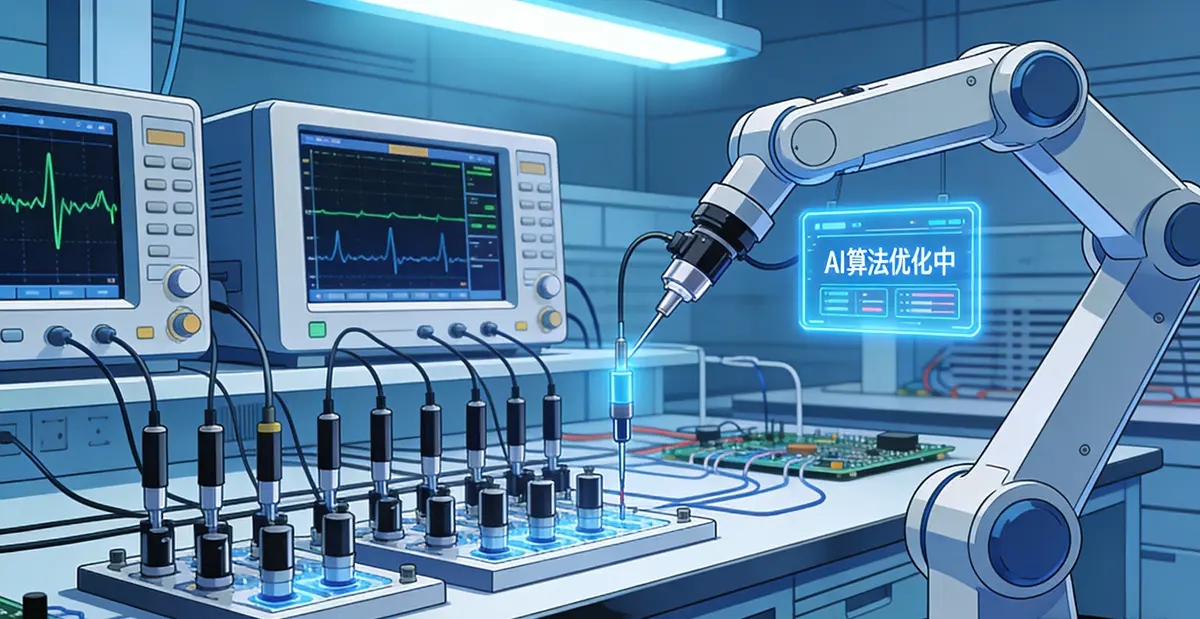
Instrument Science Major(Instrument Science and Technology) is a multidisciplinary field dedicated to precision measurement, intelligent control, and scientific exploration tools. In 2026, as AI reshapes research paradigms, it undergoes a profound transformation from “precision manufacturing” to “intelligent creation.” Instrument Science serves as a foundational discipline supporting scientific research and high-end manufacturing.
Instrument Science Major Overview
Instrument Science (Instrument Science and Technology) is an engineering discipline focused on measurement, control, instrument design, and manufacturing. Its core mission is to develop high-precision, highly reliable scientific instruments and testing systems. Integrating physics (sensing principles), mechanical engineering (precision structures), electrical engineering (signal processing), computer science (embedded systems), and artificial intelligence (intelligent control), it serves as the “infrastructure” for modern scientific research and high-end manufacturing.
If scientific exploration is likened to humanity's journey of understanding the world, Instrument Science serves as the indispensable “eyes” and ‘tentacles’ of this expedition—without microscopes, there would be no microbiology; without mass spectrometers, no proteomics; without gas chromatography, no modern environmental monitoring. The core mission of this discipline is “to forge the most precise tools for scientific research and high-end manufacturing.”
Characteristics from an international perspective: Instrument Science is a highly specialized, extremely fragmented “hidden track.” Germany possesses deep expertise in precision optics and scientific instruments (e.g., Jena's optical heritage); the United States leads in high-end analytical and biomedical instruments; Chinese scientific instrument companies are transitioning from “catch-up players” to “parallel runners,” with 2026 viewed by the industry as a pivotal turning point. This is a strategic discipline characterized by high technical barriers, lengthy accumulation cycles, and broad application scenarios.
Core Curriculum at International Institutions
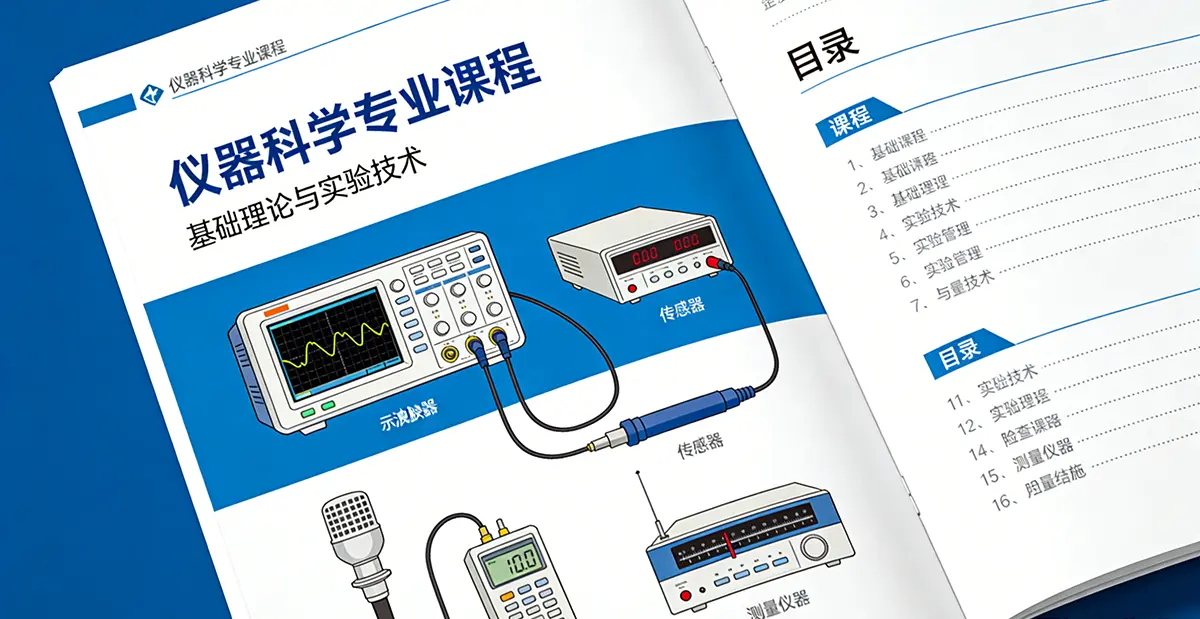
Instrument Science programs at top global universities emphasize “theory-practice integration and hardware-software balance,” typically adopting a modular structure of “core fundamentals + specialized tracks + comprehensive practice.” The curriculum at Germany's University of Applied Sciences and Arts in Jena serves as a representative example:
Core Fundamentals Module (First Semester):
- Applied Mechanics: Precision Mechanical Design, Fundamentals of Finite Element Analysis
- Electronics: Electronic Hardware Systems, Signal Conditioning Circuits
- Optics: Applied Optics and Photonics, Optical Engineering
- Scientific Computing: Numerical Methods, Data Processing Algorithms
Instrument Science Specialization Modules (Semesters 2 & 3):
| Specialization | Core Courses | Application Areas |
| Precision Instrument Design | Precision Device Design, Product Development Methods, FEM Simulation | High-end Manufacturing, Scientific Research Equipment |
| Materials and Processes | Functional Materials, Micro/Nano Technologies, Solid-State Physics | Sensor Development, MEMS |
| Applied Optics and Photonics | Optical Engineering, Image Data Processing, Physical Material Diagnostics | Imaging Systems, Spectroscopic Instruments |
Integrated Practice Module (Semester 4):
- Master's Thesis Research: Conducted in corporate, research institute, or university laboratories
- Industry Internship: Collaborations with companies like Carl Zeiss and Jena Optik
- Interdisciplinary Projects: Collaborative problem-solving with students from diverse disciplines
Additional International Program Features:
- AIMS Program at Coburg University of Applied Sciences: Focuses on analytical instruments, measurement, and sensor technology. Specializations include automotive electronics, chemical sensors, industrial reliability, IoT, and optoelectronic detection. Requires at least one year of work experience.
- University of Liège/KIT Collaborative Programs: Technical courses in optical remote sensing, hyperspectral imaging, lidar, and related technologies.
Advanced Study Pathways in Instrument Science Major
Master's and doctoral research focuses on highly specialized and cutting-edge areas, primarily covering:
Precision Instrumentation and System Design:
- Precision Mechanical Design: High-precision motion mechanisms, nanopositioning technology, thermal stability design
- Microsystem Technology: MEMS sensors, microfluidic chips, miniature spectrometers
- Opto-Mechatronics: Integrated design of optical-mechanical-electronic systems
Sensing and Measurement Technology:
- Novel Sensors: Chemical sensors, biosensors, fiber optic sensors
- Measurement Techniques: Geometric measurement, mechanical measurement, thermal measurement
- Non-Destructive Testing: Ultrasonic testing, X-ray testing, industrial CT
Signal Processing and Intelligence:
- Signal Processing: Weak signal detection, noise suppression, multi-sensor fusion
- Embedded Systems: Real-time data acquisition, FPGA/DSP applications, IoT nodes
- AI and Intelligent Instruments: Machine learning in measurement data analysis, intelligent diagnostic algorithms
Scientific Instruments and Applications:
- Analytical Instruments: Chromatography, mass spectrometry, spectroscopy, electrochemical analysis
- Biomedical Instruments: Medical assistive robots, PET-CT, high-voltage pulsed electric field sterilization devices
- Space Science Instruments: Laser interferometry, high-resolution cryogenic spectrometers
- Environmental Monitoring Instruments: Atmospheric monitoring, water quality analysis, soil testing
International Career Paths and Positions
Graduates in Instrument Science Major are in high demand globally, with career opportunities spanning research institutions to high-tech enterprises.
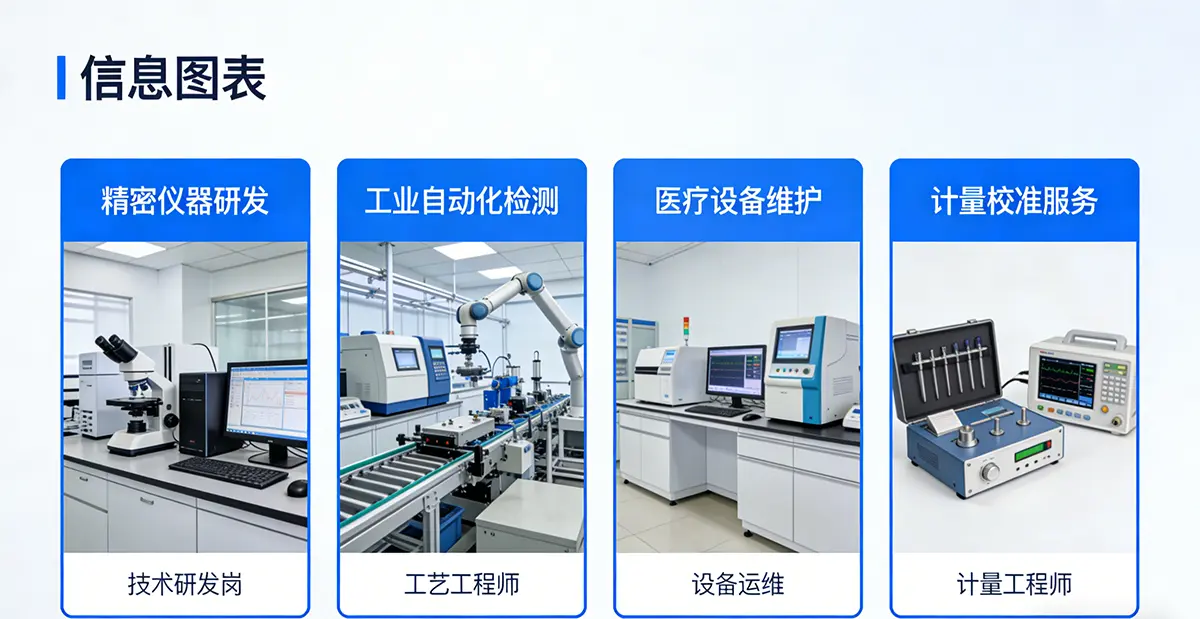
Core Employment Sectors:
| Sector | Typical Employers | Representative Positions |
| Scientific Instrument Giants | Danaher, Thermo Fisher, Agilent, Zeiss, Jena Optik | R&D Engineer, Systems Designer, Application Specialist |
| Space/Research Institutions | NASA, ESA, DLR, Max Planck Institutes | Systems Engineer, Scientific Instrument Specialist |
| Automotive/Industrial Automation | Bosch, Siemens, ABB | Sensor Engineer, Test System Development |
| Semiconductor/Electronics | Applied Materials, ASML, TSMC | Process Control Engineer, Inspection Equipment R&D |
| Medical Instruments | Philips, Siemens Healthineers, GE Healthcare | Medical Device Engineer, Imaging System Specialist |
| Analytical Instrumentation Firms | Agilent, Waters, Shimadzu | Application Engineer, Technical Support, Product Manager |
| Third-Party Testing Agencies | SGS, TÜV, Intertek | Testing Engineer, Certification Specialist |
| Startups | Various Scientific Instrument Startups | CTO, Co-Founder |
Representative Global Positions (Based on Latest Job Postings):
1. Subsystem Engineer – Space Science Instruments (Max Planck Institute for Gravitational Physics, Hannover): Responsible for system design, validation, and technical documentation for the LISA space mission. Requires Master's degree + systems engineering experience, familiarity with ECSS workflows, English C1 level.
2. Systems Engineer/Physicist – High-Resolution Cryogenic Spectrometer (Max Planck Institute for Astronomy): Develop near-infrared spectrometer for ELT telescope ANDES project; responsible for system design, requirement decomposition, interface definition. Requires Master's degree + spectrometer construction experience. Salary: TVöD EG 12
3. R&D Engineer (Scientific Instrument Company): Design novel chromatography, spectroscopy, or mass spectrometry instruments; optimize system performance and reliability
4. Application Engineer (Analytical Instrument Company): Provide technical support and solutions to clients; develop new application methods
5. Sensor Engineer (Automotive/Industrial Sector): Develop sensor systems for autonomous driving and Industry 4.0
6. Inspection Equipment Engineer (Semiconductor Industry): Develop optical/electron beam equipment for wafer inspection and defect analysis
Salary Levels (International Reference):
- Germany: R&D positions in scientific instruments follow TVöD standards, starting at EG 12 with approx. €55,000–70,000/year
- United States: Instrument engineers earn a median annual salary of approximately $85,000–110,000; senior specialists can reach $130,000+
- International Organizations: Max Planck Institutes offer highly competitive salaries and social benefits
International Employment Rates and Industry Development Trends
Employment Rates and Talent Shortages:
- The scientific instrument industry is characterized by “extreme specialization, extreme fragmentation, and a long, steep slope with deep snow,” featuring stable yet highly specialized talent demand.
- The 2026 Teaching Symposium of the Chinese Society for Instrument and Control pointed out that the industry urgently requires talent capable of solving complex engineering problems, integrating interdisciplinary knowledge, and mastering digital transformation skills.
- The corresponding program at Germany's Jena University of Applied Sciences attracts students from over 10 countries, with graduates enjoying strong employment prospects.
Industry Development Trends:
1. AI Redefines Efficiency and Entry Barriers: AI not only advances instrument intelligence but also reconfigures efficiency across the entire enterprise R&D, production, and service chain. In R&D, AI assists with experimental design and automated drawing generation; in production, it optimizes scheduling and predicts failures; while in service, it provides 24/7 technical support.
2. Information asymmetry is diminishing and traffic entry points are redistributing: Evaluation videos, live streams, and other content rapidly expose product strengths and weaknesses, rendering information no longer a competitive barrier. The traditional “manufacturer → distributor → sales” channel is being restructured, shifting future competition toward “who can better solve customer problems.”
3. Domestic Scientific Instruments Reach Critical Inflection Point: 2026 marks the industry's “straight-line acceleration race”—a contest of capability, learning agility, perseverance, and speed with no shortcuts. Domestic scientific instrument manufacturers are transitioning from “catch-up players” to “parallel competitors.”
4. Software shortcomings are rapidly being addressed: AI large models can swiftly enhance the functional richness of domestic instrument software. Natural language interaction improves user experience, while intelligent data processing enables automatic anomaly detection and one-click generation of visual reports. When software ceases to be a weakness, domestic instruments will achieve a qualitative leap in competitiveness.
5. Data becomes an asset matured over time: Long-term accumulation of R&D data, production process data, and application data transforms into a core competitive advantage in the AI era. Haineng Technology's fifteen years of data accumulation make AI application a seamless process.
6. Core industrial chain model emerges: Evolving from “full industrial chain manufacturing” to “core industrial chain”—focusing on mastering performance and quality-critical segments while emphasizing supply chain management for controllable outsourced components.
7. Upgraded talent requirements: The industry no longer settles for traditional expertise, placing greater emphasis on solving complex engineering problems, interdisciplinary integration, innovative thinking, engineering ethics, and digital transformation skills. Companies stress that students must possess systems thinking, engineering practice standards, and awareness of cost and reliability.
Ideal candidates for Instrument Science Major
If you possess the following traits, you'll gain a competitive edge internationally:
1. Strong Mathematical and Physical Foundations: Requires solid physics and mathematics, particularly in optics, mechanics, and electronics. Instrument science is a multidisciplinary field.
2. Hands-On and Practical Skills: Enjoy conducting experiments, building systems, and debugging equipment; willing to engage in frontline lab and fieldwork. German programs emphasize high laboratory work intensity.
3. Interdisciplinary Integration Mindset: Ability to seamlessly transition between mechanical, electronic, optical, and software domains, integrating diverse technologies into a single instrument.
4. Patience and Perseverance: The scientific instrument industry is a long-term, steady-growth field requiring daily accumulation—there are no shortcuts.
5. Commitment to precision manufacturing: Demonstrates reverence for high-precision, high-reliability equipment and pursues the pinnacle of manufacturing craftsmanship.
6. Problem-solving orientation: Develops tailored solutions addressing clients' actual needs rather than solely pursuing technological advancement.
7. Global perspective and communication skills: Scientific instruments are a global industry requiring strong English proficiency; the German program mandates IELTS 6.0 or TOEFL 79+.
Core Competencies of Instrument Science Major
The core strength of this discipline lies in its end-to-end engineering capabilities spanning from “physical principles” to “reliable products”:
Multiphysics System Integration: Seamlessly integrates mechanical, optical, electronic, and software subsystems to ensure optimal overall performance.
Precision Design and Analysis Capabilities: Mastery of tools like finite element analysis (FEM), optical design, and thermal stability analysis to guarantee instrument accuracy at the fundamental level.
Weak Signal Detection and Processing: Capable of extracting valid signals from noise, designing circuits for low-noise amplification, phase-locked amplification, and correlation detection.
Error Theory and Compensation Techniques: Deep understanding of error sources, enabling reduction of systematic errors through structural design and algorithmic compensation.
Reliability and Engineering Practice Standards: Familiarity with workflows like ECSS, possessing engineering competencies in product assurance, non-conformance tracking, and review preparation.
AI and Intelligent Integration Capabilities: Ability to combine AI technologies like machine learning and big data analytics with traditional instruments to develop smart instruments.
Industrialization Mindset: Understanding of the industry's “high variety, low volume” characteristics, with awareness of cost control, supply chain management, and design for manufacturability.
Major Global Institutions Offering Programs
(partial list - no ranking order)
| China | Tsinghua University | Instrument Science and Technology (Top Discipline) |
| Harbin Institute of Technology | Precision Instrumentation, Testing and Measurement | |
| Technology | Tianjin University | Precision Instrumentation and Optoelectronics |
| Beihang University | Instrument Science and Technology | |
| Southeast University | Instrument Science and Engineering | |
| Chongqing University | Measurement and Control Technology and Instrumentation | |
| China Jiliang University | Metrology, Testing, Instrumentation | |
| Hebei University | Instrument Science | |
| United Kingdom | Imperial College London | Instrument Science, Optical Engineering |
| University of Cambridge | Instrument Science-related fields | |
| Switzerland | ETH Zurich | Precision Instrumentation, Measurement Technology |
| United States | Stanford University | Electrical Engineering/Instrument Science-related fields |
| Massachusetts Institute of Technology | Instrument Science, Precision Engineering | |
| California Institute of Technology | Astronomical Instruments, Scientific Instruments | |
| Netherlands | Delft University of Technology | Precision Engineering, Microsystems Technology |
| Germany | Jena University of Applied Sciences | Master of Science in Scientific Instruments, Specializations: Precision Instrument Design, Materials and Processes, Applied Optics and Photonics |
| Coburg University of Applied Sciences | Master of Science in Analytical Instrumentation, Measurement and Sensor Technology (AIMS) | |
| RWTH Aachen University | Instrument Science and Technology-related fields | |
| Industry Research Institutions | Max Planck Institutes (Germany) | Institute for Gravitational Physics, Institute for Astronomy recruiting Scientific Instrument Engineers |
| Fraunhofer Society for the Promotion of Applied Research (Germany) | Institute for Applied Optics and Precision Engineering | |
| Changchun Institute of Optics, Mechanics and Physics, Chinese Academy of Sciences | Precision Instruments and Optics | |
| Shanghai Institute of Technical Physics, Chinese Academy of Sciences | Infrared and Optoelectronic Instruments |
Recommended Learning Path for Instrument Science Major
1. Build a Solid Foundation (Undergraduate Stage): Focus on core fundamentals in physics, mathematics, and electronics. Master university-level physics (optics, mechanics, electromagnetism), advanced mathematics, linear algebra, circuit theory, and analog/digital electronics. Simultaneously, become proficient in at least one programming language (C/C++/Python) and CAD software. Early exposure to foundational courses like Sensor Technology and Signal Processing is recommended.
2. Build Your Disciplinary Framework (Mid-to-Late Undergraduate):
Delve into core courses including Sensor and Detection Technology, Principles of Automatic Control, Error Theory and Data Processing, Embedded Systems, and Microcontroller Principles. Select a specialization based on your interests (e.g., optical instruments, analytical instruments, biomedical instruments). Actively participate in course projects and laboratory work, and pursue internships at instrumentation companies.
3. Focus and Deepen (Master's Stage): Select a research direction aligned with your interests, such as precision instrument design, optical engineering, or intelligent sensing. Note application deadlines for German programs (Jena: April 15, Coburg: August 31). Actively seek industrial internships, particularly at scientific instrument manufacturers, research institutions, or high-tech companies. For your master's thesis, prioritize topics closely tied to industry or cutting-edge research.
4. Future Planning and Internationalization (Throughout):
- Language and Perspective: Obtain IELTS or TOEFL scores (Jena requires IELTS 6.0/TOEFL 79). Instrument science is a highly international field; fluent English is essential. German programs offer German language courses to prepare for employment in Germany.
- Professional Certification: Research engineer certification systems in target countries. Familiarity with workflows like ECSS aids entry into space instrumentation.
- Skill Matrix: Target industry needs to supplement skills:
- Software Tools: FEM simulation (ANSYS/COMSOL), optical design (Zemax), circuit design (Altium Designer)
- AI/ML: Machine learning applications in measurement data analysis, Python data science stack
- Embedded Systems: FPGA/DSP development, real-time operating systems
- Industry Monitoring: Stay updated through industry publications like the China Instrument and Control Association to track domestic scientific instrument advancements.
- International Experience: German program students may complete coursework at European or global partner universities with Erasmus+ funding support.
- The Previous Passage:Metallurgical Engineering(Metall. Eng.)_冶金工程
- The Next Passage:没有了!
Human Geography Major_Geography(Geog.)_人文地理
The Human Geography Major explores the complex relationships between human activities and space, cul···
Atmospheric Sciences(Atmos. Sci.)_大气科学
Atmospheric science is the study of phenomena and evolutionary patterns within Earth's atmospher···
Earth Sciences(Earth Sci.)_地球科学
The Earth Science major focuses on studying the Earth system and its interactions, providing a scien···
Ocean Sciences(Ocean Sci.)_海洋科学
PbootCMS是全新内核且永久开源免费的PHP企业网站开发建设管理系统,是一套高效、简洁、 强悍的可免费商用的···

