

Metallurgical Engineering(Metall. Eng.)_冶金工程
Time:2026-06-09 Visits:3
Metallurgical Engineering Major
Metallurgical engineering Major is the discipline that applies chemical, physical, and engineering principles to the mining, extraction, alloying, processing, and heat treatment of metals to impart specific properties and forms. While materials science focuses on the relationship between a material's structure and its properties, metallurgical engineering concentrates on how to obtain metals from ores and how to optimize their properties through process control. It forms the bedrock of modern industrial civilization, with everything from construction rebar to aerospace engine blades relying on the ingenuity of metallurgical engineers.
Introduction to Metallurgical Engineering Major: Forging Modern Industrial Civilization
The core mission of metallurgical engineering major is to transform ores from nature into metal materials with specific properties through a series of complex physicochemical processes, while continuously exploring new techniques to meet the demands of high-end manufacturing. This discipline combines scientific depth with engineering breadth.
Its core responsibilities include:
- Extraction and Smelting: Researching efficient, economical, and environmentally sound methods to extract valuable metals from ores and refine them into high-purity metals.
- Alloying and Preparation: Designing novel alloy compositions and studying metal solidification, forming, and processing (e.g., casting, rolling, welding).
- Heat Treatment and Microstructure Control: Modifying internal microstructures through thermal processes to achieve desired mechanical properties (strength, toughness, hardness) and physical characteristics.
- Resource Recycling and Green Manufacturing: Developing technologies for resource recovery from metallurgical slag and waste liquids, driving the transition toward low-carbon, eco-friendly, and intelligent metallurgical processes.

Core Courses at International Institutions
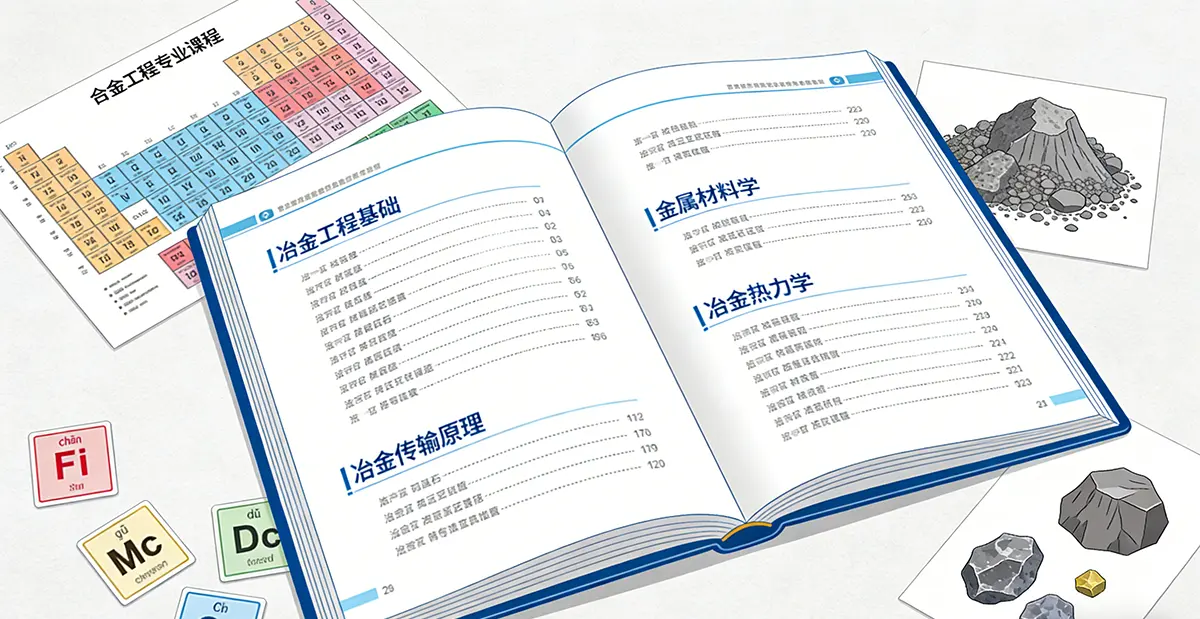
The metallurgical engineering curriculum emphasizes “strong fundamentals and practical application,” requiring students to possess both a solid foundation in physical chemistry and the ability to solve complex engineering problems.
| Course Stage | Core Course Examples | Learning Objectives |
| Mathematical and Chemical Foundations | Advanced Mathematics, University Physics, Inorganic Chemistry, Analytical Chemistry, Physical Chemistry | Establish a solid scientific foundation to understand the fundamental principles underlying metallurgical processes. |
| Core Metallurgical Theory | Metallurgical Physical Chemistry, Principles of Metallurgical Transport, Metallurgy and Heat Treatment, Metallurgical Thermodynamics/Kinetics | Master core theories of metallurgical processes, understanding the relationships between metal composition, processes, microstructure, and properties. |
| Processes and Engineering | Iron and Steel Metallurgy (Ironmaking/Steelmaking), Nonferrous Metallurgy, Fundamentals of Metallurgical Plant Design, Metallurgical Process Control | Study specific production workflows, equipment principles, and plant design standards. |
| Frontier & Interdisciplinary | Environmental Metallurgy & Resource Utilization, Low-Carbon Metallurgical Technologies, Smart Metallurgy, Powder Metallurgy, Hydrometallurgy | Explore cutting-edge green and intelligent metallurgical technologies, as well as interdisciplinary connections with other fields (e.g., environmental science, computer science). |
| Practice and Tools | Metallurgical Experimental Research Methods, Metallurgical Process Simulation and Modeling, Steel Production Simulation Training, Professional Course Design | Develop hands-on skills and problem-solving abilities through experiments, simulations, and practical training. |
> Source: University of Science and Technology Beijing, Qinghai University, Liaoning University of Science and Technology, Hebei University of Engineering
Advanced Study Directions in Metallurgical Engineering Major
At the master's or doctoral level in metallurgical engineering major, research directions are closely aligned with national strategic needs and industrial development, offering diverse pathways:
- Iron and Steel Metallurgy: Focuses on smelting processes for high-grade steels (e.g., high-speed rail track steel, automotive sheet steel, specialty tool steel), ladle refining, continuous casting innovations, and low-carbon ironmaking technologies (e.g., hydrogen metallurgy).
- Nonferrous Metallurgy: Investigates efficient, clean extraction and separation technologies for light metals (aluminum, magnesium, titanium), heavy metals (copper, lead, zinc), and rare/precious metals (rare earths, gold, silver, platinum).
- Physical Chemistry of Metallurgy: Deeply explores thermodynamic and kinetic mechanisms of metallurgical processes, providing theoretical guidance for new process development and material design.
- Material Forming and Control: Research on solidification theory of metals, plastic working (rolling, forging, extrusion) technologies, and microstructure-property regulation.
- Metallurgical Energy and Environmental Protection: Focusing on energy-saving and emission-reduction technologies for metallurgical processes, high-value utilization of secondary resources (e.g., metallurgical slag, dust sludge), and CO₂ capture and storage.
- Intelligent Metallurgy: Integrating big data and artificial intelligence with metallurgical processes to study intelligent sensing, modeling, and optimization control of metallurgical operations.
International Career Paths and Positions
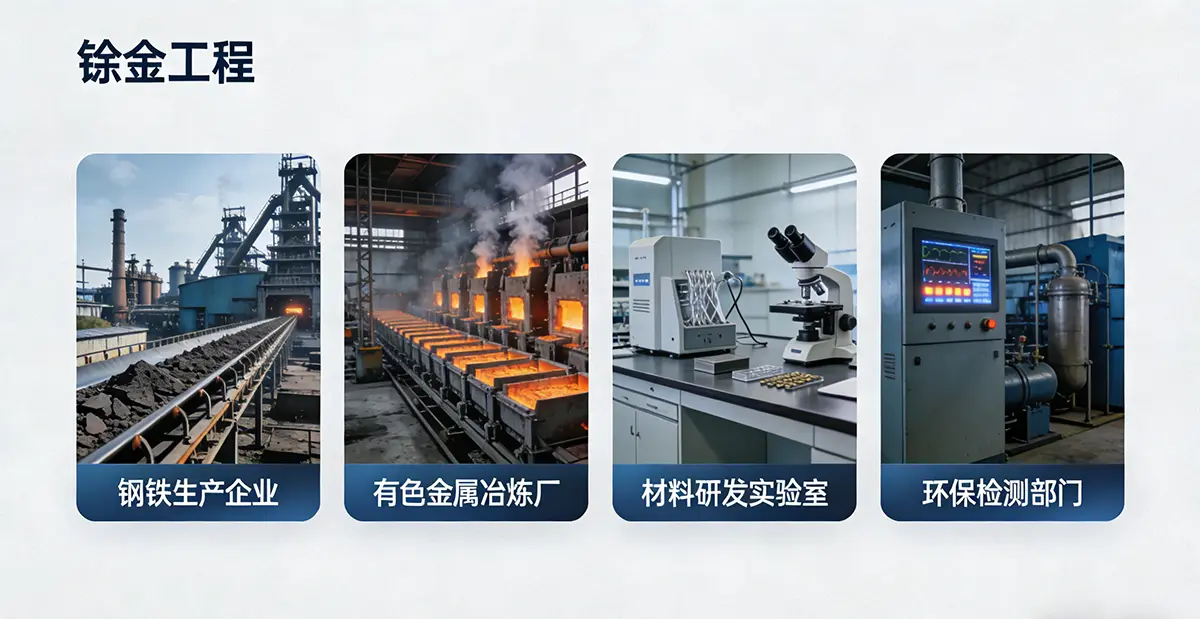
Graduates in Metallurgical Engineering are the “hardcore” talent of the manufacturing sector, with employment opportunities expanding from traditional heavy industries into high-tech fields like new energy and aerospace.
| Industry Sector | Common Positions | Brief Job Responsibilities |
| Steel and Non-Ferrous Metals Enterprises | Smelting Process Engineer, Product Quality Engineer, Production Plant Manager, R&D Technician | At companies like Baowu, Shougang, Ansteel, Minmetals, Chinalco, and Tata Steel, responsible for production process optimization, quality control, new product development, and production management. |
| High-End Equipment Manufacturing | Materials Engineer, Failure Analysis Engineer, Casting/Forging Engineer | In aerospace (e.g., COMAC), automotive manufacturing (e.g., Tesla), and nuclear power sectors, engage in special alloy material selection, forming process development, and component failure analysis. |
| New Energy & New Materials | Battery Materials Engineer, Rare Earth Materials R&D Specialist, 3D Printing Materials Engineer | Develop lithium battery cathode/anode materials and photovoltaic silicon purification technologies at new energy enterprises; or engage in R&D and production of metal 3D printing powders at technology companies. |
| Design Institutes & Research Centers | Metallurgical Process Designer, Engineering Consultant, Researcher | Responsible for process design and engineering consulting for metallurgical plants at institutes like Metallurgical Planning Institute or MCC Jingcheng; or engaged in scientific research at institutions such as the Iron and Steel Research Institute or the Institute of Process Engineering, Chinese Academy of Sciences. |
| Government & Regulatory Agencies | Industry Management Specialist, Environmental Inspector, Policy Researcher | Work in agencies like the National Development and Reform Commission, Ministry of Industry and Information Technology, or environmental protection departments, handling industry planning, industrial policy formulation, and environmental oversight. |
| Financial Institutions & IT Enterprises | Commodity Analyst, New Materials Industry Researcher, Industrial Software Engineer | Analyze metal market trends at investment banks or fund companies; or engage in supply chain management related to metal materials or industrial software development at IT enterprises like Huawei and ZTE. |
Global Employment Rate & Development Trends
Employment Rate: Metallurgical Engineering maintains a high and stable employment rate worldwide, representing a classic “supply-demand imbalance” in high-demand fields.
- Only over 20 universities nationwide offer this program, while market demand exceeds graduate output by nearly 10 times.
- Graduates' employment rate has consistently ranked within the top 30% of engineering disciplines over the past three years.
- Over 68% of USTC graduates pursue further studies, while direct entrants primarily join major state-owned enterprises like Baowu and Shougang, or national ministries.
- Job postings for 2025 increased by 14% compared to 2024, with master's and doctoral candidates accounting for 0.576% and 0.322% of national demand for corresponding degrees respectively, indicating robust demand for high-end talent.
Salary Levels: Significant salary growth accompanies increased experience and skills.
- Fresh graduates' average starting salary exceeds 6K, with potential for over 300% growth within a decade.
- According to Zhaoyouji data, metallurgical engineering positions range from 4.5K to 50K monthly, with 51.2% falling between 8K and 15K.
- Bachelor's graduates can reach an average salary of 12K after 5 years, with top-tier enterprises in first-tier cities offering up to 18K.
Industry Development Trends:
- Green and Low-Carbon Initiatives: Under the “dual carbon” goals, hydrogen metallurgy, low-carbon ironmaking, and energy conservation in process industries have become top R&D priorities. Funding for green metallurgy technology in the National Key R&D Program increased by 45% year-on-year.
- Intelligence and Digitalization: Metallurgical processes are undergoing automation and intelligent upgrades. The roles of smart sensing, digital twins, and big data analytics in optimizing production, reducing costs, and ensuring safety are increasingly prominent.
- High-End and Materials Orientation: Surging demand for high-purity metals, specialty alloys, and lightweight materials from booming high-end manufacturing sectors like aerospace, defense, and new energy vehicles is driving metallurgical engineering toward materials-focused applications.
- Resource Recycling and Urban Mining: Extracting valuable metals from electronic waste and spent batteries through “urban mining” has become a critical strategy for safeguarding national resource security.
Ideal Candidates and Core Competencies for Metallurgical Engineering Major
If you possess the following traits, you may thrive in the field of metallurgical engineering major:
- Strong hands-on skills and a passion for practical work: Enjoy working in factory workshops, witnessing firsthand how ore transforms into metal, and relish the satisfaction of solving on-site technical challenges.
- Solid foundation in mathematics, physics, and chemistry: Able to apply physical chemistry knowledge to understand and control high-temperature, complex metallurgical reaction processes.
- Systems thinking and engineering mindset: Viewing metallurgical processes as interconnected systems, understanding how adjusting process parameters impacts final product performance and quality.
- Sense of responsibility and mission: Recognizing your work underpins national industrial foundations and defense security, willing to contribute to the real economy and support critical national infrastructure.
Core Competency: Your core value lies in mastering complex metallurgical processes—applying physical chemistry principles and engineering methodologies to efficiently, cleanly, and economically extract and prepare metal materials from ores that meet high-end manufacturing demands, while continuously advancing processes toward greener and smarter solutions.
Major Global Institutions Offering Programs
(Selected Institutions Listed—No Ranking Implied)
1. United Kingdom
University of Manchester, Imperial College London, University of Oxford, University of Cambridge, University of Sheffield, University College London
2. Singapore
Nanyang Technological University, National University of Singapore
3. Switzerland
École Polytechnique Fédérale de Lausanne
4. Japan
Tohoku University (Sendai), Kyoto University, University of Tokyo
5. United States
Massachusetts Institute of Technology, Georgia Institute of Technology
6. Canada
McGill University, University of Alberta, University of Toronto, University of Waterloo
7. Netherlands
Delft University of Technology
8. South Korea
Pohang University of Science and Technology
9. Germany
Karlsruhe Institute of Technology, RWTH Aachen University
10. Australia
University of New South Wales
11. China
Central South University, University of Science and Technology Beijing, Harbin Institute of Technology, Northwestern Polytechnical University, Northeastern University, Xi'an Jiaotong University, Shanghai Jiao Tong University, Chongqing University, University of Science and Technology of China, Tsinghua University
Recommended Learning Path for Metallurgical Engineering Major
1. Undergraduate Stage: Build a solid foundation in mathematics, physics, and chemistry while establishing engineering concepts
- Core: Master foundational courses such as Physical Chemistry, Principles of Metallurgical Transport, Metallurgy, and Heat Treatment. These form the cornerstone for understanding all subsequent process courses.
- Practice: Prioritize laboratory courses, introductory internships, and production internships. Visit steel mills or non-ferrous enterprises to witness firsthand how blast furnaces produce iron and converters refine steel, bridging theory with practice. Participate in virtual simulation training to experience modern steel production processes.
2. Master's Level: Focus on Specialization, Enhance R&D and Design Capabilities
- Objective: Select a specialization (e.g., iron and steel metallurgy, non-ferrous metallurgy, environmental metallurgy) aligned with your interests and career goals for in-depth study. Master a specialized software tool (e.g., metallurgical process simulation software, thermodynamic calculation software like FactSage).
- Advancement: Join your advisor's research projects in the lab (e.g., hydrogen metallurgy, high-quality steel development) to gain insights into industry frontiers. Pursue internships at major metallurgical enterprises or design institutes to accumulate practical engineering experience.
3. Doctoral & Postdoctoral Phase: Challenging Scientific Frontiers, Leading Technological Innovation
- Positioning: If you crave exploring the unknown and aspire to become an expert in cutting-edge fields like hydrogen metallurgy, intelligent metallurgical processes, or specialty alloy R&D, the doctoral phase is essential. Under your advisor's guidance, you will conduct in-depth research on a specific scientific or technical challenge (e.g., toughening mechanisms for ultra-high-strength steels, novel low-carbon ironmaking processes).
- Future: PhD graduates in metallurgical engineering are highly sought-after core talents by central research institutes of major corporations (e.g., Baowu Central Research Institute), national-level research institutions (e.g., Iron and Steel Research Institute), and top universities. They drive generational transformations in metallurgical technology and contribute to solving critical material bottlenecks.
- The Previous Passage:Remote Sensing Technology(Remote Sens. Technol.)_遥感技术
- The Next Passage:Instrumentation Science(Instrum. Sci.)_仪器科学
Human Geography Major_Geography(Geog.)_人文地理
The Human Geography Major explores the complex relationships between human activities and space, cul···

Atmospheric Sciences(Atmos. Sci.)_大气科学
Atmospheric science is the study of phenomena and evolutionary patterns within Earth's atmospher···

Earth Sciences(Earth Sci.)_地球科学
The Earth Science major focuses on studying the Earth system and its interactions, providing a scien···

Ocean Sciences(Ocean Sci.)_海洋科学
PbootCMS是全新内核且永久开源免费的PHP企业网站开发建设管理系统,是一套高效、简洁、 强悍的可免费商用的···

