

Interaction Design(IxD (业界标准缩写))_交互设计
Time:2026-03-19 Visits:1
Interaction Design Major
The Interaction Design Major explores the creation of meaningful connections between users and digital products. This guide details the curriculum in user research, prototyping, and interface design, explores advanced study options in HCI and service design, and outlines career opportunities in tech, finance, and emerging fields. Discover how this Major blends psychology, technology, and design to shape the future of digital experiences.
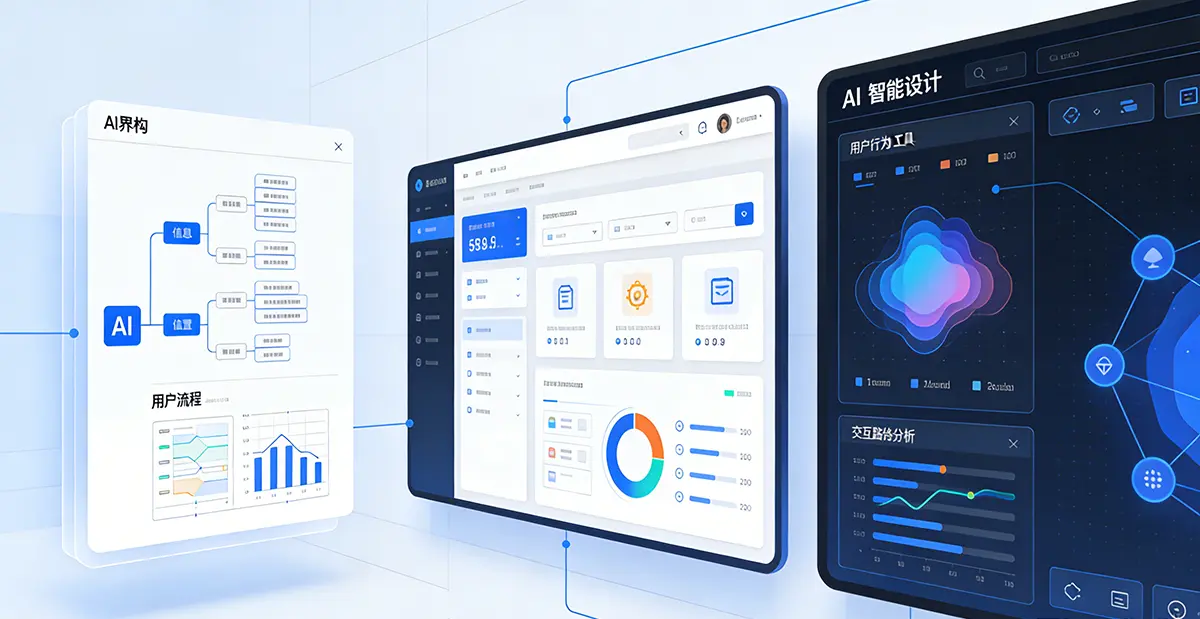
1. Introduction to the Interaction Design Major
The Interaction Design Major is an interdisciplinary design field dedicated to studying the interactive behaviors, experiential flows, and emotional connections between humans and digital products, services, and systems. It moves beyond traditional interface aesthetics to focus on defining a product’s behavioral logic, information architecture, and user flows, employing prototyping and testing to optimize usability, accessibility, and delight. By integrating design thinking, cognitive psychology, technical implementation, and business strategy, the Interaction Design Major aims to create useful, usable, and satisfying digital experiences, serving as a core discipline driving the development of today's internet, smart devices, and future digital ecosystems.
2. Core Curriculum for the Interaction Design Major
| Module Category | Core Courses |
| Design Foundations & Thinking | Design Thinking, UX Design Principles, Information Architecture, Interaction Design Fundamentals, Intro to Service Design |
| User Research & Analysis | User Research Methods, User Personas, Experience Mapping, Data Analysis Fundamentals, Usability Engineering |
| Core Design Skills | Wireframing & Prototyping, Interface Visual Design, Motion Design, Design System Development, Responsive & Accessible Design |
| Technical Implementation & Tools | Front-End Dev Fundamentals, Design Tools (Figma/Sketch/XD), Prototyping Tools, Three.js/WebGL Basics |
| Advanced & Emerging Fields | Voice & AR/VR Interaction Design, IoT Interaction, Gamification Design, AI & UX, Data Visualization Interaction |
| Projects & Collaboration | Interdisciplinary Project Practice, Design Sprints, Agile Development, Design Documentation & Teamwork |
| Career & Theory | History & Theory of Interaction Design, Design Ethics, Product Strategy & Business, Design Leadership, Portfolio Guidance |
3. Advanced Study Pathways for the Interaction Design Major
Master’s (Specialization): Interaction Design/UX Design, Human-Computer Interaction, Service Design.
Master’s (Frontier Exploration): Foresight/Transformative Design, Data Visualization.
Cross-Disciplinary: Product Management, Computer Science/Software Engineering, Psychology/Cognitive Science.
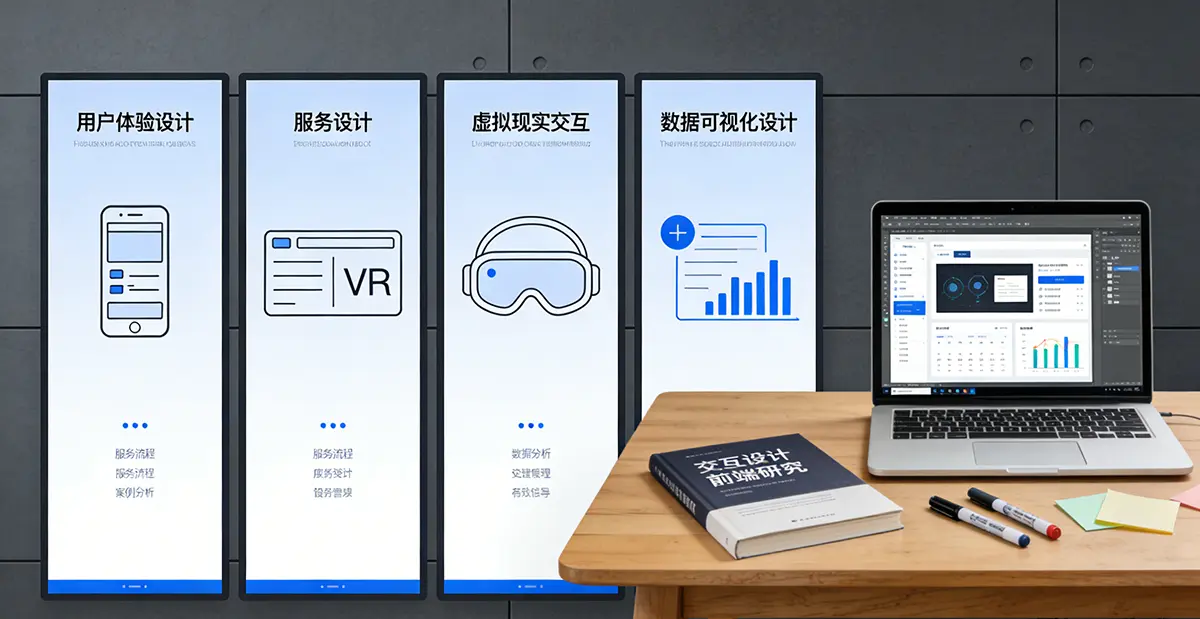
4. Career Pathways for the Interaction Design Major
Career prospects are broad, centered on the tech industry while expanding into traditional sectors undergoing digital transformation.
Internet & Tech Giants: User Experience Designer, Interaction Designer, Product Designer, User Researcher.
Finance, Automotive & Hardware: FinTech UX Designer, In-Car HMI Designer, Smart Home Interaction Designer.
Consulting & Innovation Agencies: Design Consultant, Service Designer, Innovation Strategist.
Emerging Sectors & Startups: AR/VR Interaction Designer, Game UX Designer, Metaverse Experience Designer.
Freelance & Education: Independent UX Consultant, Design Studio Founder, University Faculty, Corporate Trainer.
5. Employment & Industry Trends for the Interaction Design Major
Employment Characteristics
Strong demand meets increasingly high expectations; companies seek designers who can solve complex business problems with end-to-end expertise.
Success requires a hybrid skillset: user empathy, logical thinking, technical literacy, business acumen, and visual communication.
Highly competitive salaries, but premium roles are concentrated in major metropolitan hubs.
Clear, rapid career progression from junior to senior, expert, and leadership positions.
Industry Trends
Shift from GUI to multimodal interactions encompassing voice, gesture, eye-tracking, and brain-computer interfaces.
AI serves as both a collaborative tool for designers and a core subject for experience design.
Personalized, context-aware experiences powered by big data and sensors.
Convergence of physical/virtual realms and spatial computing in the metaverse and mixed reality.
Ethics, privacy, and inclusivity becoming foundational design requirements.
Design’s impact is increasingly quantified and linked to key business metrics like retention and conversion.
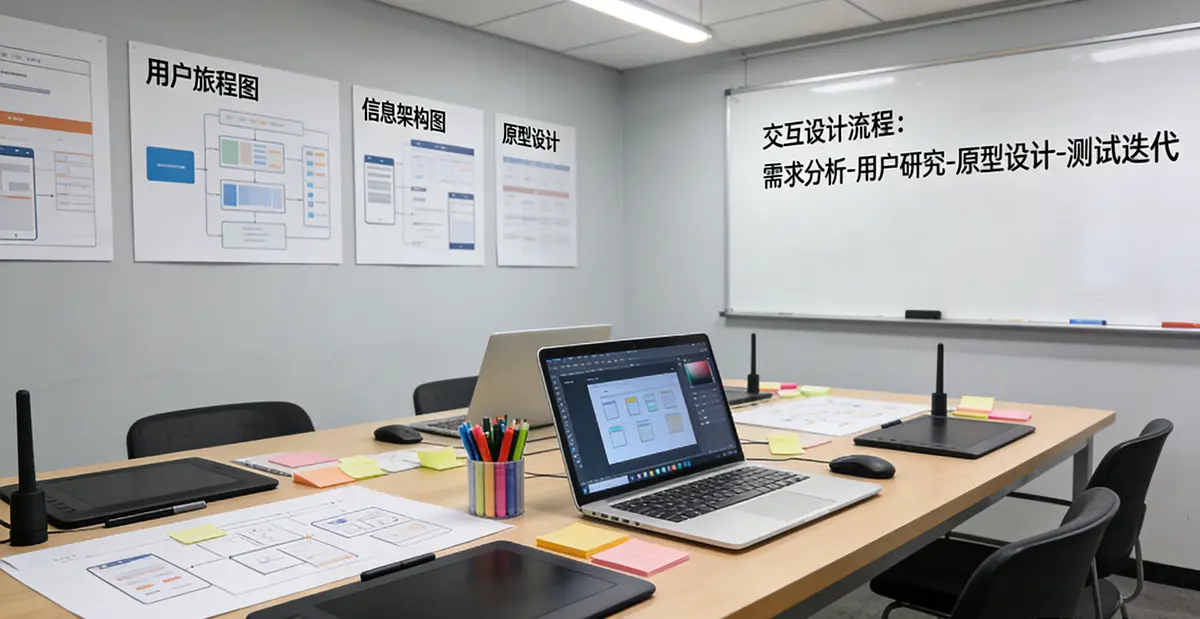
6. Leading Global Institutions for the Interaction Design Major
(Selected Institutions - No Ranking Order)
| Country/Region | Representative Institutions (Leading Programs) |
| United States | Carnegie Mellon University, MIT Media Lab, Stanford University, University of Washington, Parsons School of Design |
| United Kingdom | Royal College of Art, University of the Arts London, Glasgow School of Art, University of Edinburgh |
| Europe | Delft University of Technology, Politecnico di Milano, Umeå University, Copenhagen Institute of Interaction Design |
| China | Tsinghua University, Tongji University, Zhejiang University, Jiangnan University, Beijing Institute of Technology |
| Other Asia | The Hong Kong Polytechnic University, National University of Singapore, KAIST |
| Australia | University of Sydney, RMIT University |
DisciplineMajor Recommendations
Ideal Candidates for the Major
Possess strong curiosity about the intersection of people, technology, and society, and enjoy analyzing underlying logic.
Demonstrate excellent systems thinking, logical analysis, and empathy to uncover latent user needs.
Are unafraid of technology, eager to learn new tools, and able to communicate effectively with engineers.
Are skilled communicators and facilitators who can articulate design rationale and drive cross-functional collaboration.
Core Competencies of the Major
Ability to solve complex UX problems through systematic research, design, and validation.
Skill in constructing clear information architectures, fluid interaction flows, and effective prototypes.
Strategic thinking to balance user needs, technical feasibility, and business goals.
Capacity for continuous learning, adaptation, and innovation in a fast-evolving tech landscape.
Study Recommendations
Build a T-shaped skillset: gain broad knowledge in psychology, business, and tech while deeply specializing in 1-2 areas.
Adopt project-driven learning: tackle real-world problems, complete full projects from research to hi-fi prototype, and build a strong portfolio.
Learn to speak the language of engineering: understand front-end fundamentals and technical constraints.
Develop data sensitivity: learn A/B testing and basic data analysis to inform design decisions.
Engage with the community: follow industry leaders, participate in conferences and workshops.
Maintain human-centered values and critical thinking: always consider the social impact of design.
*Note: Program classification may vary by institution.*
- The Previous Passage:Painting(Painting)_绘画学
- The Next Passage:Jazz Studies(Jazz Stud.)_爵士

Human Geography Major_Geography(Geog.)_人文地理
The Human Geography Major explores the complex relationships between human activities and space, cul···

Atmospheric Sciences(Atmos. Sci.)_大气科学
Atmospheric science is the study of phenomena and evolutionary patterns within Earth's atmospher···

Earth Sciences(Earth Sci.)_地球科学
The Earth Science major focuses on studying the Earth system and its interactions, providing a scien···

Ocean Sciences(Ocean Sci.)_海洋科学
PbootCMS是全新内核且永久开源免费的PHP企业网站开发建设管理系统,是一套高效、简洁、 强悍的可免费商用的···

