

Jazz Studies(Jazz Stud.)_爵士
Time:2026-03-20 Visits:1
Jazz Major (Jazz Performance and Composition)
The Jazz Major is a specialized discipline focused on jazz performance and composition, designed to cultivate versatile musicians through core training in improvisation, harmony, ensemble playing, and jazz history. This guide outlines the curriculum, advanced study pathways, and diverse career opportunities for jazz majors. With an emphasis on practical skills and industry trends, it provides insights into the evolving landscape of jazz education and professional development. Whether pursuing performance, composition, or teaching, the jazz major equips students with the creativity and adaptability needed in today’s music scene.
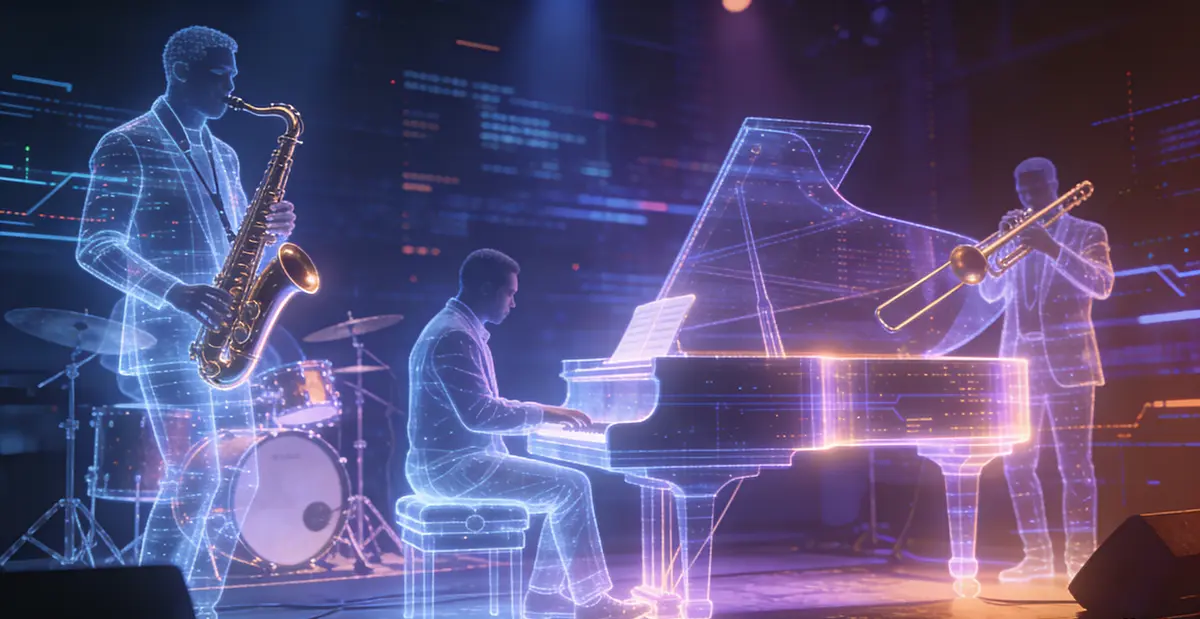
Jazz Major (Jazz Performance and Composition) Introduction
The Jazz Major is a modern music discipline centered on jazz—an improvisational and creative musical form originating in the United States. It systematically explores performance techniques, harmonic theory, improvisational methods, historical styles, and arranging. Unlike classical music's emphasis on score reproduction, the jazz major prioritizes individual musical voice, live interaction, and spontaneous creation. This major aims to cultivate versatile contemporary musicians with masterful instrumental/vocal skills, deep jazz harmony knowledge, exceptional improvisational ability, and a thorough understanding of jazz history and its various styles.
Core Curriculum for the Jazz Major (Jazz Performance and Composition)
| Module Category | Core Courses |
| Core Performance & Ensemble | Jazz Major Instrument/Voice Lessons (one-on-one, focusing on jazz vocabulary and technique), Jazz Big Band Rehearsal, Jazz Combo Ensemble (core practice), Rhythm Section Workshops (piano, bass, drums, guitar), Standards Performance |
| Harmony & Improvisation Theory | Jazz Harmony (extended chords, substitute chords, modal harmony), Jazz Sight-Singing & Ear Training (focus on chord progression recognition and complex rhythms), Improvisation Methodology (scale application, motivic development, phrase construction), Melodic Analysis and Composition |
| History, Styles & Analysis | Jazz History (from ragtime, swing, bebop to fusion, and modern jazz), Jazz Style Studies (e.g., bebop, cool jazz, funk jazz, Latin jazz), Masterworks/Solo Analysis |
| Composition & Arrangement | Jazz Arranging (for small ensembles and big bands), Jazz Composition, Digital Audio Workstation Application (for arranging and production), Score Reading and Writing |
| Rhythm and Groove | Jazz Rhythm Training, Latin Rhythm Workshops, Rhythm Section Interaction and Dialogue |
| Practice and Business | Stage Performance Practice, Studio Recording Practice, Introduction to the Jazz Industry, Musician Self-Management |
| Electives and Extensions | Jazz Piano Minor (for non-piano majors), Sound Design and Electronic Music Fundamentals, World Music Rhythm Studies |
Advanced Study Pathways for Jazz Majors (Jazz Performance and Composition)
Master of Jazz Performance/Artist Diploma: Further refine improvisation and ensemble skills while developing a personal artistic style.
Master of Jazz Composition/Arrangement: Focus on jazz composition and large ensemble orchestration.
Master of Music Production/Recording Arts: Shift toward modern music production and recording/mixing techniques.
Master of Music Education (Jazz Emphasis): Research jazz pedagogy and train future jazz educators.
Master of Musicology/Ethnomusicology (with Jazz Studies focus): Conduct research in jazz history, theory, or culture.
Master of Popular Music Studies/Commercial Music Production: Expand into broader contemporary music industry fields.
Advanced studies at top jazz institutions in the U.S./Europe: Immerse in the birthplace or major hubs of jazz.
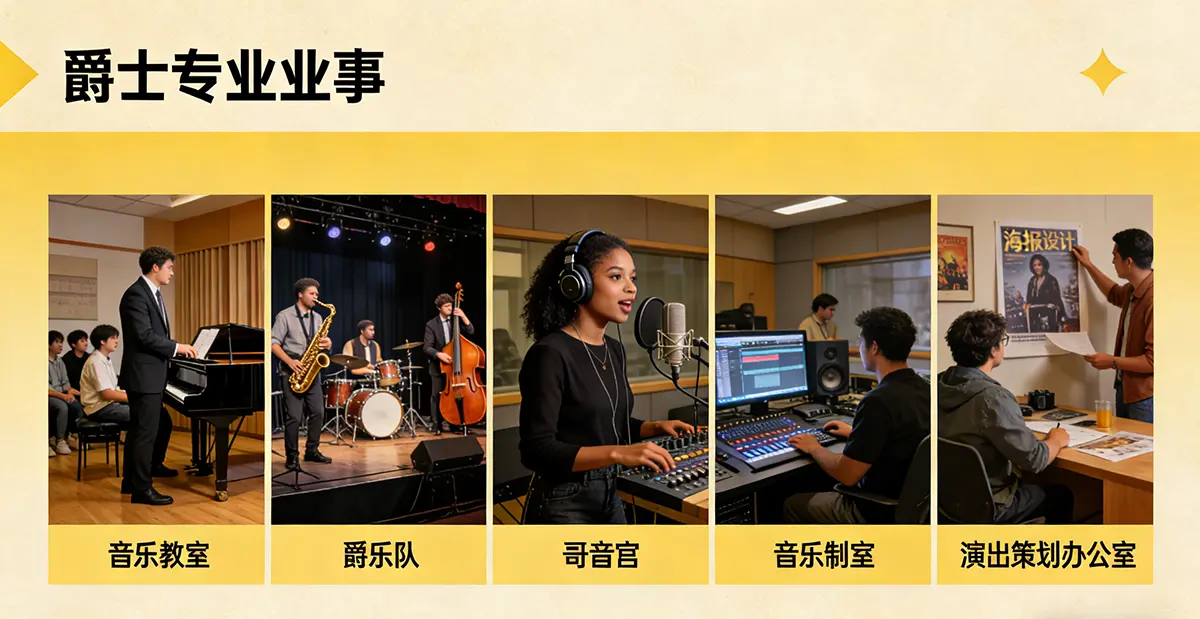
Career Paths for Jazz Majors (Jazz Performance and Composition)
| Core Employment Fields | Typical Positions | Primary Responsibilities and Skill Application |
| Live Performance & Musicianship | Professional Jazz Musician (freelance or contracted) | Perform live at jazz clubs, festivals, concert halls, and engage in improvisation. |
| Big Band/Professional Ensemble Musician | Join established or project-based jazz big bands, performing saxophone, trumpet, trombone, or other section parts. | |
| Session Player | Provide jazz or fusion-style performances for albums, film/TV, advertisements, and video game music. | |
| Musical/Variety Show Live Band Musician | Accompany live performances requiring jazz or pop-oriented arrangements. | |
| Composition & Production | Jazz Composer/Arranger | Create original jazz works for bands or vocalists, or arrange classic tunes. |
| Music Producer/Arranger (specializing in jazz, fusion, R&B) | Lead or contribute to album production, conceptualizing and arranging music. | |
| Education & Training | University/Conservatory Jazz Faculty (requires advanced degree and performance experience) | Teach jazz performance, improvisation, ensemble, harmony, and related courses. |
| Jazz Instructor at Community Music Schools | Teach jazz instruments, ensemble playing, and improvisation fundamentals. | |
| Masterclass/Workshop Instructor | Conduct short-term intensive jazz workshops upon invitation. | |
| Music Industry & Media | Festival/Venue Programmer or Stage Manager | Organize jazz-themed performances and manage live music events. |
| Music Journalist/Critic (jazz focus) | Write reviews, artist interviews, and industry reports. | |
| Music Copyright Management/Artist Manager (focus on jazz and original artists) | Handle copyright or agency work for jazz and original musicians. | |
| Emerging & Cross-disciplinary Fields | Film/Game Composer or Performer | Compose or perform for productions requiring jazz, blues, swing, or related styles. |
| Immersive Performance/New Media Art Project Music Designer | Design and perform live music for interdisciplinary projects like exhibitions, theater, and dance. | |
| Music Technology Content Developer (e.g., smart instruments, music education apps) | Design jazz-related educational or entertainment content. | |
| Community Cultural Services | Music Director at Cultural/Community Arts Centers | Organize community jazz bands and host outreach concerts or workshops. |
Employment Rate and Industry Trends for Jazz Majors (Jazz Performance and Composition)
Employment Characteristics:
"Highly freelance-oriented with significant income volatility": Most professional jazz musicians rely on project-based gigs, performances, and teaching, lacking stable salaries and requiring strong self-management and diversified income streams.
"High dependence on urban music scenes": Job opportunities concentrate in first-tier cities like Beijing, Shanghai, Chengdu, and Shenzhen, which feature active jazz clubs, festivals, and recording industries.
"Composite skills provide a competitive edge": Merely playing standards is insufficient; musicians skilled in composition, arranging, production, and multiple genres (e.g., fusion, pop, Latin) secure work more easily.
"Teaching is a key stable income source": Both institutional and private teaching serve as vital economic pillars for many jazz musicians.
Industry Trends:
Increasing "crossover" and fusion in jazz: Boundaries between jazz and pop, hip-hop, electronic, and world music are blurring, creating more cross-genre collaboration and performance opportunities.
Growth and internationalization of China's local jazz scene: Increasing local jazz festivals and clubs, along with rising international visibility of domestic musicians, drive ecosystem development.
Revival of live music and the experience economy: Post-pandemic, small-scale, high-quality live jazz performances (Livehouse, clubs) are favored, demanding stronger stage presence from musicians.
Online content creation and knowledge monetization: Showcasing performances, sharing improvisation/arranging insights, and offering online lessons have become new channels for personal branding and income.
Jazz elements in game and film scoring: Steady demand for jazz in indie games, film noir, and urban-themed productions provides ongoing opportunities for composition and performance.
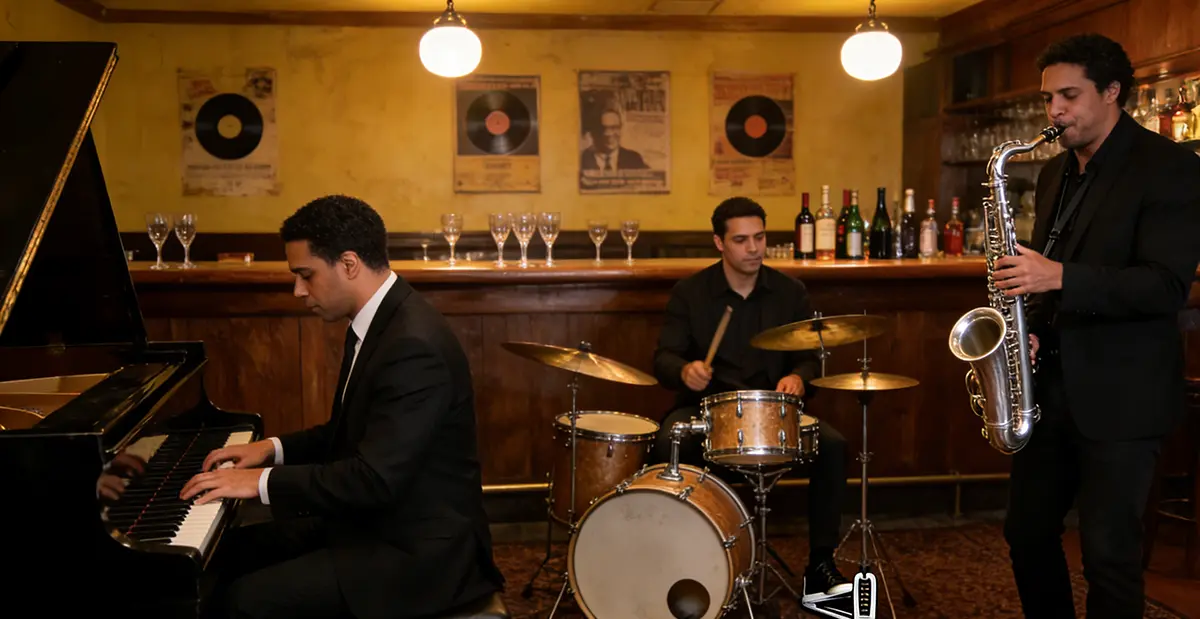
Major Global Institutions Offering Jazz Majors
(Selected Institutions - No Ranking Order)
| Country/Region | Representative Institutions (Top Jazz Programs) |
| United States | Berklee College of Music (leader in modern pop and jazz education), New England Conservatory (top jazz department), Manhattan School of Music, University of North Texas (one of the oldest jazz studies programs), Oberlin Conservatory |
| Netherlands | Conservatorium van Amsterdam (major European jazz education hub, highly international) |
| Denmark | Royal Danish Academy of Music |
| France | Conservatoire National Supérieur de Musique de Paris |
| China | Shanghai Conservatory of Music (leading domestic jazz program), Beijing Modern Music Institute, Xinghai Conservatory of Music (jazz program under the Popular Music Department), Nanjing University of the Arts |
| Other | Conservatoire de Montréal (Canada) |
Ideal Candidates for the Jazz Major (Jazz Performance and Composition):
Individuals with a strong rhythmic sense, good aural skills, and a deep desire for improvisation.
Those passionate about jazz’s unique harmonic colors, swing feel, and free expression.
Open-minded, collaborative personalities who enjoy interaction and chemistry in ensemble settings.
Those unsatisfied with merely reading scores and eager to create their own musical voice.
Core Competencies of the Jazz Major (Jazz Performance and Composition):
Exceptional improvisational ability: Creating logical, emotive, and personally distinctive melodic lines in real-time based on harmonic progressions.
Deep internalized understanding of jazz harmony: Translating complex harmony into instinctive playing choices beyond theoretical knowledge.
Precise rhythmic control and ensemble interaction: Especially seamless dialogue with the rhythm section.
Unique personal tone and musical identity: Developing a recognizable sonic signature among musicians.
Study Recommendations for the Jazz Major (Jazz Performance and Composition):
Extensive listening and analysis: Study classic and contemporary master recordings to analyze improvisational approaches, harmonic usage, and rhythmic treatment, building an internal “jazz vocabulary.”
Intensive ensemble practice: Jazz is the art of “dialogue.” Participate in as many small combo sessions as possible—the fastest path to growth.
Master jazz piano fundamentals: Even for non-piano majors, keyboard harmony skills are crucial for understanding jazz harmony and arranging.
Begin composing and arranging early: Move beyond playing standards; create original works and arrange for your own ensemble.
Engage actively in live scenes: Perform at jazz clubs and jam sessions to build industry connections and experience real-stage dynamics. Learn basic recording and music production skills to meet modern music industry demands.
Note: Some institutions classify this major under different disciplines. Please refer to the actual classification of the specific institution.
- The Previous Passage:Interaction Design(IxD (业界标准缩写))_交互设计
- The Next Passage:Fine Arts(Fine Arts)_美术学
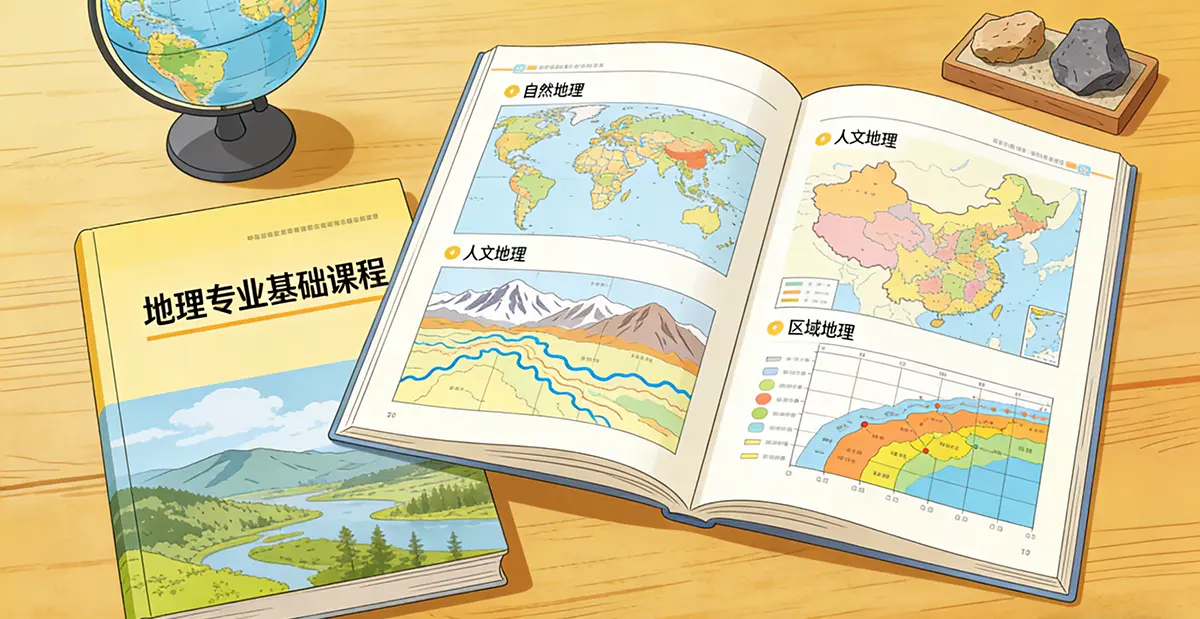
Human Geography Major_Geography(Geog.)_人文地理
The Human Geography Major explores the complex relationships between human activities and space, cul···

Atmospheric Sciences(Atmos. Sci.)_大气科学
Atmospheric science is the study of phenomena and evolutionary patterns within Earth's atmospher···

Earth Sciences(Earth Sci.)_地球科学
The Earth Science major focuses on studying the Earth system and its interactions, providing a scien···

Ocean Sciences(Ocean Sci.)_海洋科学
PbootCMS是全新内核且永久开源免费的PHP企业网站开发建设管理系统,是一套高效、简洁、 强悍的可免费商用的···

