

Engineering Seismology(Eng. Seismol.)_工程地震学
Time:2026-04-10 Visits:1
Engineering Seismology Major
The Engineering Seismology Major is an interdisciplinary field bridging seismology and civil engineering, focused on seismic ground motion, structural earthquake resistance, and disaster risk assessment. Through quantitative analysis and engineering solutions, it ensures the seismic safety of critical infrastructure and cities, training advanced professionals in seismic design, risk evaluation, and disaster mitigation planning.
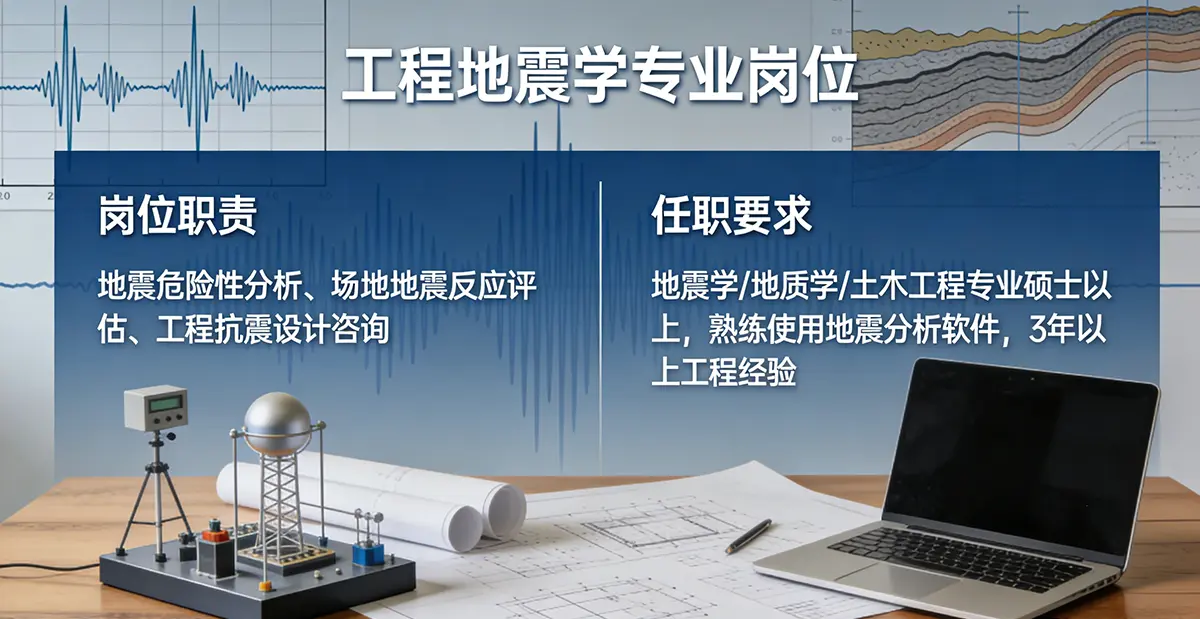
1. Introduction to the Engineering Seismology Major
The Engineering Seismology Major is an interdisciplinary discipline integrating seismology and civil engineering. It focuses on investigating seismic ground motion characteristics, site effects, structural seismic response, and theories and methodologies for seismic design. Its core objective is to mitigate earthquake disaster risks through quantitative analysis and engineering measures, ensuring the safety of lifeline projects and critical infrastructure under seismic action. This Major serves as a crucial bridge connecting Earth’s internal processes with surface engineering safety and is vital for earthquake resistance and disaster prevention.
2. Major Courses in the Engineering Seismology Major
| Module Category | Core Courses |
| Foundational Sciences | Advanced Mathematics, Linear Algebra, Probability Theory and Mathematical Statistics, University Physics, Theoretical Mechanics, Mechanics of Materials, Elasticity Theory |
| Seismology Fundamentals | General Geology, Structural Geology, Introduction to Seismology, Seismic Wave Theory, Strong Ground Motion Observation and Data Processing |
| Engineering Core | Structural Dynamics, Soil Dynamics, Engineering Geology and Hydrogeology, Seismic Design of Geotechnical Structures, Earthquake Engineering |
| Analysis and Design | Seismic Hazard Analysis, Site Response Analysis, Seismic Design of Building Structures, Seismic Design of Bridges, Seismic Design of Lifeline Engineering |
| Numerical Simulation and Tools | Finite Element Method and Dynamic Analysis, Seismic Motion Simulation, Professional Analysis Software (e.g., OpenSees, SAP2000, ABAQUS), Scientific Programming (Python/MATLAB) |
| Risk Assessment and Management | Seismic Hazard Risk Assessment, Seismic Resilience Evaluation, Disaster Prevention and Mitigation Planning, Fundamentals of Structural Health Monitoring |
3. Advanced Study Pathways for the Engineering Seismology Major
Master's/PhD in Earthquake Engineering/Disaster Mitigation Engineering: Conduct in-depth research into frontier areas such as seismic motion simulation, structural nonlinear response, seismic isolation and vibration control, and resilient cities.
Master's/PhD in Solid Earth Physics: Transition to fundamental research on seismic source mechanisms and Earth's internal structure.
Master's in Geotechnical Engineering: Specialize in geotechnical seismic engineering issues like seismic liquefaction and slope stability under earthquakes.
Master's in Structural Engineering: Deepen expertise in seismic analysis and design methodologies for complex structures.
Master's in Insurance and Risk Management: Engage in catastrophe model development and pricing of earthquake risk financial derivatives.
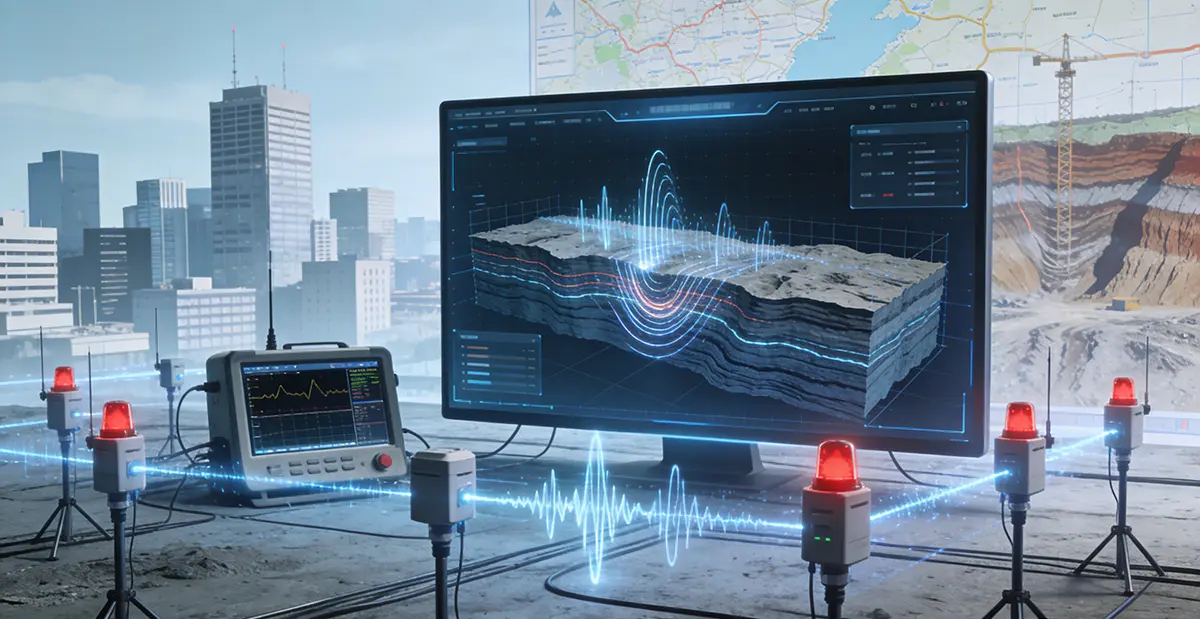
4. Career Paths and Positions for the Engineering Seismology Major
This Major is highly specialized, with employment concentrated in industries and sectors that have stringent seismic safety requirements.
Core Employment Sectors
Research Institutes and Universities (Primary Alignment):
Institutes under the China Earthquake Administration (e.g., Institute of Engineering Mechanics, Institute of Geology, Institute of Earthquake Forecasting) and related institutes of the Chinese Academy of Sciences: Researchers engaged in theoretical, experimental, and observational studies in earthquake engineering.
University departments related to civil or seismic engineering: Teaching and research positions (typically requiring a PhD).
Major Engineering Design and Consulting Firms:
Large-scale architectural design institutes, bridge design institutes, and power/nuclear power design institutes: Seismic design/analysis specialists responsible for the seismic analysis and design of super-tall buildings, long-span bridges, nuclear power plants, and UHV facilities.
Engineering consulting companies: Seismic safety assessment engineers responsible for conducting seismic safety evaluations for major projects.
Government Disaster Prevention and Mitigation Agencies:
Various units within the Ministry of Emergency Management and the China Earthquake Administration system: Technical management roles involving earthquake damage prediction, emergency preparedness, administration of seismic design codes, and disaster prevention planning.
High-End Manufacturing and Insurance:
Sectors such as nuclear power, aerospace, and precision instrumentation requiring seismic safety evaluations for equipment.
Reinsurance companies and risk modeling firms (e.g., RMS, AIR): Catastrophe model researchers developing seismic risk models for insurance pricing.
Civil Engineering Software Companies:
Algorithm engineers developing software for civil/earthquake engineering analysis.
5. Employment Rate and Industry Trends for the Engineering Seismology Major
Employment Rate Characteristics
“Niche Elite with Inelastic Demand”: The discipline has a small scale with a limited number of directly related positions. However, it falls within the realm of national strategic security, resulting in stable and irreplaceable demand.
“High Academic Requirements”: Core R&D and high-end design positions generally require a master's degree or higher, with PhDs being predominant in research institutions.
“Significant Responsibility”: Work is directly related to public safety, demanding the highest standards of professional ethics and accountability.
Industry Development Trends
Paradigm Shift from “Seismic Resistance” to “Resilience”: The research focus is expanding from preventing structural collapse to ensuring the rapid recovery of urban functions after earthquakes, driving the development of theories and technologies for resilient cities.
Integration of Artificial Intelligence and Big Data: Utilizing AI for real-time ground motion prediction, rapid structural damage assessment, and seismic disaster simulation to enhance early warning and emergency response capabilities.
High-Performance Computing and High-Fidelity Simulation: Employing supercomputing for city-scale seismic disaster scenario modeling and refined analysis of nonlinear dynamic responses in engineering structures.
Application of New Seismic Isolation/Damping Technologies and Smart Materials: Promoting the engineering application of high-performance seismic isolators, dampers, and smart materials with self-centering and self-monitoring capabilities.
Climate Change and Earthquake-Disaster Chain Research: Investigating the chain effects and comprehensive risk assessment of earthquakes coupled with secondary disasters like landslides and floods under the influence of climate change.
6. Major Global Institutions Offering the Engineering Seismology Major
Engineering seismology/earthquake engineering is typically a core research focus within civil engineering, geophysics, or disaster mitigation programs at leading universities. (Some universities are shown - ranking is not in order)
| Country/Region | Representative Institutions (Leading Institutions in Engineering Seismology/Earthquake Engineering) |
| United States | University of California, Berkeley (PEER Center), Stanford University, California Institute of Technology, University of Illinois at Urbana-Champaign |
| Japan | University of Tokyo, Kyoto University (World-leading in research and application due to frequent seismic activity) |
| New Zealand | University of Canterbury (Renowned for seismic engineering research) |
| Italy | Institutions affiliated with the European Centre for Training and Research in Earthquake Engineering (EUCENTRE) |
| China | Tongji University (State Key Laboratory of Civil Engineering Disaster Prevention), Harbin Institute of Technology, Institute of Engineering Mechanics (China Earthquake Administration), University of Science and Technology of China |
| Other | ETH Zurich, University of Patras |
DisciplineMajor Recommendations
Ideal Candidates for the Engineering Seismology Major
Individuals with a strong interest in the interdisciplinary intersection of Earth sciences and engineering safety, coupled with a deep sense of social responsibility and mission.
Possess top-tier mathematical logic, a solid foundation in mechanics, and strong programming skills.
Ability to adapt to highly specialized and multidisciplinary collaborative research environments.
Maintain a scientific understanding and approach toward uncertainty and low-probability, high-consequence events.
Core Competencies of the Engineering Seismology Discipline
A solid foundation in seismology, structural dynamics, and probability theory.
Comprehensive capability to conduct seismic hazard analysis, site effect evaluation, and structural dynamic response assessment.
Proficiency in using advanced numerical tools for seismic ground motion simulation and nonlinear structural analysis.
The applied skill to translate complex theories into engineering codes and design guidelines.
Study Recommendations for the Engineering Seismology Major
Build a balanced and robust knowledge base across the three pillars of seismology, mechanics, and engineering—none should be neglected.
Achieve proficiency in at least one scientific computing language and one professional finite element dynamic analysis software.
Actively participate in major research projects or competitions (e.g., seismic design challenges) to accumulate practical experience.
Stay informed about detailed post-disaster investigation reports of major earthquakes worldwide and the latest updates in seismic design codes and standards.
Cultivate a rigorous, prudent scientific attitude and excellent technical report writing skills.
Develop an international perspective: Engineering seismology is a global discipline; stay abreast of international cutting-edge developments through organizations like the Earthquake Engineering Research Institute (EERI).
Note: Some institutions may categorize this Major under different disciplines. Please refer to the specific classification used by your chosen institution.
- The Previous Passage:Cell and Developmental Biology(Cell Dev. Biol.)_细胞和发育
- The Next Passage:Environmental Science and Engineering(Env. Sci. & Eng. 或 ESE)_环境科学与工程

Human Geography Major_Geography(Geog.)_人文地理
The Human Geography Major explores the complex relationships between human activities and space, cul···

Atmospheric Sciences(Atmos. Sci.)_大气科学
Atmospheric science is the study of phenomena and evolutionary patterns within Earth's atmospher···

Earth Sciences(Earth Sci.)_地球科学
The Earth Science major focuses on studying the Earth system and its interactions, providing a scien···

Ocean Sciences(Ocean Sci.)_海洋科学
PbootCMS是全新内核且永久开源免费的PHP企业网站开发建设管理系统,是一套高效、简洁、 强悍的可免费商用的···

