

English Language and Literature(English Lang. & Lit.)_英语语言文学
Time:2026-04-25 Visits:2
English Language and Literature Major
The English Language and Literature Major offers an in-depth exploration of Anglophone literary traditions, critical theory, and cultural contexts. This guide details the rigorous curriculum, graduate study options, and diverse career paths in education, translation, publishing, and international affairs. Discover how this Major cultivates advanced analytical and communication skills, preparing graduates for impactful roles in a globalized world.
1. Introduction to the English Language and Literature Major
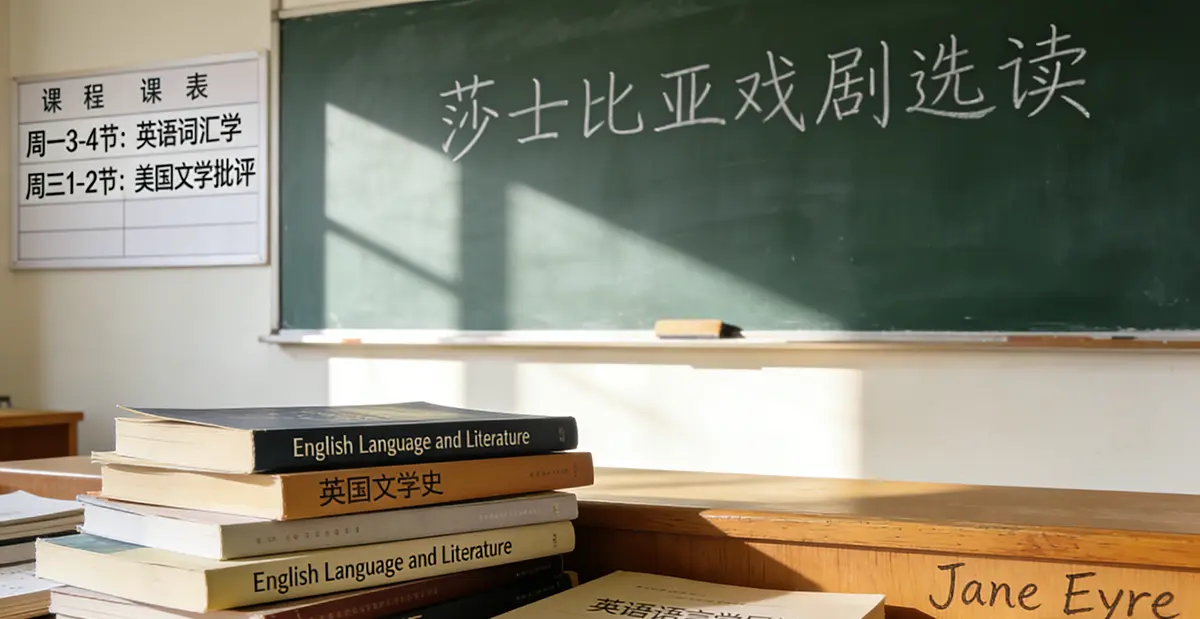
The English Language and Literature Major is a humanities discipline that uses English as a medium to systematically study the literature, culture, history, society, and global influence of Anglophone countries. Moving beyond mere language skills, this Major is dedicated to exploring the intellectual depth and artistic value of literary classics through critical reading, theoretical analysis, and sophisticated writing, while interrogating the cultural logic and social transformations of the English-speaking world. The English Language and Literature Major aims to cultivate versatile, high-caliber professionals with superior English proficiency, profound cross-cultural insight, keen textual analysis skills, and independent research capabilities.

2. Core Curriculum for the English Language and Literature Major
| Module Category | Core Courses |
| Language Skills Core | Advanced/Integrated English, Listening/Speaking, English Writing, Advanced Grammar & Rhetoric, Translation & Interpretation |
| Literary History & Classics | History of English Literature, History of American Literature, Selected Readings in Poetry/Fiction/Drama, Shakespeare Studies |
| Literary Theory & Criticism | Introduction to Literary Theory, Western Literary Theory, Critical Practice, Narratology, Feminist & Postcolonial Criticism |
| Cultural & Area Studies | Overview of Anglophone Countries, Intro to Western Culture, American/British Studies, Intercultural Communication |
| Linguistics & Language Science | Intro to English Linguistics, Phonetics & Phonology, Lexicology, Syntax, Sociolinguistics, Second Language Acquisition |
| Specialized & Frontier Topics | Minority/Ethnic Literature, Postmodernist Fiction, Ecocriticism, Film & Literary Adaptation, Digital Humanities |
| Practice & Skills | Academic Writing & Research Methods, Comparative Literature, Literary Translation Practice, Creative Writing |
3. Advanced Study Pathways for the English Language and Literature Major
Master’s/PhD in English Literature/Comparative Literature: Enter academia as a university professor or research specialist.
Master’s in Translation & Interpreting Studies: Become a professional translator, interpreter, or translation theorist.
Master of Fine Arts (MFA) in Creative Writing: Pursue careers as a writer, poet, screenwriter, or writing instructor.
Master’s in Cultural/Media Studies: Specialize in research on popular culture, film, or digital media.
Master of Laws (LL.M.): Leverage superior language and analytical skills to enter the legal field.
Master’s in International Relations/Public Policy: Apply linguistic and cross-cultural expertise to policy analysis.
Master’s in Publishing/Library & Information Science: Enter the publishing, editorial, or information management sectors.
Master of Education (M.Ed.): Specialize in TESOL (Teaching English to Speakers of Other Languages) theory and methodology.
4. Career Pathways for the English Language and Literature Major
| Core Employment Sectors | Typical Positions | Primary Responsibilities & Skill Application |
| Education & Research | University Professor/Researcher, K-12/International School Teacher, Language Trainer/Curriculum Developer | Teaching, curriculum design, academic research, imparting literary and cultural knowledge. |
| Translation & Communication | Professional Translator/Editor, Foreign Correspondent/News Editor, Corporate Communications Specialist | Translation/Interpreting, news reporting/editing, cross-cultural copywriting and localization. |
| Publishing & Media | Book Editor/Copyright Manager, Culture Reporter/Editor | Project acquisition/editing, copyright trading, creation of cultural content. |
| Government & Foreign Affairs | Diplomat/Foreign Affairs Officer, Civil Servant (Foreign-related Departments) | Diplomatic reception, policy research, document drafting, international project management. |
| Business & Consulting | Management Trainee/Admin/PR (MNCs), Research Analyst (Consulting), International Business Specialist | Cross-cultural communication, market analysis, strategic research, business negotiation support. |
| Culture & Creative Industries | Program Officer/Curator (Cultural Institutions), Localization Specialist/Script Consultant (Media Companies) | Planning cultural exchange events, content localization, cultural adaptation, creative development. |
5. Employment & Industry Trends for the English Language and Literature Major
Employment Characteristics
Broad yet non-specialized with intense competition: Graduates must differentiate themselves when competing with applied English majors, translation majors, and interdisciplinary peers.
Skills and certifications are key: Exceptional practical language skills (writing/speaking) are fundamental, enhanced by credentials like CATTI, TESOL, or professional qualifications.
High postgraduate enrollment: Many pursue further studies; international experience is a significant advantage.
Variable starting salaries: Entry-level roles in education or administration may offer modest pay, but significant growth potential exists in high-end translation, international business, and consulting.
Industry Trends
Refined demand for premium language services (translation, interpreting, copywriting).
Growth in cross-cultural content creation and management driven by globalization.
Sustained market preference for “English + Specialization” hybrid talent.
Steady demand in international education and cultural exchange for professionals with deep literary-cultural knowledge.
Transformation via digital humanities, creating new skill sets in text analysis and digital storytelling.

6. Leading Global Institutions for the English Language and Literature Major
(Selected Institutions - No particular ranking)
| Country/Region | Representative Institutions (Leading Programs) |
| United Kingdom | University of Oxford, University of Cambridge, UCL, University of Edinburgh, University of St Andrews, Durham University |
| United States | Harvard University, Yale University, Princeton University, UC Berkeley, University of Chicago, Stanford University |
| Other Anglophone | University of Toronto (Canada), University of Melbourne (Australia), University of Auckland (NZ), Trinity College Dublin (Ireland) |
| Non-Anglophone | The University of Hong Kong, National University of Singapore, Leiden University (Netherlands), Freie Universität Berlin (Germany) |
| China | Peking University, Beijing Foreign Studies University, Shanghai International Studies University, Nanjing University, Fudan University, Guangdong University of Foreign Studies |
DisciplineMajor Recommendations
Ideal Candidates for the Major
Possess a deep appreciation for the aesthetics and logic of the English language and a passion for literature.
Have keen emotional intelligence and strong analytical skills to uncover deeper meanings in texts.
Enjoy critical thinking and writing, aspiring to be communicators and interpreters across cultures.
Maintain enduring curiosity about the history, culture, and social thought of Anglophone societies.
Core Competencies of the Major
Elite language command for sophisticated reading, analysis, and writing.
Deep textual interpretation and critical thinking using diverse theoretical frameworks.
Superior research and writing skills for producing high-quality academic or creative work.
Cross-cultural sensitivity and adaptability for effective communication and creative translation.
Study Recommendations
Read classics widely to build a solid foundation in literary history and textual knowledge.
Hone writing and critical thinking through regular practice in academic and creative writing.
Develop a “second major” by combining English with another field like law, business, or tech.
Immerse in English environments through debates, conferences, and cultural activities.
Chart a pragmatic career path early and gain relevant internships and certifications.
*Note: Program classification varies by institution.*
- The Previous Passage:Journalism(Journ.)_新闻学
- The Next Passage:Philosophy(Philos.)_哲学
Human Geography Major_Geography(Geog.)_人文地理
The Human Geography Major explores the complex relationships between human activities and space, cul···

Atmospheric Sciences(Atmos. Sci.)_大气科学
Atmospheric science is the study of phenomena and evolutionary patterns within Earth's atmospher···

Earth Sciences(Earth Sci.)_地球科学
The Earth Science major focuses on studying the Earth system and its interactions, providing a scien···

Ocean Sciences(Ocean Sci.)_海洋科学
PbootCMS是全新内核且永久开源免费的PHP企业网站开发建设管理系统,是一套高效、简洁、 强悍的可免费商用的···

