

Electrical Engineering(Electr. Eng.)_电机工程
Time:2026-03-08 Visits:5
This article introduces the Electrical Engineering major, covering its core definition, key courses, advanced study paths, career prospects, industry trends, and top global institutions. The Electrical Engineering discipline focuses on electrical energy technology and systems, providing essential support for energy, manufacturing, transportation, and information sectors, making it a stable and continuously evolving core engineering field.
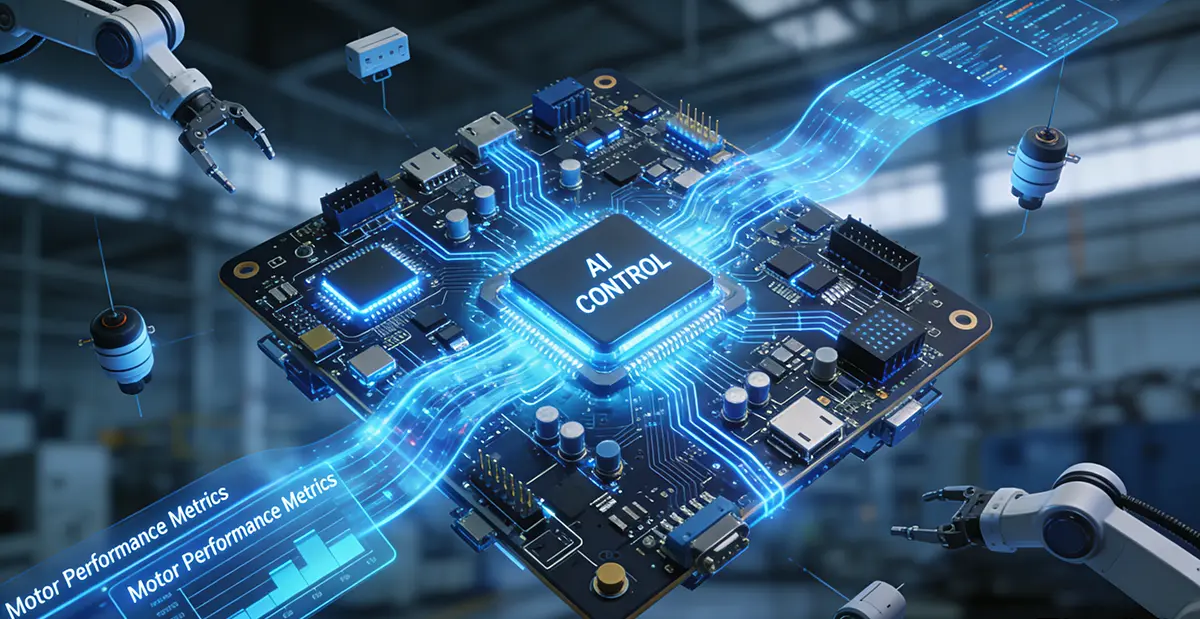
1. Introduction to the Electrical Engineering Major
The Electrical Engineering major is dedicated to the study of electrical energy generation, transmission, distribution, conversion, control, and its applications. It spans a broad spectrum from microelectronics to macro-scale power systems, serving as a cornerstone of modern technological society by providing core power and intelligent control for information communication, industrial production, transportation, and daily life. The core of this discipline lies in applying electromagnetic theory, circuit principles, and electronic technology to design and optimize electrical and electronic systems.
2. Major Courses in the Electrical Engineering Major
| Module Category | Core Courses |
| Mathematics and Science Foundation | Advanced Mathematics, Linear Algebra, Complex Variables and Integral Transforms, Probability Theory and Mathematical Statistics, University Physics, Engineering Chemistry |
| Circuits and Systems | Circuit Theory, Analog Electronics, Digital Electronics, Signals and Systems, Electromagnetic Fields and Waves |
| Power Engineering Core | Electrical Machinery, Power Electronics, Power System Analysis (Steady-State, Transient), High Voltage Technology, Power Supply Technology |
| Control and Automation | Principles of Automatic Control, Modern Control Theory, Electrical Control and PLC, Automatic Control Systems for Electric Drives |
| Information and Communications | Communication Principles, Digital Signal Processing, Microprocessor Principles and Interface Technology |
| Computing and Simulation | Fundamentals of Computer Programming (C/C++/Python), Electrical Engineering Software Applications (e.g., Matlab/Simulink, PSpice) |
| Specialized Electives and Frontiers | New Energy Power Generation Technology, Smart Grids, Electric Vehicle Technology, Robot Control, Introduction to Integrated Circuit Design, Fundamentals of Artificial Intelligence |
3. Advanced Study Pathways for the Electrical Engineering Major
Master's/PhD in Electrical Engineering: Specialize in power systems, power electronics, electric machines and appliances, high-voltage and insulation technology, electrical theory and emerging technologies.
Control Science and Engineering: Focus on system control, robotics, and automation.
Electronic Science and Technology: Shift toward microelectronics, integrated circuits, and semiconductor devices.
Computer Engineering/Artificial Intelligence: Emphasizes hardware-software integration, such as embedded systems and AI chips.
Energy and Power Engineering: Studies broader energy conversion and utilization.
Interdisciplinary Fields: Biomedical Engineering, Financial Engineering (Quantitative Trading).
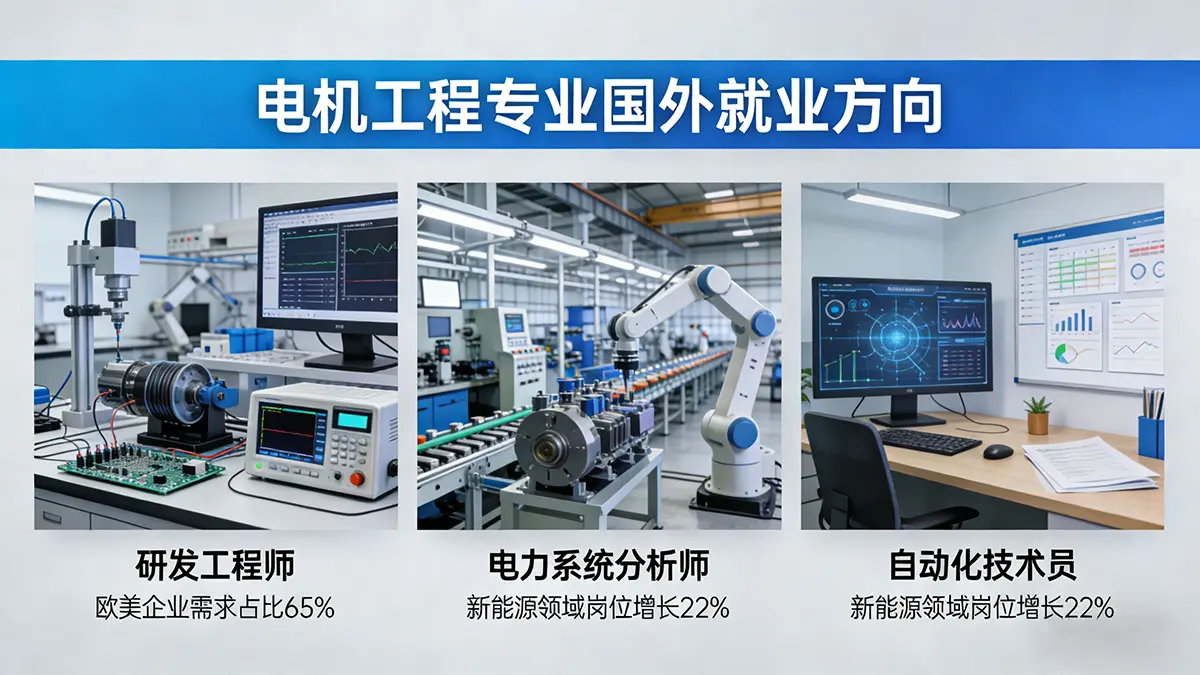
4. Career Paths and Positions for Electrical Engineering Majors
Graduates from the Electrical Engineering major enjoy extremely broad employment prospects spanning traditional industries and cutting-edge technologies, making it a quintessential “hardcore” engineering discipline.
Core Employment Sectors
Power Industry (State Grid, China Southern Power Grid, Power Generation Groups):
Power Systems: Dispatch operations, planning/design, equipment R&D, relay protection engineers.
Power Plants/Substations: Operations and maintenance engineers.
High-End Manufacturing:
Industrial Automation: Automation engineers, electrical engineers, PLC/DCS engineers responsible for designing, programming, and debugging production line electrical control systems.
Motor and Power Electronics: Motor design engineers, inverter/converter R&D engineers.
Rail Transit: Traction power supply and vehicle electrical system engineers for high-speed rail and metro systems.
New Energy & Electric Vehicles:
New Energy Vehicles: R&D and testing engineers for the three-electric systems (battery, motor, electronic control).
Photovoltaic/Wind Power: Electrical design, grid connection, and control engineers for new energy power stations.
Electronics, Information, and Communications:
Consumer Electronics/Home Appliances: Power Supply Engineer, Hardware Engineer.
Communication Equipment: Base Station Power Supply Engineer, RF Engineer.
Integrated Circuits: Analog/Digital IC Design Engineer (requires additional in-depth study of microelectronics courses).
Construction and Infrastructure:
Architectural Design Institutes/Engineering Companies: Building Electrical Designer, Intelligent Systems Designer.
Research Institutes and Universities: Researcher, Faculty Member (typically requires a Ph.D.).
5. Employment Rate and Industry Trends for Electrical Engineering Majors
Employment Rate Characteristics
“Stable Demand, Broad Applications”: As the “blood vessels” and “nerves” of modern industrial society, the job market for Electrical Engineering majors remains consistently stable, particularly amid manufacturing upgrades and the energy transition.
“Rapid Technological Iteration, Lifelong Learning”: The shift from traditional power to new energy and from automation to intelligent systems drives continuous updates in technical requirements, necessitating ongoing learning.
Significant Salary Variation: Stable entry-level salaries with good benefits in state-owned enterprises like power grids; higher starting pay and faster growth potential in R&D roles with core technical skills in hot sectors like new energy, electric vehicles, and semiconductors.
Industry Development Trends
Energy Transition and New Power Systems: Building new power systems centered on renewable energy generates huge demand for energy storage technologies, flexible transmission, smart dispatch, and virtual power plants.
Industry 4.0 and Smart Manufacturing: The digital, networked, and intelligent transformation of factories drives the application of Industrial IoT, edge computing, machine vision, and advanced process control.
Transportation Electrification and Intelligence: The proliferation of electric vehicles and advances in autonomous driving make onboard power management, drive motor control, and vehicle-to-everything (V2X) communication critical technologies.
Energy Efficiency Enhancement Under Dual Carbon Goals: Vast market potential exists for high-efficiency motors, energy-saving variable frequency drives, and smart building energy management systems.
Integration of Artificial Intelligence and Hardware: Application of AI algorithms in power system forecasting and equipment fault diagnosis, along with the design of specialized chips and hardware accelerators for AI computing.
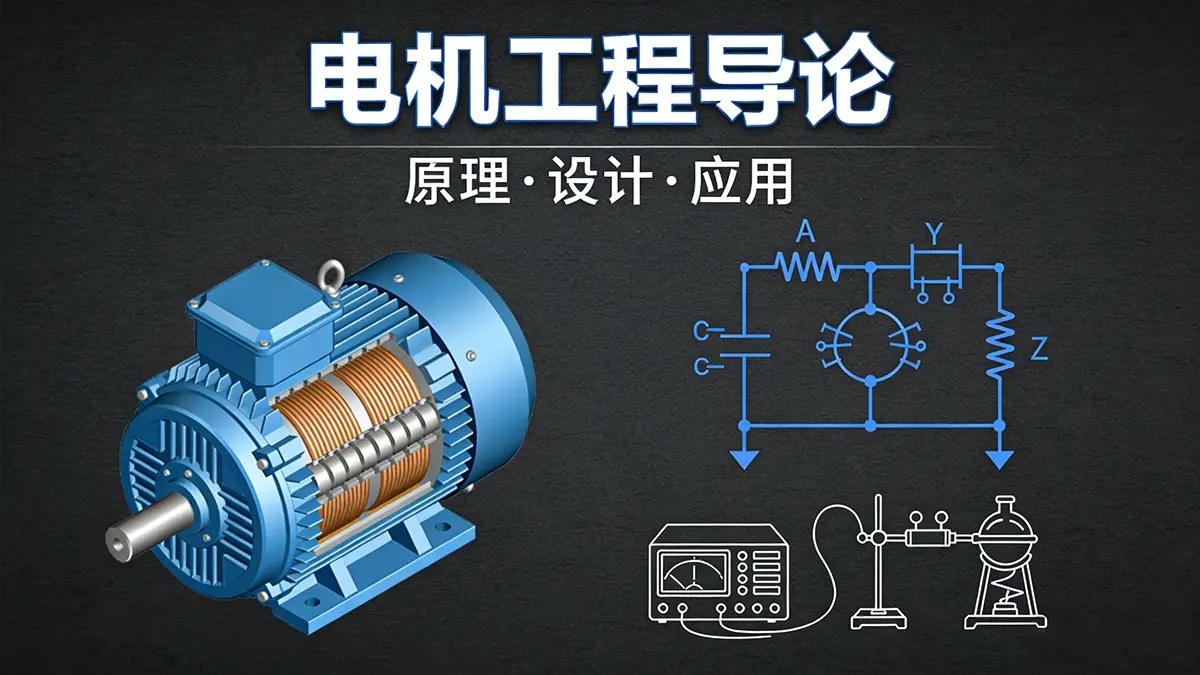
6. Major Global Institutions Offering the Electrical Engineering Major
Electrical Engineering is a pillar discipline in science and engineering universities worldwide.
| Country/Region | Representative Institutions (Top-tier in Electrical Engineering) |
| United States | Massachusetts Institute of Technology, Stanford University, University of California, Berkeley, University of Illinois at Urbana-Champaign, Georgia Institute of Technology |
| United Kingdom | University of Cambridge, Imperial College London, University of Oxford |
| Switzerland | ETH Zurich |
| Germany | RWTH Aachen University, Technical University of Munich |
| China | Tsinghua University, Zhejiang University, Huazhong University of Science and Technology, Xi'an Jiaotong University, Harbin Institute of Technology |
| Other | National University of Singapore, University of Waterloo (Canada), Delft University of Technology (Netherlands) |
DisciplineMajor Recommendations
Ideal Candidates for the Electrical Engineering Major
Individuals with strong curiosity about how electricity powers the world and a passion for hands-on circuit assembly and equipment debugging.
Those with excellent logical reasoning, abstract thinking, and practical implementation skills.
Candidates who can adapt to rapid technological change and are committed to continuous learning.
Individuals who balance systems thinking with meticulous attention to detail.
Core Competencies of the Electrical Engineering Discipline
A solid theoretical foundation in circuits, electromagnetic fields, and control systems.
Hardware design and debugging skills: The ability to read and design schematics and proficiently use instruments like oscilloscopes and signal generators.
Programming and software application skills: Proficiency in languages and tools for control systems (C/C++), simulation (Matlab), and data analysis (Python).
Interdisciplinary knowledge integration: The ability to synthesize knowledge from power engineering, electronics, control theory, and computer science to solve complex engineering problems.
Study Recommendations for the Electrical Engineering Major
Solidify core foundational courses: Circuit Theory, Analog Electronics, Digital Electronics, Electric Machinery, and Power Systems form the essential foundation.
Actively participate in competitions like electronics design or intelligent vehicle contests: These are excellent ways to enhance practical skills.
Master at least one simulation tool and one programming language.
Identify a niche area of interest early (e.g., power systems, control, power electronics, embedded systems) and pursue in-depth coursework and skill development in that area.
Stay informed about industry standards and cutting-edge technologies, such as smart grid standards, silicon carbide power devices, and AI chips.
Pursue high-quality internships: Gain exposure to real-world engineering applications through placements at power grid companies, electrical equipment manufacturers, new energy vehicle firms, or automation companies.
Note: Some institutions may categorize this major under different disciplines. Please check the specific classification at your chosen institution.
- The Previous Passage:Ship and Ocean Engineering(Ship Ocean Eng.)_船舶与海洋工程
- The Next Passage:Power Electronics Engineering(Power Electron. Eng.)_电力电子工程

Human Geography Major_Geography(Geog.)_人文地理
The Human Geography Major explores the complex relationships between human activities and space, cul···

Atmospheric Sciences(Atmos. Sci.)_大气科学
Atmospheric science is the study of phenomena and evolutionary patterns within Earth's atmospher···

Earth Sciences(Earth Sci.)_地球科学
The Earth Science major focuses on studying the Earth system and its interactions, providing a scien···

Ocean Sciences(Ocean Sci.)_海洋科学
PbootCMS是全新内核且永久开源免费的PHP企业网站开发建设管理系统,是一套高效、简洁、 强悍的可免费商用的···

