

Power Electronics Engineering(Power Electron. Eng.)_电力电子工程
Time:2026-03-08 Visits:3
Power Electronics Engineering
Power electronics engineering serves as the “heart” of today's energy revolution and digital transformation, determining energy utilization efficiency across applications ranging from electric vehicles to photovoltaic and wind power, and from data centers to aircraft and ships. From an international perspective, this core engineering discipline features high technological barriers, significant talent shortages, and directly impacts global carbon neutrality goals.

Introduction to Power Electronics Engineering Major
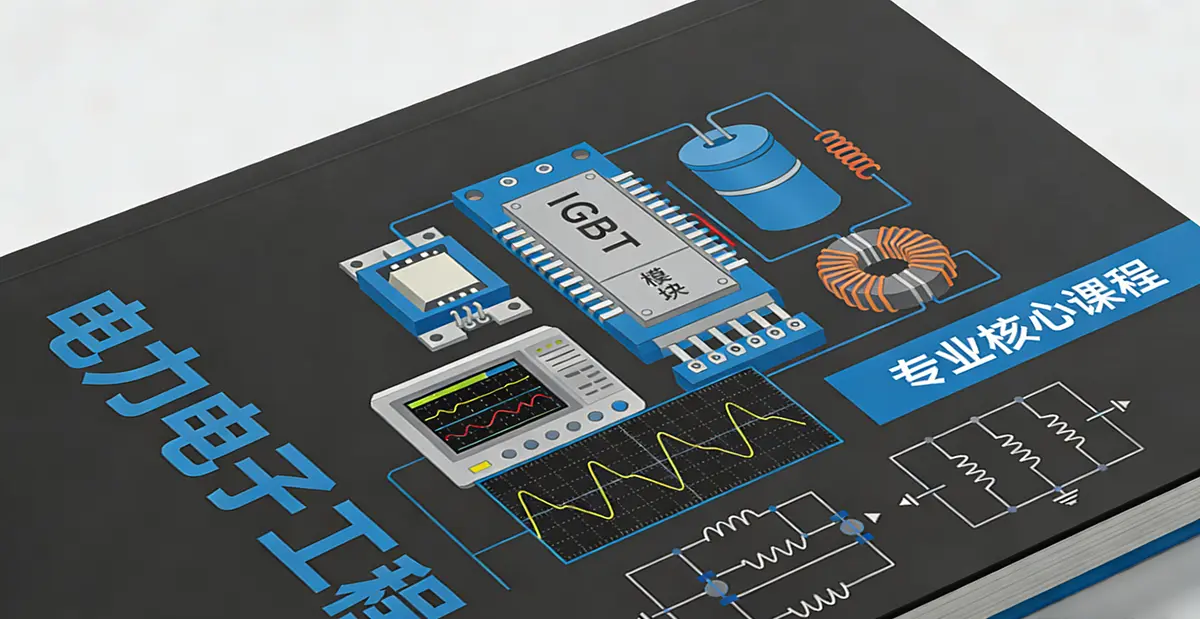
Power Electronics Engineering is a vital branch of electrical engineering, focusing on technologies that utilize power electronic devices (such as thyristors, IGBTs, SiC/GaN MOSFETs, etc.) for efficient conversion and control of electrical energy. Simply put, its mission is to address the questions of “what to convert, how to convert, and to what extent,” achieving optimal transformation of electrical energy forms (voltage, current, frequency, waveform).
Driven globally by the “dual carbon” strategy and Industry 4.0, this discipline has expanded beyond traditional power system analysis and motor design into cutting-edge fields like renewable energy grid integration, automotive-grade electronic control, hydrogen energy management, and smart grids. It serves as the vital bridge connecting energy generation and consumption.
Core Courses at International Institutions
Top-tier universities typically offer power electronics engineering education at the master's level in electrical engineering, emphasizing both theory and practice. The curriculum structure at the University of Twente in the Netherlands serves as a representative example:
Core Required Courses:
- Power Electronics Circuits: In-depth study of inverter and converter topologies.
- Semiconductor Device Physics: Focuses on principles and applications of wide-bandgap semiconductors (e.g., silicon carbide SiC, gallium nitride GaN).
- System Integration and Energy Storage: Covers battery efficiency optimization and energy conversion strategies from system-level to component-level.
Specialization Track (choose one):
- Physics and Devices Track: Focuses on semiconductor physics and electromagnetic compatibility analysis.
- Systems and Control Track: Focuses on digital control, system configuration, and modeling.
Practical Experience and Research:
- Internships: Students gain hands-on experience at leading tech companies like ASML, Philips, and NXP.
- Master's Thesis: Completed within research groups or partner enterprises, tackling cutting-edge topics like high-efficiency bidirectional charging station switches or lithium-ion battery performance prediction.
Other internationally renowned institutions like Queen Mary University of London emphasize system applications, covering modules such as power electronics, motor systems, advanced control, and hybrid powertrains.
Further Study Paths for Power Electronics Engineering Major
After completing a master's degree, those pursuing doctoral studies will engage in more specialized and cutting-edge research, primarily addressing core technological challenges in future energy systems:
- Devices and Materials: Investigating properties of next-generation wide-bandgap semiconductors (SiC, GaN), power module packaging, and integration.
- Topology and Control: Multilevel converters, solid-state transformers, high-voltage direct current (HVDC) transmission control, digital twins and AI-assisted control.
- Systems and Applications:
- Renewable Energy Grid Integration: Stability of PV/wind converters, grid-forming inverter technology.
- Transportation Electrification: Electric vehicle drive systems, on-board chargers (OBC), aircraft/marine electric propulsion technology.
- Smart Grids and Energy Storage: Microgrids, virtual synchronous machines, battery management system (BMS) optimization.
International Career Paths and Positions
The international job market for this major is highly active, with graduates being in high demand globally.
- Core Industrial Sectors:
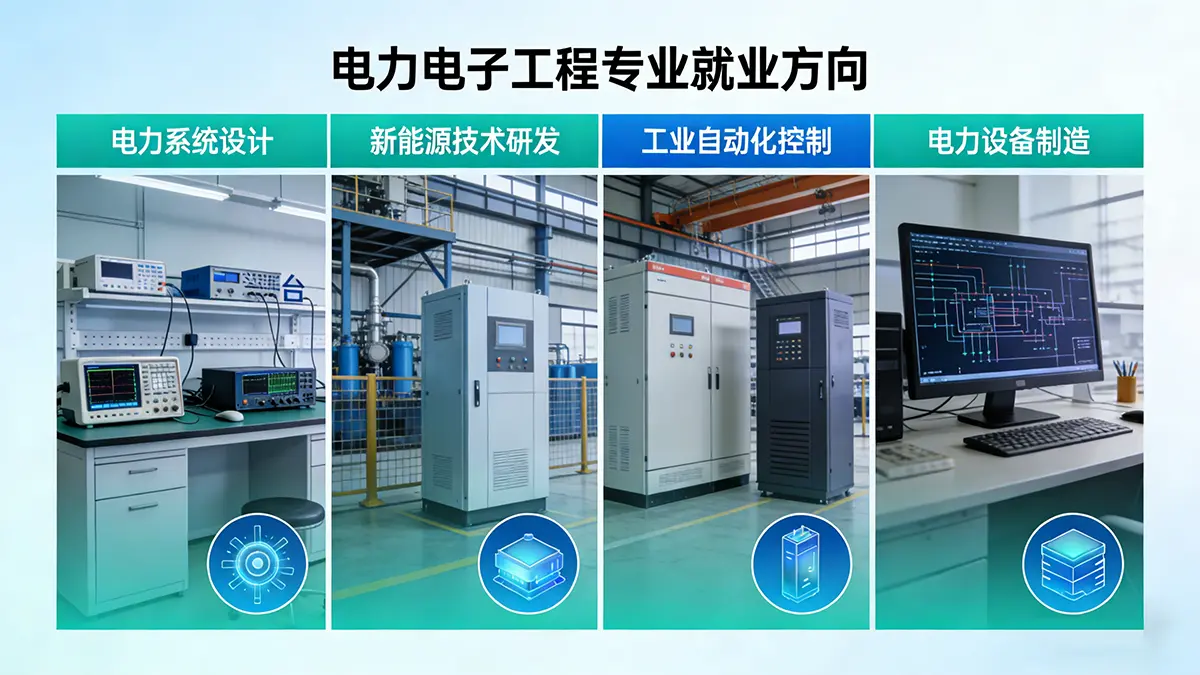
1. New Energy Vehicles: Tesla, BYD, BMW. Roles: Electric Drive System Engineer, On-Board Charging System R&D Engineer, SiC Device Application Engineer.
2. Renewable Energy & Power Systems: Siemens Energy, Hitachi Energy, Vestas. Roles: Wind/PV Inverter R&D Engineer, High-Voltage Direct Current (HVDC) Engineer, Grid Stability Analyst.
3. Semiconductor & Equipment Manufacturing: e.g., Infineon, Wolfspeed, ASML. Positions: Power Device Application Engineer, Power Management IC Design Engineer, Semiconductor Process Integration Engineer.
4. Industrial Automation & Aerospace: e.g., ABB, Siemens, GE, Airbus. Positions: Industrial Power Supply R&D Engineer, Aircraft Variable Frequency Power Distribution Engineer.
- Representative Global Positions (Based on Latest Job Postings):
1. Senior Power Electronics Engineer (Siemens Energy, Berlin): Lead development of next-generation high-power converter systems; proficient in multilevel topologies, SiC/GaN technologies, Matlab/PLECS simulation.
2. Senior Control Applications Engineer (Hitachi Energy, Madrid): Responsible for control and protection software design for high-power converters like STATCOMs (Static Synchronous Compensators), participating in global project commissioning.
3. R&D Engineer (Philips, NXP, etc.): Conducting electromagnetic compatibility analysis and designing novel converters at partner companies of the University of Twente.
International Employment Rates and Industry Trends
- Employment Rate & Talent Shortage:
The international job market faces severe “supply-demand imbalance.” In Germany, for instance, the shortage of skilled professionals in climate-related occupations reached 120,000 in 2024, with electrical engineering facing particularly acute challenges—over 80% of engineering positions remain unfilled. By 2030, the energy transition alone is projected to require an additional 157,000 workers. Graduates from Queen Mary University of London in this field achieve a 100% employment or further study rate within 15 months of graduation.
- Salary Levels:
Highly competitive. In the German market, the median annual salary for R&D positions is approximately €85,700, while senior specialists in sales or management roles can earn €110,000 to €140,000 annually.
- Industry Trends:
1. All-Electric Society: Explosive growth in electric vehicles, renewable energy, AI data centers, and battery energy storage systems (BESS) form the “three engines” driving power electronics demand.
2. Wide Bandgap Semiconductors (WBG) Adoption: SiC and GaN devices are transitioning from high-end to mainstream applications, requiring engineers to possess deeper semiconductor physics knowledge and high-frequency design capabilities.
3. Digitalization and Intelligence: AI-assisted design, digital twins, and 5G-based smart grid protection represent emerging technological frontiers.
4. High Integration and Systemization: Circuit expertise alone is insufficient; the industry now demands multidisciplinary professionals with comprehensive understanding spanning devices, topologies, control systems, and system-level applications.
Ideal Candidates for Power Electronics Engineering Major
You'll gain a competitive edge globally if you possess these traits:
1. Strong Mathematical and Physical Foundations: Particularly in electromagnetics, circuit theory, and signals and systems—the cornerstones for understanding complex topologies and device physics.
2. Exceptional hands-on and simulation skills: You go beyond theoretical derivations, enjoy building circuits and debugging waveforms in labs, and are proficient in tools like Matlab/Simulink, PLECS, and LTspice.
3. Systems engineering mindset: You can evaluate the function and limitations of local power electronic converters from the perspective of entire energy systems (e.g., power grids, electric vehicles).
4. Passion for continuous learning: Rapid technological evolution (e.g., SiC, GaN, novel topologies) demands ongoing engagement with academic papers and industry white papers.
5. Cross-cultural communication skills: International employment requires collaboration with global teams. Strong English communication is essential, while proficiency in additional languages like German is a significant advantage.
Core Competencies of Power Electronics Engineering Major
The core strength of this discipline lies in its vertical integration capability spanning from “materials” to “power grids”:
Multiphysics Modeling and Simulation: Capable of simultaneously addressing electromagnetic, thermal, structural, and other multiphysics coupling issues to achieve precise modeling and simulation optimization of converters.
Wide Bandgap Device Application Expertise: Deep understanding of SiC and GaN device characteristics, enabling targeted driver circuit design and layout optimization to unlock their high-frequency, high-efficiency potential.
Advanced Topologies and Control Algorithms: Proficiency in and innovation of multilevel, soft-switching, and other topologies, alongside corresponding digital control algorithms (e.g., DSP/FPGA implementation), addressing high power density and reliability challenges.
Electromagnetic Compatibility (EMC) Design: Incorporates EMC awareness from the initial design phase to ensure products meet stringent global EMC standards—a critical step for commercialization.
System-Level Perspective: Comprehends the role and interactions of converters within larger systems (e.g., microgrids, aircraft power distribution systems) and possesses the ability to solve systemic problems.
Leading Institutions Globally
(Selected Schools - Listed in no particular order)
- Mainland China:
- Top Institutions: Tsinghua University , Zhejiang University , Southeast University , Xidian University , Harbin Institute of Technology , Shanghai Jiao Tong University , Xi'an Jiaotong University
- Other Strong Institutions: Huazhong University of Science and Technology , Chongqing University , Nanjing University of Aeronautics and Astronautics , South China University of Technology , University of Science and Technology of China , etc.
- United States:
- Top representatives: University of California, Berkeley , Massachusetts Institute of Technology , Stanford University , North Carolina State University-Raleigh
- Other Strong Institutions: University of Illinois at Urbana-Champaign , Georgia Institute of Technology , University of Michigan-Ann Arbor , etc.
- Europe:
- Top Institutions: Imperial College London , Aalborg University , ETH Zurich
- Other Strong Institutions: Delft University of Technology , Technical University of Munich , University of Cambridge , etc.
- Other Asian Regions:
- Top Representatives: Nanyang Technological University , National University of Singapore
- Other Strong Institutions: City University of Hong Kong , Hong Kong Polytechnic University , Hong Kong University of Science and Technology , University of Tokyo , etc.
Recommended Learning Path for Power Electronics Engineering Major
1. Build a Solid Foundation (Undergraduate Stage): Focus on core courses like Circuit Theory, Analog Electronics, Digital Electronics, and Electrical Machinery. Simultaneously, master Advanced Mathematics and University Physics to lay the groundwork for understanding device physics and control theory. Master at least one programming language (e.g., C/C++ for embedded systems, Python for data analysis) and begin working with MATLAB/Simulink.
2. Build Professional Barriers (Early Master's Stage): Deepen knowledge in power electronics technology, power system analysis, and automatic control theory. Select a mainstream simulation tool (e.g., PLECS, PSIM) for intensive practice. Secure lab access to participate in real projects and hone hardware debugging skills.
3. Focus and Deepen (Mid-to-Late Master's): Select a research direction based on interests (e.g., devices, topologies, control, renewable energy applications). Actively seek industrial internships at companies like Siemens, ABB, or Infineon. High-quality internship experience is crucial for entering top international firms. Choose a master's thesis topic closely aligned with industry needs.
4. Future Planning and Internationalization (Throughout):
International Certifications & Languages: Prepare for and pass GRE, TOEFL, or IELTS. For German-speaking regions, achieving B2/C1 German proficiency significantly expands opportunities.
Skill Map: Targeted skill development aligned with industry demands. For example, Siemens Energy roles require expertise in PLECS/LTspice simulation, thermal design, and FPGA digital control.
Networking: Attend international conferences like PCIM Europe—the world's largest power electronics exhibition and conference—to stay abreast of cutting-edge developments and identify career opportunities.
- The Previous Passage:Electrical Engineering(Electr. Eng.)_电机工程
- The Next Passage:Electronic and Information Engineering(Electron. Inf. Eng.)_电子信息工程学
Human Geography Major_Geography(Geog.)_人文地理
The Human Geography Major explores the complex relationships between human activities and space, cul···

Atmospheric Sciences(Atmos. Sci.)_大气科学
Atmospheric science is the study of phenomena and evolutionary patterns within Earth's atmospher···

Earth Sciences(Earth Sci.)_地球科学
The Earth Science major focuses on studying the Earth system and its interactions, providing a scien···
Ocean Sciences(Ocean Sci.)_海洋科学
PbootCMS是全新内核且永久开源免费的PHP企业网站开发建设管理系统,是一套高效、简洁、 强悍的可免费商用的···

