

History of Science(Hist. Sci.)_科学史
Time:2026-03-08 Visits:4
The History of Science Major is a humanities discipline studying the historical evolution of scientific knowledge, technological practices, and their interactions with society and culture. It aims to cultivate students' ability to critically analyze science within its historical context, serving as a vital bridge connecting science, technology, and the humanities. This article introduces the core curriculum, advanced study pathways, diverse career options, and leading global institutions for the History of Science Major, offering key insights for students interested in the intersection of science and humanities.
1. Introduction to the History of Science Major
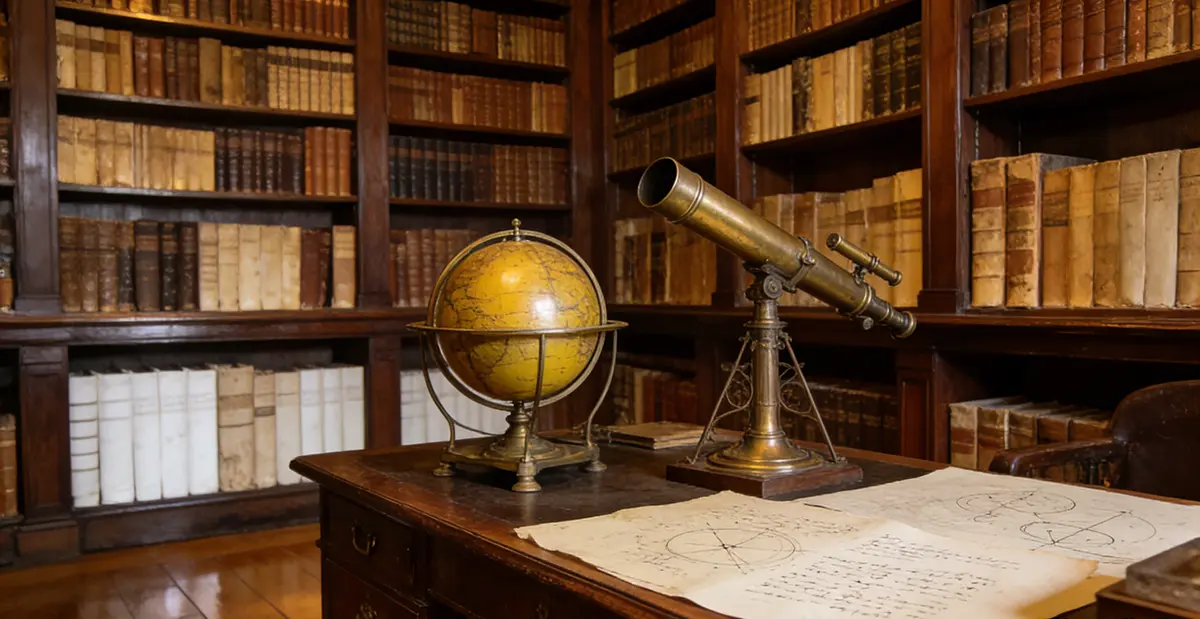
The History of Science Major is a humanities discipline dedicated to studying the historical development of scientific knowledge, technological practices, and their dynamic interactions with society, culture, and philosophy. By examining shifts in scientific thought, methodologies, and institutional frameworks, it seeks to understand how science has emerged as a pivotal force in shaping the modern world. This major cultivates students' ability to critically analyze science within its historical context, effectively bridging the sciences and the humanities. It serves as an essential conduit for comprehending technoscientific societies, reflecting on the nature of science, and fostering meaningful dialogue between science, technology, and the humanities.
2. Core Curriculum of the History of Science Major
| Module Category | Core Courses |
| Core General History & Special Topics | General History of Science, History of Technology, History of Medicine, History of Chinese Science, History of Western Science, Special Topics on Scientific Revolutions, Science & Religion, Gender & Science |
| Philosophy & Methodology | Philosophy of Science, Science, Technology & Society (STS), Historiography of Science (Historical Writing Methods), Anthropology of Science |
| Specialized Field Histories | History of Physics, History of Life Sciences, Environmental History, Industrial Revolution & Technological Change, Empire & Science, History of Scientific Instruments |
| Research Skills | Historical Sources & Archival Research, Historical Writing, Academic English, Interpretation of Scientific Texts, Oral History Methods, Fundamentals of Digital Humanities |
| Foundational Related Disciplines | World History, Chinese History, Introduction to Philosophy, Introduction to Sociology, Foundational Scientific Concepts (Select 1-2 Natural Science Courses) |
3. Advanced Study Pathways for the History of Science Major
Pursuing a Master's or PhD in History of Science, Medicine, or Technology is the primary pathway for graduates of the History of Science Major aiming for academic research careers in universities or institutes. Other prominent directions include: Science, Technology, and Society (STS), with a greater focus on sociological research and policy analysis of contemporary technoscience; Museum Studies/Cultural Heritage, specializing in curation, management, and artifact research for science and technology museums; Science Communication/Journalism, shifting towards public-facing science writing and media production; Science & Technology Policy/Innovation Management, complementing studies with public policy or management knowledge for roles in government or think tanks; Library & Information Science, for managing and digitizing specialized scientific literature; and Law (Patent, S&T Law), becoming legal professionals with a strong scientific background.

4. Career Paths for History of Science Majors
Employment for graduates of the History of Science Major is characterized by “high specialization coexisting with flexible cross-sector mobility.” Core positions are concentrated in academic and cultural institutions, yet their unique analytical skills enable entry into diverse fields. In the core area of Academia, Culture, and Education, graduates become professors, researchers, or curators in universities, research institutes, museums, and archives, or serve as editors, journalists, or teachers. Within Public Policy and Think Tanks, they work as policy researchers or assessment specialists in government S&T departments or international organizations like UNESCO. The Corporate and Cross-Sector sphere offers roles for History of Science Majors as corporate historians, innovation strategists in tech firms, patent analysts in law, or industry researchers in consulting and venture capital, where they provide deep historical and philosophical perspectives on technological trends.
5. Employment and Industry Trends for History of Science Majors
Employment follows a “niche elite” pathway: academic posts are extremely scarce and competitive, typically requiring a PhD. Overall employment rates are modest, but outcomes vary significantly based on institutional prestige, individual initiative, and cross-disciplinary engagement. An “interdisciplinary profile” is a key competitive advantage, as combining the History of Science Major with natural sciences, law, journalism, or management unlocks broader opportunities. Salary structures are diverse, with modest academic starting salaries but greater potential in policy, media, or corporate sectors.
Key industry trends shaping the field for History of Science Majors include: increasing demand for humanistic reflection on technology (e.g., AI, gene editing), elevating the public role of HST/STS scholars; the professionalization and deepening of science communication, requiring creators who can explore the stories and controversies behind science; growing focus on technological heritage preservation and utilization; innovations in digital humanities research methods; and the rise of global and cross-cultural history of science, moving beyond Western-centric narratives.

6. Leading Global Institutions Offering the History of Science Major
Programs in the History of Science, Technology, and Medicine (HSTM) are typically offered within history departments, dedicated HSTM departments, or STS departments at leading comprehensive universities worldwide.
| Country/Region | Representative Institutions (Leading in HSTM/STS) |
| United States | Harvard University (Department of History of Science), Princeton University, MIT (STS Program), Stanford University, Cornell University |
| United Kingdom | University of Cambridge (Department of History & Philosophy of Science), University of Oxford, University College London (UCL) |
| Germany | Technical University of Berlin (strength in History of Technology), Max Planck Institute for the History of Science (Berlin, world-leading institute) |
| China | Tsinghua University (Department of History of Science), Peking University (History of Science & Technology Program), Shanghai Jiao Tong University (Institute of History and Culture of Science) |
| Other Countries | Utrecht University (Netherlands), Université de Montréal (Canada) |
7. DisciplineMajor Recommendations
Ideal Candidates for the History of Science Major:
This major is ideal for individuals with a profound interest in both science and the humanities, who enjoy exploring science within the context of intellectual history and social change. Successful candidates possess exceptional critical thinking, advanced textual analysis skills, and strong writing proficiency. They have the patience for meticulous research and a passion for uncovering clues in archival materials to construct compelling arguments. They typically value intellectual exploration and interdisciplinary dialogue for its own sake over immediate career returns.
Core Competencies of the History of Science Major:
The History of Science Major fosters deep historical literacy and robust skills in documentary analysis. It develops the ability to accurately understand and historically contextualize scientific concepts and technologies. Graduates gain strong interdisciplinary synthesis skills, effectively connecting past and present while bridging the sciences and humanities. The program also emphasizes clear, persuasive, and narrative-driven writing and communication abilities.
Learning Recommendations for History of Science Majors:
Identify your area of interest early, whether in intellectual, social, or institutional history, or the history of a specific scientific discipline. Master at least one relevant foreign language (e.g., German, French, Latin) to access primary sources. Complete intermediate-level coursework in a natural science to gain firsthand experience of scientific practice. Actively participate in academic conferences and workshops to build professional networks. Deliberately develop transferable skills like project management, public speaking, and digital content creation to prepare for diverse careers. Strongly consider a dual major, minor, or complementary studies in a natural science, computer science, journalism, or law to build a distinctive and competitive interdisciplinary profile.
*Note: Program classification may vary by institution; always verify the specific structure within your target university.*
- The Previous Passage:Chemistry(Chem.)_化学
- The Next Passage:Clinical Psychology(Clin. Psychol.)_临床心理学
Human Geography Major_Geography(Geog.)_人文地理
The Human Geography Major explores the complex relationships between human activities and space, cul···

Atmospheric Sciences(Atmos. Sci.)_大气科学
Atmospheric science is the study of phenomena and evolutionary patterns within Earth's atmospher···
Earth Sciences(Earth Sci.)_地球科学
The Earth Science major focuses on studying the Earth system and its interactions, providing a scien···
Ocean Sciences(Ocean Sci.)_海洋科学
PbootCMS是全新内核且永久开源免费的PHP企业网站开发建设管理系统,是一套高效、简洁、 强悍的可免费商用的···

