

Materials Science and Engineering(Mater. Sci. Eng.)_材料科学与工程
Time:2026-03-08 Visits:6
Materials Science and Engineering
Materials Science and Engineering serves as the pivotal link between fundamental science and industrial manufacturing, while also providing crucial support for China's strategic emerging industries. Driven by the 14th Five-Year Plan, the new materials industry is entering a golden development period, poised to expand from a 7.2 trillion yuan market to 13.5-16 trillion yuan, with a talent shortage already reaching 4 million.
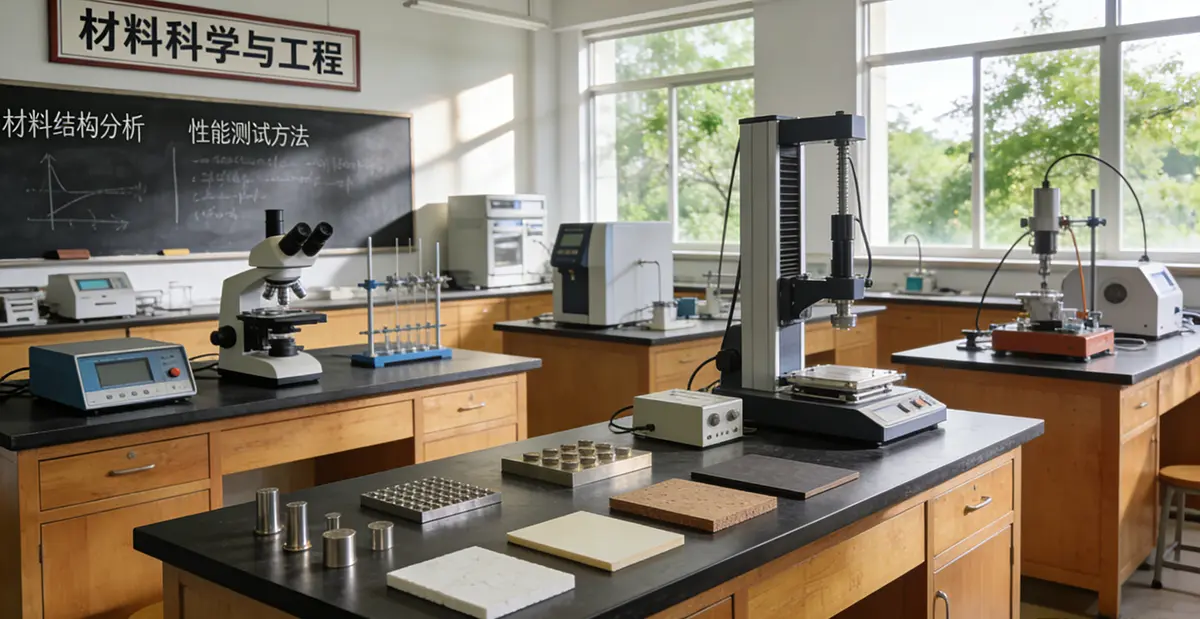
Introduction to Materials Science and Engineering Major
Materials Science and Engineering is a discipline that explores the relationships between a material's composition, structure, preparation processes, properties, and applications. It stands as a strategic core major within the engineering field. Combining disciplinary comprehensiveness, application foresight, and industrial necessity, it is hailed as the “comprehensive flagship major” in the new materials sector.
If modern technology were likened to a skyscraper, materials would be its bricks and steel beams—without them, even the most advanced designs remain mere blueprints. From extending the range of new energy vehicles to achieving self-reliance in semiconductor chips, from revolutionizing biomedical technologies to upgrading aerospace equipment, new materials play the pivotal role of the “behind-the-scenes core.”
The Materials Science and Engineering program encompasses three core sub-disciplines: Materials Science, Materials Physics and Chemistry, and Materials Processing Engineering. It focuses on the research, development, preparation, modification, and application of various high-performance materials, equipping students with core competencies in material design, performance testing, and process optimization.
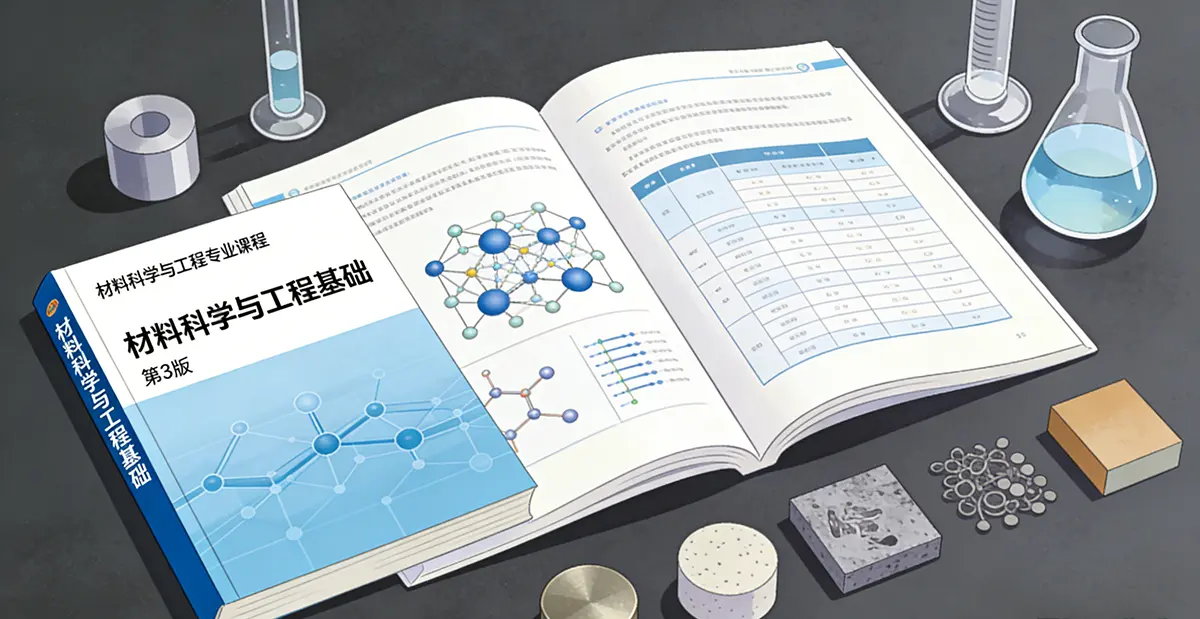
Core Courses in Materials Science and Engineering Major
The curriculum combines theoretical depth with industrial relevance, building a solid disciplinary foundation while aligning with national strategic priorities.
Mathematics and Foundational Courses: Advanced Mathematics, Linear Algebra, Probability Theory and Mathematical Statistics, University Physics, Inorganic Chemistry, Organic Chemistry, Physical Chemistry, etc.
Core Specialized Courses:
- Fundamental Theory: Physical Chemistry of Materials, Fundamentals of Materials Science, Fundamentals of Materials Engineering, Mechanical Properties of Materials, Physical Properties of Materials, Computational Materials Science and Materials Simulation
- Materials Analysis: Modern Microscopic Analysis Methods for Materials, Materials Analysis and Testing Methods
- Material Categories: Metallurgy and Heat Treatment, Fundamentals of Inorganic Non-metallic Materials Science, Fundamentals of Polymer Materials Science
- Processing Technologies: Electronic Packaging Engineering, Modern Welding Methods, Materials Surface Engineering
Distinctive and Frontier Courses:
- Nanomaterials, Smart Materials, Superconducting Materials
- New Energy Materials and Devices, Electronic Information and Optoelectronic Functional Materials
- Mineral Materials and Resource Recycling
Advanced Study Pathways in Materials Science and Engineering Major
Pursuing graduate studies is the mainstream choice after undergraduate completion, with a high postgraduate enrollment rate for Materials Science and Engineering majors. Research directions span traditional fields and emerging frontiers:
Materials Physics and Chemistry: Materials Physics, Materials Chemistry, Solid State Physics, Functional Thin Films, Theoretical Computation, New Energy Materials (Photovoltaic/Optoelectronic/Thermoelectric), Semiconductor Materials, Functional Nanomaterials
Materials Science: Thermodynamics and Kinetics of Materials, Solid-State Chemistry, Ceramic Materials, Energy Conversion and Storage Materials (Solid Oxide Fuel Cells, Lithium-Ion Batteries), Ceramic Membrane Reactors, Luminescent Materials, Biomaterials
Materials Processing Engineering: Polymer Composite Molding and Processing, Toughening Modification of Polymer Materials, Inorganic/Organic Hybrid Materials, Flame-Retardant Polymer Composites, Polymer/Inorganic Nanocomposites, Biomedical Materials
Metallic Materials: High-Performance Metallic Materials and Surface Engineering, Advanced Powder Metallurgy Materials and Technologies, Solidification and Forming Theory and Methods, Advanced Plastic Forming Processes, Advanced Material Welding and Joining
Inorganic Non-metallic Materials: Novel Inorganic Non-metallic Materials, Advanced Cementitious Materials and Concrete, Solid Waste Disposal and Low-Carbon Materials, Functional Building Materials
New Energy Materials: Novel Energy Storage Materials, Lightweight Alloy Materials, Emerging Energy Materials, Solid-State Battery Materials, High-Efficiency Photovoltaic Materials
Frontier Interdisciplinary Directions: Data-Driven Material Design and Integrated Computation, Advanced Characterization and Devices, Advanced Structures and Composite Materials, Nanomaterials, Smart Materials
Career Paths and Positions in Materials Science and Engineering Major
Graduates in Materials Science and Engineering enjoy broad employment prospects across multiple high-paying sectors prioritized by the state, including new energy materials, high-end equipment manufacturing, biopharmaceuticals, electronics and information technology, aerospace, and energy conservation and environmental protection.
High-Tech Enterprises (Primary Destinations)
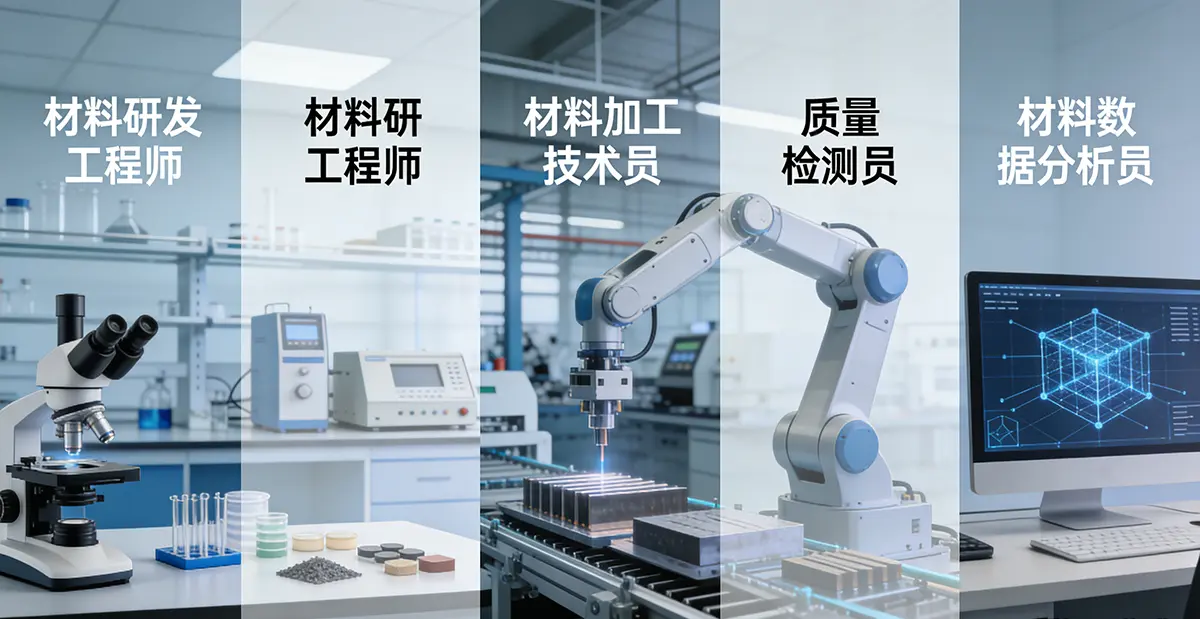
- Positions: Materials R&D Engineer, Process Engineer, Product Development Engineer, Quality Engineer
- Notes: Employers include Huawei, CR Microelectronics, SMIC, CATL, BYD, and Sanhuan Group. Sanhuan Group's Spring 2026 campus recruitment targets 200 material R&D positions.
New Energy/Automotive Industry
- Positions: Battery Material R&D Engineer, Photovoltaic Material R&D Engineer, New Energy Materials Engineer
- Notes: Employers include AVIC Lithium Battery, Jiangsu Zhongneng Silicon Industry, GCL Group, CATL, BYD, etc.
Semiconductor/Electronic Information
- Positions: Chip Material R&D Engineer, Packaging Material Engineer, Electronic Material Engineer
- Notes: Employers include CR Microelectronics, Huawei, and enterprises related to electronic information and optoelectronic functional materials.
Aerospace/High-End Equipment
- Positions: Composite Material Engineer, Aerospace Material R&D Engineer, High-End Equipment Material Engineer
- Notes: Employers include Chengdu Aircraft Industry Group, Shanghai Electric, XCMG Group, Sany Heavy Industry
Traditional Materials/Manufacturing Enterprises
- Positions: Materials Engineer, Process Technician, Production Management
- Notes: Employers include Baosteel, China Railway Group, China State Construction Engineering Corporation, China Railway Construction Investment Group (for new materials investment management roles)
Research & Educational Institutions
- Positions: Researcher, University Faculty, Laboratory Engineer
- Notes: Enter the Chinese Academy of Sciences system or pursue advanced studies/work at major universities; some graduates earn PhDs and become renowned experts at institutions like Johns Hopkins University and Shanghai Jiao Tong University
Government/Public Institutions
- Positions: Civil Servant, Technical Supervision, Quality Inspection
- Notes: Some graduates choose to take civil service exams or join public institutions
Employment Rate and Industry Trends for Materials Science and Engineering Major
Employment Rate Data: The Materials Science and Engineering program maintains strong employment prospects. China University of Mining and Technology has consistently achieved over 98% employment rates for this major in the past three years. Graduates primarily seek opportunities in the Yangtze River Delta, Bohai Rim, Pearl River Delta, and Huaihai Economic Zone, with nationwide reach.
Salary Levels: 2025 data indicates lucrative compensation for materials roles in the semiconductor/chip sector, with emerging fields offering even more competitive salaries. SanHuan Group offers generous benefits for materials R&D positions, including five social insurances and one housing fund, talent apartments, and employee cafeterias.
Industry Development Trends:
1. Strong National Strategic Drive: During the 15th Five-Year Plan period, the new materials industry has been elevated as the foundation and vanguard supporting industrial upgrading, directly impacting the security of industrial and supply chains. The new materials sector is poised for a golden development phase, expanding from a 7.2 trillion yuan market scale to 13.5-16 trillion yuan.
2. Significant Talent Shortage: The industry currently faces a shortage of 4 million professionals in related fields. Recruitment demand remains stable, with ongoing growth in hiring needs from high-tech enterprises, transportation, civil engineering, and other sectors related to materials.
3. Emerging Sectors:
- New Energy Materials: Solid-state batteries, photovoltaic materials, energy storage materials
- Semiconductor Materials: Chip materials, packaging materials, electronic functional materials
- Biomedical Materials: Biodegradable materials, tissue engineering materials
- Aerospace Materials: Carbon fiber composites, high-temperature alloys
4. Evolving Hiring Criteria: Enterprises and research institutions now prioritize graduates' practical innovation skills, cross-disciplinary collaboration abilities, and complex problem-solving capabilities alongside specialized knowledge. Candidates with project experience, proficiency in cutting-edge technical tools, and strong professional ethics hold a competitive edge.
Ideal Candidates for Materials Science and Engineering Major
If you possess the following qualities, this major may be an excellent fit for you:
1. Strong foundation in chemistry and physics: Materials Science and Engineering demands a solid grounding in physics and chemistry, particularly chemistry. Core courses like material synthesis and performance analysis rely heavily on chemical knowledge. Applicants with outstanding physics and chemistry grades are encouraged to consider this major.
2. Strong hands-on skills: Enjoy conducting experiments, operating instruments, and engaging in technical work like material synthesis and performance testing.
3. Clear logical thinking: Excel at analyzing problems, approach tasks with rigor and attention to detail, and can distill patterns from experimental phenomena.
4. Patience and perseverance: Material development often requires repeated trials and long-term accumulation; you don't mind repetitive experimental work.
5. Commitment to cutting-edge technology: Interest in tackling critical technological challenges and driving industrial progress through R&D.
6. Passion for frontier technologies: Enthusiasm for emerging fields like new energy vehicles, semiconductors, aerospace, and biomedicine.
Core Competencies of Materials Science and Engineering Major
The core strength of Materials Science and Engineering lies in its end-to-end R&D capability spanning atoms to products:
* Composition-Structure-Property Correlation Thinking: Ability to establish intrinsic links between material composition, microstructure, fabrication processes, and macroscopic properties—the core mindset of materials science.
* Multiscale Systems Understanding: Systematic comprehension spanning atomic scale (crystal structures, defects), microscopic scale (microstructure, phase transitions), and macroscopic scale (mechanical/physical properties), with insight into inter-scale correlations.
Experimental Design and Characterization Analysis: Mastery of diverse experimental methods for material synthesis, processing, and characterization, including designing experimental protocols, operating advanced instrumentation (SEM, TEM, XRD, etc.), and analyzing experimental data.
Interdisciplinary Knowledge Integration: Ability to synthesize fundamental knowledge from physics, chemistry, mathematics, mechanics, and other fields to solve complex problems in materials R&D.
Ability to Solve Practical Engineering Problems: Develop new materials and optimize processes to address industry pain points (e.g., limited range of new energy vehicles, low photovoltaic efficiency, insufficient energy storage stability).
Innovative Thinking and R&D Capabilities: Conduct pioneering research by staying abreast of cutting-edge technological trends (e.g., nanomaterials, smart materials, superconducting materials).
Leading Institutions Worldwide
Materials Science and Engineering boasts robust research capabilities at top universities globally. According to the 2026 US News World University Rankings by Subject, the following institutions are among the leaders in this field:(Selected Schools - Listed in no particular order)
| Rank | Institution Name | Country/Region |
| 1 | Tsinghua University | Mainland China |
| 2 | Nanyang Technological University | Singapore |
| 3 | University of Chinese Academy of Sciences | Mainland China |
Other Notable Institutions (partial list):
Mainland China: Shanghai Jiao Tong University, Harbin Institute of Technology, Central South University, University of Science and Technology Beijing, University of Science and Technology of China, Zhejiang University, Xi'an Jiaotong University, South China University of Technology, Tianjin University, Sichuan University, etc. Among these, University of Science and Technology Beijing is renowned as the “Cradle of Steel” in materials science.
United States: Massachusetts Institute of Technology, Stanford University, University of California, Santa Barbara, Northwestern University, University of Illinois at Urbana-Champaign
Europe: University of Cambridge (UK), University of Oxford (UK), ETH Zurich (Switzerland), RWTH Aachen University (Germany), Imperial College London (UK)
Asia: The University of Tokyo (Japan), Kyoto University (Japan), Korea Advanced Institute of Science and Technology (KAIST, South Korea), National University of Singapore (Singapore)
Special Note: Prioritize institutions with strong disciplinary strengths, focusing on those with national key disciplines or world-class disciplines in Materials Science and Engineering. Additionally, certain industry-specific universities (e.g., Beijing University of Chemical Technology, Nanjing Tech University) enjoy high industry recognition in new materials and offer excellent value for money.
Recommended Study Path for Materials Science and Engineering Major
1. Build a Solid Foundation (Freshman & Sophomore Years): Focus on core mathematics, physics, and chemistry fundamentals alongside introductory materials courses. Master advanced mathematics, university physics, inorganic chemistry, organic chemistry, and physical chemistry—these form the bedrock for subsequent studies. Simultaneously, familiarize yourself with foundational materials science principles starting in freshman year to establish an initial understanding of the discipline. Gain basic knowledge of materials characterization instruments (e.g., SEM, XRD).
2. Build Your Professional Framework (Sophomore–Junior Years): Dive into core courses like Fundamentals of Materials Science, Physical Chemistry of Materials, Mechanical Properties of Materials, and Modern Materials Analysis Methods. Through hands-on experiments in material preparation and performance testing, gain practical experience operating instruments and analyzing data to bridge theory and practice. Master materials simulation software (e.g., Materials Studio) and data analysis tools (Python/MATLAB).
3. Focus and Deepening (Junior and Senior Years): Select advanced courses aligned with personal interests (e.g., metals, inorganic/non-metallic materials, polymers, or new energy materials). Aim to join a faculty research group, participate in specific projects (e.g., “Undergraduate Innovation and Entrepreneurship Training Program”), and pursue paper publications or conference presentations. Corporate internships are crucial; secure placements at materials-related companies during winter/summer breaks.
4. Future Planning (Throughout):
- Graduate Studies: Pursuing a master's or PhD in Materials Science and Engineering is the mainstream path. August to October is the critical preparation period for graduate school entrance exams, requiring early planning. Monitor summer camps and exam information from universities.
- Direct Employment: Capitalize on the golden autumn recruitment season from August to October. Proactively monitor company websites (e.g., SMIC, CATL, Huawei, Sanhuan Group) or university career fairs. - Diligently attend professional courses to build a foundation for interviews; prioritize academic focus while utilizing winter/summer breaks for concentrated internships.
- Embrace Emerging Fields: Focus on strategically vital areas like new energy materials, semiconductor materials, and biomedical materials. These sectors feature significant talent shortages, competitive salaries, and expansive growth opportunities.
- Broaden International Perspective: Pursue overseas exchanges and international conferences when feasible to enhance English proficiency and global outlook.
- The Previous Passage:没有了!
- The Next Passage:Ship and Ocean Engineering(Ship Ocean Eng.)_船舶与海洋工程
Human Geography Major_Geography(Geog.)_人文地理
The Human Geography Major explores the complex relationships between human activities and space, cul···

Atmospheric Sciences(Atmos. Sci.)_大气科学
Atmospheric science is the study of phenomena and evolutionary patterns within Earth's atmospher···

Earth Sciences(Earth Sci.)_地球科学
The Earth Science major focuses on studying the Earth system and its interactions, providing a scien···
Ocean Sciences(Ocean Sci.)_海洋科学
PbootCMS是全新内核且永久开源免费的PHP企业网站开发建设管理系统,是一套高效、简洁、 强悍的可免费商用的···

