

News Reporting and Production(Journalism (作为学科统称) 或 News Production)_新闻采编与制作
Time:2026-03-29 Visits:2
Journalism, Editing and Production Major
The Journalism, Editing and Production Major is a practice-driven program training skilled professionals for omnichannel news production. This guide details its hands-on curriculum in reporting, editing, and multimedia storytelling, explores advanced pathways, and outlines direct career opportunities in traditional media, digital platforms, and corporate communications. Discover how this Major equips graduates with the technical and narrative skills to thrive in the fast-evolving media landscape.
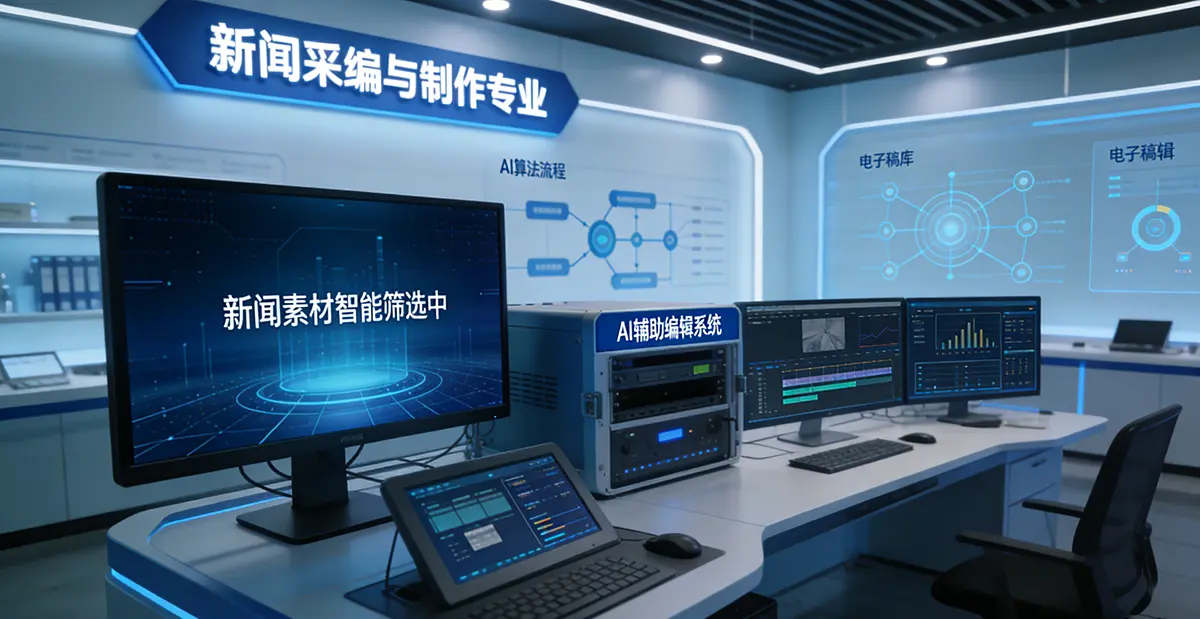
1. Introduction to the Journalism, Editing and Production Major
The Journalism, Editing and Production Major is a highly practice-oriented and application-focused discipline designed to cultivate applied professionals with hands-on capabilities across the entire omnichannel news production workflow. This Major focuses on the gathering, writing, editing, visual presentation, and multimedia distribution of news, emphasizing the completion of a full production cycle—from story conception to final dissemination—within authentic media settings. Compared to more theory-centric journalism studies, the Journalism, Editing and Production Major directly prepares graduates for frontline roles in the media industry, molding the “craftspeople” and “engineers” of content production in the convergence era.
2. Core Curriculum for the Journalism, Editing and Production Major
| Module Category | Core Courses |
| Core Journalism & Editing Practices | Journalistic Interviewing, News Writing, Feature & Investigative Reporting, News Editing & Layout, Commentary Writing |
| Audio-Visual Production Techniques | Photojournalism & Image Editing, TV News Videography & Editing, Audio Production (Radio/Podcast), Short-Form Video Production, On-Camera & Live Reporting |
| Digital Media Skills | New Media Copywriting, Web News Editing, H5 Interactive Journalism, Data Journalism Fundamentals, Social Media Content Operations |
| Specialized Production | Documentary Filmmaking, Feature Production, Major Event Coverage, Convergence Journalism Project Practice |
| Tools & Software | NLE Software (Premiere Pro/Final Cut Pro), Image Editing (Photoshop/Lightroom), Graphic Design (Illustrator/InDesign), Basic Data Visualization Tools |
| Related Theory & Management | Intro to Journalism, Communication Fundamentals, Media Ethics & Law, Media Management, Story & Project Planning |
3. Advanced Study Pathways for the Journalism, Editing and Production Major
Master’s in Journalism & Communication: Enhance theoretical depth for career advancement into management or research.
Master’s in TV/Film Directing & Production: Specialize in professional film and television production.
Master’s in Digital Media Arts/Technology: Deepen the integration of technical skills and artistic expression.
Master’s in Media Management: Transition into operational and leadership roles within media organizations.
Industry-Specific Advanced Training: Pursue high-level skill certifications (e.g., in advanced cinematography, color grading, sound engineering).
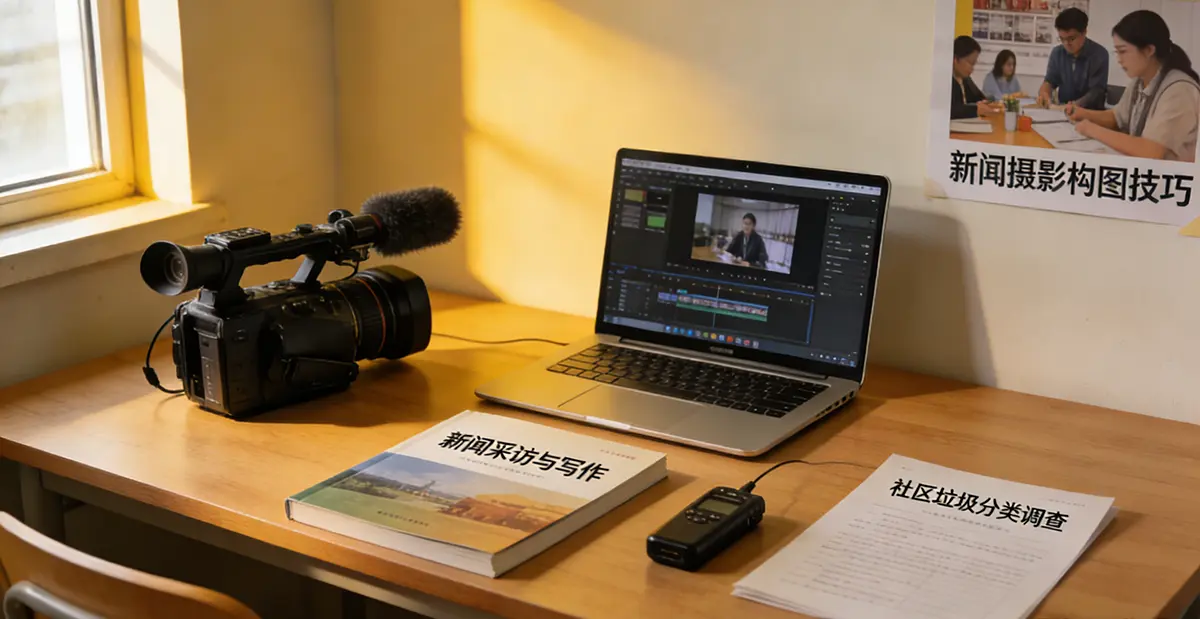
4. Career Pathways for the Journalism, Editing and Production Major
Career paths are clearly directed toward frontline production roles in various media and content creation organizations.
Core Employment Sectors: Traditional News Media (Newspaper Reporter/Editor; TV Reporter/Cameraman/Editor); New Media & Digital Platforms (Content Editor, Video Director, Live Stream Operator); Institutional & Corporate Communications (Government Media Officer, Corporate New Media Specialist); Professional Production Companies & Studios (Editor at film/TV companies, Production Assistant at ad agencies); Freelancing & Entrepreneurship (Independent Photographer, Short-Form Video Creator).
5. Employment & Industry Trends for the Journalism, Editing and Production Major
Employment Characteristics
Clear skill orientation enables quick adaptation to frontline roles, leading to relatively high initial employment rates.
Job market is significantly influenced by media industry volatility; demand is strong in new media and corporate communications despite limited growth in traditional media.
Compensation is strongly tied to portfolio quality and experience; competitive salaries for graduates with strong technical skills (especially in video/data visualization); high earnings for experienced directors/producers.
High-intensity, project-based work often involving tight deadlines, travel, and irregular hours.
Industry Trends
Dominance of audiovisual and mobile formats shifts core skills toward short-form video, mobile live-streaming, interactive video, and podcast production.
Democratization and cloud-based tools (cloud editing, AI-assisted production) require rapid tool adoption and greater focus on creativity and storytelling.
Convergence production as the standard model demands skills in cross-platform content adaptation and integrated “create once, publish everywhere” workflows.
Data-driven content creation utilizes audience and distribution metrics to guide story selection and format optimization.
Blurring lines between institutional and independent media as corporations and governments build in-house production centers, creating new employment avenues.
Resurgence of quality and depth, with professional content featuring investigative rigor, high production value, and emotional resonance gaining prominence amidst information overload.
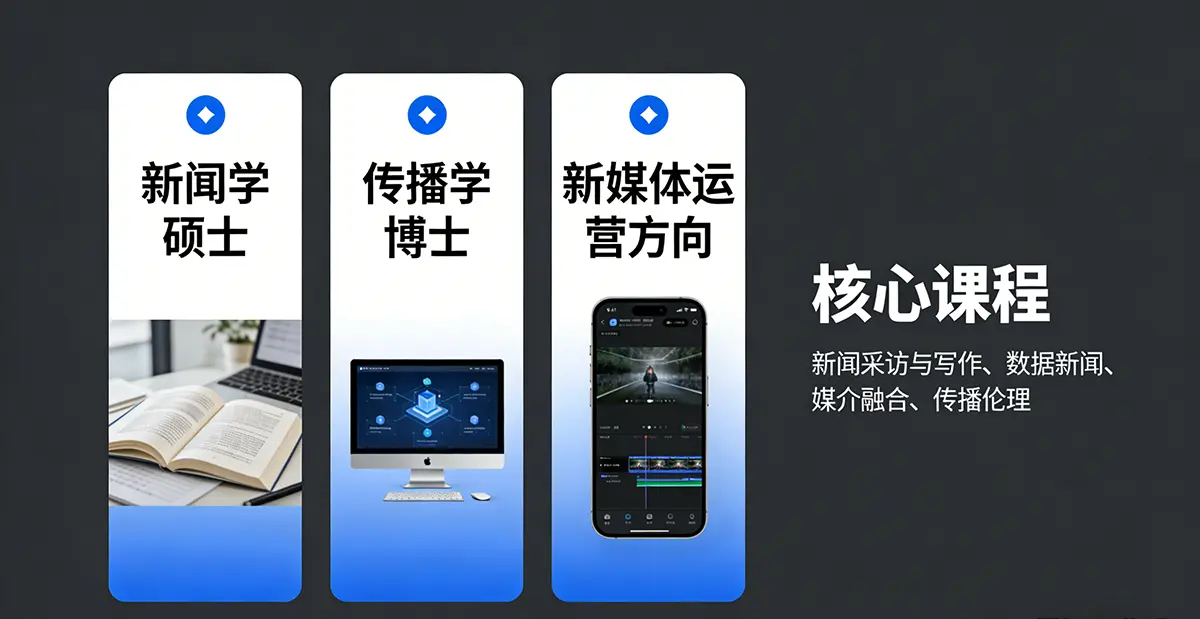
6. Leading Global Institutions for the Journalism, Editing and Production Major
| Country/Region | Representative Institutions (Practice-Focused Journalism & Media Education) |
| China | Communication University of China, Zhejiang University of Media and Communications, Central Academy of Drama (Film/TV) |
| United States | New York Film Academy, Chapman University (Dodge College), Savannah College of Art and Design, University of Missouri |
| United Kingdom | Goldsmiths, University of London, Bournemouth University, University of Westminster |
| Other | Vancouver Film School (Canada), University of Technology Sydney (Australia), Chung-Ang University (South Korea) |
DisciplineMajor Recommendations
Ideal Candidates for the Major
Passionate storytellers with a strong drive and aesthetic sense for visual and auditory expression.
Hands-on learners eager to master various filming, editing equipment, and software.
Thrive in fast-paced, high-pressure, and collaborative work environments.
Socially aware with the potential to transform complex events into compelling narratives.
Core Competencies of the Major
Ability to independently produce a high-quality, multimedia news story from start to finish.
Expertise in one or more production techniques (e.g., videography, editing, data visualization, photography).
Sharp news judgment, story development, and narrative structuring skills.
Strong project execution, teamwork, and communication abilities.
Study Recommendations
Portfolio is paramount: Consciously build a personal portfolio from day one; create a professional website or video channel.
Master a core toolchain: Achieve proficiency in software like Adobe Creative Suite (Premiere Pro, Photoshop, After Effects) or Final Cut Pro.
Engage in real-world projects: Gain practical experience through campus media, internships, and external commissions.
Develop a niche expertise: Specialize in a vertical like financial visualization, tech explainer videos, or documentary filmmaking to build a personal brand.
Cultivate digital literacy and user-centric thinking: Analyze platform-specific content trends and user behavior to create engaging, shareable content.
Stay technically current: Continuously learn about emerging hardware (drones, 360 cameras) and software (AI tools) relevant to the field.
*Note: Program classification may vary by institution.*
- The Previous Passage:Spanish(Spanish Studies)_西班牙语
- The Next Passage:Journalism(Journ.)_新闻学
Human Geography Major_Geography(Geog.)_人文地理
The Human Geography Major explores the complex relationships between human activities and space, cul···

Atmospheric Sciences(Atmos. Sci.)_大气科学
Atmospheric science is the study of phenomena and evolutionary patterns within Earth's atmospher···
Earth Sciences(Earth Sci.)_地球科学
The Earth Science major focuses on studying the Earth system and its interactions, providing a scien···
Ocean Sciences(Ocean Sci.)_海洋科学
PbootCMS是全新内核且永久开源免费的PHP企业网站开发建设管理系统,是一套高效、简洁、 强悍的可免费商用的···

