

Actuarial Science(Act Sci)_精算
Time:2026-03-30 Visits:0
Actuarial Science Major
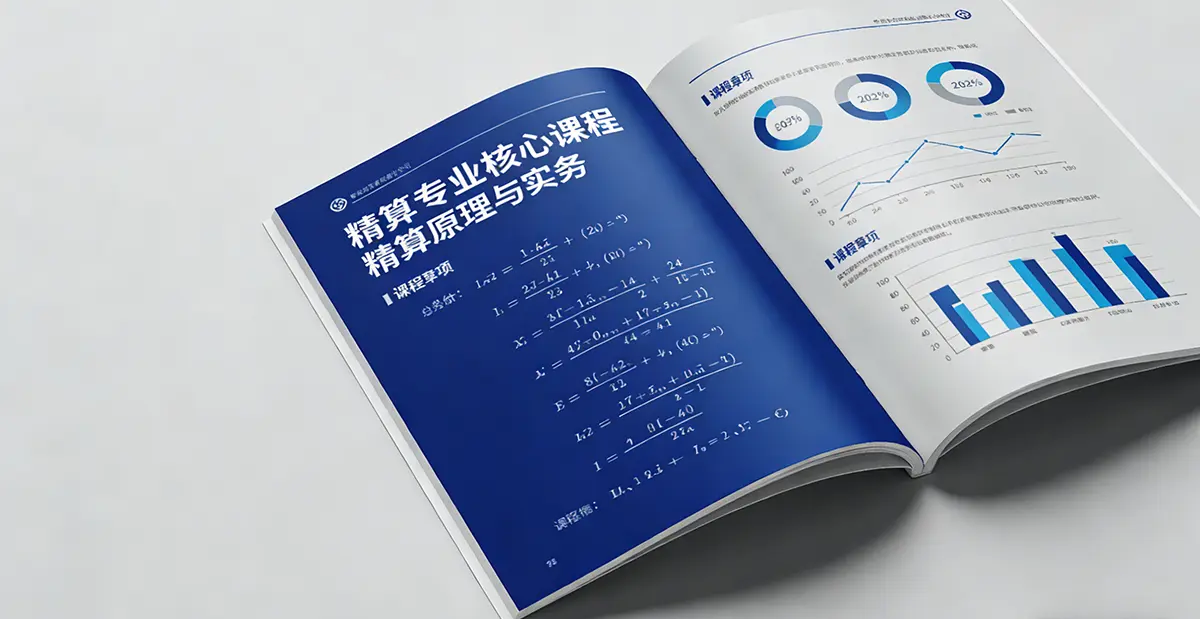
The Actuarial Science Major applies mathematics and statistics to quantify financial risks. This overview details its rigorous curriculum, the crucial path of professional actuarial exams, diverse career opportunities in insurance and finance, key industry trends like data science integration, and top global universities for actuarial studies.

1. Introduction to the Actuarial Science Major
The Actuarial Science Major is an interdisciplinary discipline that applies mathematics, statistics, and financial theory to assess and manage future uncertainties and financial risks. Its core function involves constructing mathematical models to quantitatively analyze long-term risks and their financial impacts in sectors such as insurance and finance, providing a scientific basis for product pricing, reserve valuation, asset-liability management, and corporate decision-making. Graduates of the Actuarial Science Major are recognized as technical experts within finance, renowned for their rigorous data analysis and robust risk management capabilities.
2. Core Curriculum of the Actuarial Science Major
| Module Category | Core Courses |
| Mathematics & Statistics Core | Calculus, Linear Algebra, Probability Theory, Mathematical Statistics, Stochastic Processes, Time Series Analysis, Survival Models |
| Actuarial Science Core | Actuarial Mathematics (Interest Theory, Life & Non-Life Insurance), Loss Models, Risk Theory, Pricing & Reserve Valuation |
| Finance and Economics | Economics, Financial Mathematics, Corporate Finance, Investments |
| Tools and Skills | Programming Languages (R/Python/SAS), Databases & SQL, Advanced Excel Applications |
3. Advanced Study Pathways for the Actuarial Science Major
Academic Advancement:
Master of Science in Actuarial Science: Deepens specialized knowledge and prepares for advanced professional exams.
Master of Science in Statistics/Applied Mathematics: Strengthens quantitative modeling skills.
Master of Science in Data Science: Expands into broader business analytics domains.
MBA (Risk Management Track): Develops capabilities for general management roles.
Professional Certification: Successfully passing the series of examinations administered by international bodies such as the Society of Actuaries (SOA)/Casualty Actuarial Society (CAS) or the Institute and Faculty of Actuaries (IFoA) constitutes the central career development pathway for graduates of the Actuarial Science Major.
4. Career Paths for Actuarial Science Graduates
Traditional Insurance: Actuarial departments within life/health/property & casualty insurance companies, focusing on product pricing, reserve valuation, and asset-liability management.
Professional Consulting: Actuarial consulting firms, providing actuarial valuations, model audits, and M&A due diligence services to clients.
Financial Services: Credit risk modeling, market risk management, and capital management roles within banks and financial institutions.
Corporate Risk Management: Design of employee benefit plans (pensions, health insurance) and Enterprise Risk Management (ERM) at large corporations.
FinTech: Development of pricing and risk control models for innovative products at online insurance platforms.
Government & Regulation: Pension system assessment and policy formulation at social security funds and financial regulatory agencies.
5. Employment and Industry Trends for the Actuarial Science Major
Employment Characteristics: The Actuarial Science Major leads to a highly specialized field with stable demand. Employment competitiveness is strongly tied to the number of actuarial exams passed, with favorable prospects upon achieving a certain threshold. Starting salaries are mid-to-high, with clear career progression closely linked to certification and experience accumulation.
Industry Trends:
Data Science & AI Integration: Machine learning and predictive analytics enable more precise customer segmentation, fraud detection, and dynamic pricing.
Expanding Risk Horizons: Modeling extends to new systemic risks like cybersecurity, climate change (catastrophe modeling), and pandemics.
IFRS 17 Accounting Standards: The new standards drive demand for higher data quality, refined models, and enhanced asset-liability management skills.
Rise of InsurTech: Contextual and personalized products rely on sophisticated real-time pricing models.
Pension & Longevity Risk: Global aging increases demand for pension system sustainability assessment and solution design.

6. Leading Global Institutions for Actuarial Studies
| Region | Representative Institutions (Renowned Actuarial Science Programs) |
| North America | University of Waterloo (Canada), University of Toronto, University of Michigan-Ann Arbor, University of Illinois at Urbana-Champaign |
| United Kingdom | Bayes Business School (City, University of London), London School of Economics, Heriot-Watt University |
| Asia-Pacific | National University of Singapore / Nanyang Tech, Australian National University, University of Hong Kong, Renmin University of China, Shanghai University of Finance and Economics |
| Other Regions | University of Copenhagen (Denmark), University of Cape Town (South Africa) |
DisciplineMajor Recommendations
Ideal Candidates for the Actuarial Science Major: Individuals with strong mathematical aptitude, rigorous logic, patience, meticulousness, and a comfort with complex models and long-term data; those seeking a highly specialized career with a clear and stable progression path; and those with a deep interest in risk management.
Core Competencies: A solid foundation in mathematical modeling; robust data processing and programming skills; a deep understanding of business logic and regulatory requirements; and the sustained learning ability to pass a series of challenging professional exams.
Study Recommendations:
1. Prioritize Exams: Begin preparing early for foundational exams (e.g., SOA/CAS), as they are crucial for employment.
2. Master Programming: Gain proficiency in R or Python, and understand SAS applications in traditional settings.
3. Secure Relevant Internships: Pursue internships in actuarial departments of insurance companies or at actuarial consulting firms.
4. Develop Communication Skills: Enhance the ability to explain complex model findings to non-technical stakeholders—a skill as vital as technical prowess.
Note: Program categorization varies by institution. Please refer to the specific discipline classification used.
- The Previous Passage:Finance(Fin)_金融学
- The Next Passage:History(Hist)_历史学

Human Geography Major_Geography(Geog.)_人文地理
The Human Geography Major explores the complex relationships between human activities and space, cul···

Atmospheric Sciences(Atmos. Sci.)_大气科学
Atmospheric science is the study of phenomena and evolutionary patterns within Earth's atmospher···

Earth Sciences(Earth Sci.)_地球科学
The Earth Science major focuses on studying the Earth system and its interactions, providing a scien···
Ocean Sciences(Ocean Sci.)_海洋科学
PbootCMS是全新内核且永久开源免费的PHP企业网站开发建设管理系统,是一套高效、简洁、 强悍的可免费商用的···

