

History(Hist)_历史学
Time:2026-03-31 Visits:1
History Major
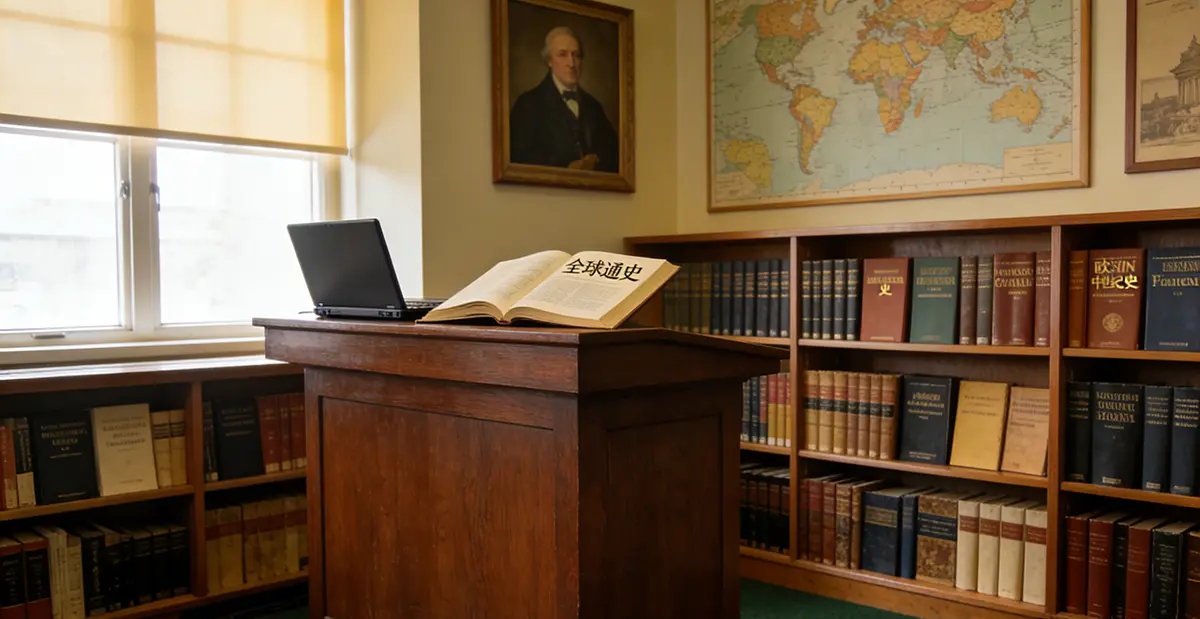
The History Major provides rigorous training in the analysis of past events, societies, and cultures, developing critical thinking, research, and writing skills essential for diverse careers. This discipline examines historical contexts and patterns, preparing graduates for roles in education, research, cultural heritage, public policy, and media. With a focus on evidence-based reasoning and narrative construction, the History Major equips students to navigate and interpret complex information in various professional settings. This guide details the program's structure, core courses, global opportunities, and career prospects.
1. Introduction to the History Major
The History Major is a humanities discipline dedicated to the systematic study of past events, transformative processes, and underlying patterns within human societies. Through the critical examination, analysis, and synthesis of historical sources—including documents, artifacts, and oral accounts—it endeavors to reconstruct, interpret, and reflect upon the trajectory of human activity. This major is not merely concerned with “what happened in the past”; its core lies in exploring “why it happened” and “how it has shaped our present world.” The History Major aims to cultivate students with solid historical source evaluation skills, profound critical thinking, rigorous argumentation techniques, and a broad historical perspective, thereby developing their capacity for understanding and insight into complex social phenomena.
2. Core Courses in the History Major
| Module Category | Core Courses |
| Methodology and Foundations | Historical Theory, History of Historiography, Philosophy of History, Historical Source Studies, Historical Research Methods, Historical Writing |
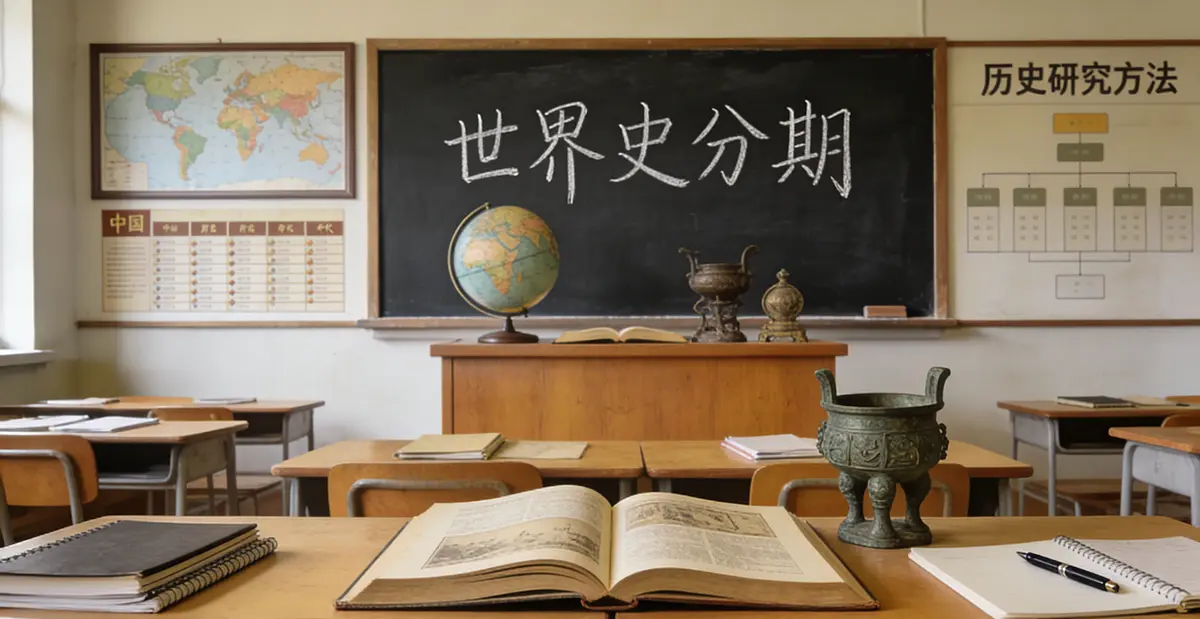
| General and Period History | Comprehensive History of China, Comprehensive World History, Ancient Chinese History (Pre-Qin through Ming-Qing periods), Modern and Contemporary Chinese History, Ancient and Medieval World History, Modern and Contemporary World History |
| Thematic and Specialized Histories | Political History, Economic History, Social History, Cultural History, Intellectual History, Military History, Environmental History, Global History, Women’s and Gender History |
| Country and Regional Histories | American History, European History, Japanese History, Southeast Asian History, African History, Middle Eastern History, Latin American History |
| Tools and Skills | Paleography (e.g., Oracle Bone Script, Bronze Inscriptions), Historical Philology, Bibliography and Textual Criticism, Archival Management, Historical Geographic Information Systems (HGIS), Foundations of Data Analysis (for Quantitative History) |
| Interdisciplinary and Frontier Studies | Digital Humanities, Public History, Historical Memory Studies, Comparative History, Oral History Theory and Practice, Material Culture and Museum Studies |
3. Advanced Study Pathways for History Majors
Master’s/PhD in History: Enter the academic research track to become a university professor or professional researcher.
Master’s/PhD in Archaeology: Transition to field archaeology and material cultural heritage studies.
Master’s in Cultural Heritage and Museum Studies: Specialize in cultural relics conservation, curation, and museum management.
Master’s in Archival Science/Library and Information Science: Pursue professional information management roles in libraries and archives.
Master of Laws (LL.M.): The training in argumentation and analysis provided by a History Major significantly benefits legal studies.
Master’s in Public Policy/International Relations: Analyze contemporary policies and global affairs through a profound historical lens.
Master’s in Journalism/Publishing: Engage in in-depth reporting, non-fiction writing, or academic publishing editing.
Master’s in Education: Become a professional secondary school or international school history teacher.
4. Career Paths and Positions for History Majors
The “transferable skills” cultivated in the History Major enable its graduates to demonstrate unique strengths across numerous professional fields.
| Core Employment Fields | Typical Positions | Primary Responsibilities and Skill Application |
| Education and Research | University Professor/Researcher (Requires a PhD) | Engage in historical teaching and academic research. |
| Secondary School History Teacher (Requires teaching certification) | Engage in historical teaching and academic research. | |
| Cultural Heritage and Cultural Tourism | Museum/Art Gallery Curator, Researcher, Education Officer | Responsible for collection research, exhibition planning, and public education program design. |
| Archaeological Research Fellow or Field Technician | Participate in field surveys, excavations, and artifact analysis. | |
| Cultural Heritage Conservation Specialist | Engage in the restoration, preservation, and management of cultural relics at heritage institutions. | |
| Cultural Tourism Planner/Content Editor | Provide historical content research and planning for tourism projects and cultural sites. | |
| Media and Publishing | Journalist/Editor/Writer (Especially for in-depth reporting and cultural sections) | Utilize research skills for background investigation and produce articles with historical depth. |
| Academic Editor or Commissioning Editor at Publishing Houses | Responsible for topic planning, manuscript review, and editing of humanities and social sciences publications. | |
| Government and Public Institutions | Civil Servant (Culture, Publicity, Foreign Affairs, Archives Departments) | Engage in policy research, document drafting, cultural promotion, and archives management. |
| Policy Research Analyst (Think Tanks, Research Centers) | Provide historical context analysis and risk assessment for policy formulation. | |
| Archivist/Librarian | Manage the organization, cataloging, research, and access services for historical archives and special collections. | |
| Business and Consulting | Business Analyst/Market Researcher | Apply research skills to analyze industry trends and historical market data. |
| Corporate Culture and Brand Strategy Consultant | Uncover historical narratives for enterprises to build brand stories and cultural value. | |
| Law and Finance | Attorney/Paralegal (Requires a law degree) | Rigorous historical analysis is crucial for case study and evidentiary chain construction. |
| Financial Industry Researcher (Focus on Macroeconomics and Industry History) | Analyze long-term historical patterns of economic cycles and industrial transformations. |
5. Employment Rate and Industry Trends for History Majors
Employment Rate Characteristics:
“Broad, Skills-Oriented Employment Beyond Direct Roles”: While positions explicitly titled “historian” are limited, graduates successfully secure employment across diverse industries by leveraging exceptional research, analytical, writing, and critical thinking skills. Employment quality is closely linked to proactive career planning and skill diversification (e.g., digital skills, foreign languages).
“Stability in Public Cultural Sectors, Vibrancy in Emerging Fields”: Employment remains steady in traditional sectors like museums, archives, and schools; opportunities are growing in emerging areas such as cultural creativity, digital humanities, and the content industry.
“High Postgraduate Enrollment, Fierce Competition for Academic Paths”: A significant proportion of undergraduates pursue advanced studies, while competition for top academic positions is exceptionally intense, requiring early preparation.
Industry Development Trends:
Digital Humanities Continues to Flourish: Technologies like database construction, text mining, and GIS spatiotemporal visualization are deeply integrated into historical research, creating new methodologies and job roles.
Public History is Thriving: The production and dissemination of historical knowledge extend beyond academia. Demand for professional historians is increasing in museums, documentaries, new media, and historical tourism.
Cultural Heritage Preservation and Utilization Gain Importance: The protection, interpretation, and sustainable use of tangible and intangible cultural heritage have become significant global priorities.
Interdisciplinarity and Global Perspectives Become Mainstream: Cross-disciplinary fields like environmental history, global history, and medical history, along with narratives transcending the nation-state framework, represent academic frontiers and meet market demands.
Historical Thinking Gains Value in Business Decision-Making: In an era of uncertainty, “megatrend” analysis based on long-term historical perspectives provides critical context for business strategy and investment decisions.

6. Major Global Institutions Offering the History Major
| Country/Region | Representative Institutions (Leading or Distinguished in History) |
| UK & USA | Harvard University, University of Cambridge, University of Oxford, Yale University, Stanford University, Princeton University, University of California, Berkeley |
| Continental Europe | Université Paris 1 Panthéon-Sorbonne (notably strong in Medieval History and French History), Freie Universität Berlin, Leiden University (Netherlands, strong in European and Asian History), Heidelberg University |
| Other Regions | University of Toronto (Canada), Australian National University, University of Tokyo (Japan, strong in East Asian History), National University of Singapore |
| China | Peking University (top-tier comprehensive strength in History), Fudan University, Beijing Normal University (strong in Historical Theory and Historiography), Nanjing University (strong in Modern Chinese History), East China Normal University (distinctive in Public History and Cold War History) |
Study and Development Recommendations for the History Major
Ideal Candidates:
Individuals who possess a lasting and sincere curiosity and passion for the stories of humanity’s past. Those who enjoy reading, thinking, and writing, and find satisfaction in untangling complex threads of information and constructing logical narratives. People with a skeptical spirit and a critical eye, who are not easily swayed by single narratives and are enthusiastic about exploring multiple causalities and diverse perspectives. Those with patience and meticulous attention to detail, capable of immersing themselves in the careful examination of historical sources.
Core Competitiveness of the History Major:
Information Processing and Evidence Evaluation: The ability to identify, filter, and assess valid information from vast and often contradictory historical sources. Complex Narrative and Argument Construction: The skill to synthesize fragmented information into logically coherent and persuasive historical narratives or analytical reports. Deep Contextual Understanding: The capacity to situate specific events or figures within their broad temporal, social, cultural, and global contexts. Critical Thinking and Pluralistic Perspective: The ability to recognize biases in historical writing and understand diverse collective memories and interpretations of the past.
Study Recommendations for History Majors:
Solidify Language and Source Foundation: Master one to two foreign languages (especially those relevant to your research interests) and excel in foundational tool courses like Classical Chinese and Historical Philology. Combine Broad Reading with Specialized Depth: Build upon general history knowledge by identifying a specific field of interest early on for intensive reading, reflection, and practice in writing short research papers. Embrace Digital Tools: Proactively learn to use databases, basic data analysis, and visualization tools to stay current with digital humanities trends. Actively Engage in Practical Experience: Seek internship opportunities at museums, archives, archaeological teams, secondary schools, or media organizations to explore diverse “History Plus” career possibilities. Define Your Career Path and Plan Proactively: Consider your future direction—whether towards academia, education, cultural heritage, or other industries—early on, and strategically plan your elective courses, skill acquisition, and internship experiences accordingly.
Note: Some university programs may be categorized under different disciplines. Please refer to the specific institution’s actual classification.
- The Previous Passage:Actuarial Science(Act Sci)_精算
- The Next Passage:Tourism and Leisure Management(Tour & Leisure Mgmt)_旅游休闲管理
Human Geography Major_Geography(Geog.)_人文地理
The Human Geography Major explores the complex relationships between human activities and space, cul···

Atmospheric Sciences(Atmos. Sci.)_大气科学
Atmospheric science is the study of phenomena and evolutionary patterns within Earth's atmospher···

Earth Sciences(Earth Sci.)_地球科学
The Earth Science major focuses on studying the Earth system and its interactions, providing a scien···

Ocean Sciences(Ocean Sci.)_海洋科学
PbootCMS是全新内核且永久开源免费的PHP企业网站开发建设管理系统,是一套高效、简洁、 强悍的可免费商用的···

