

Biology(Biol.)_生物学
Time:2026-04-06 Visits:0
Biology Major
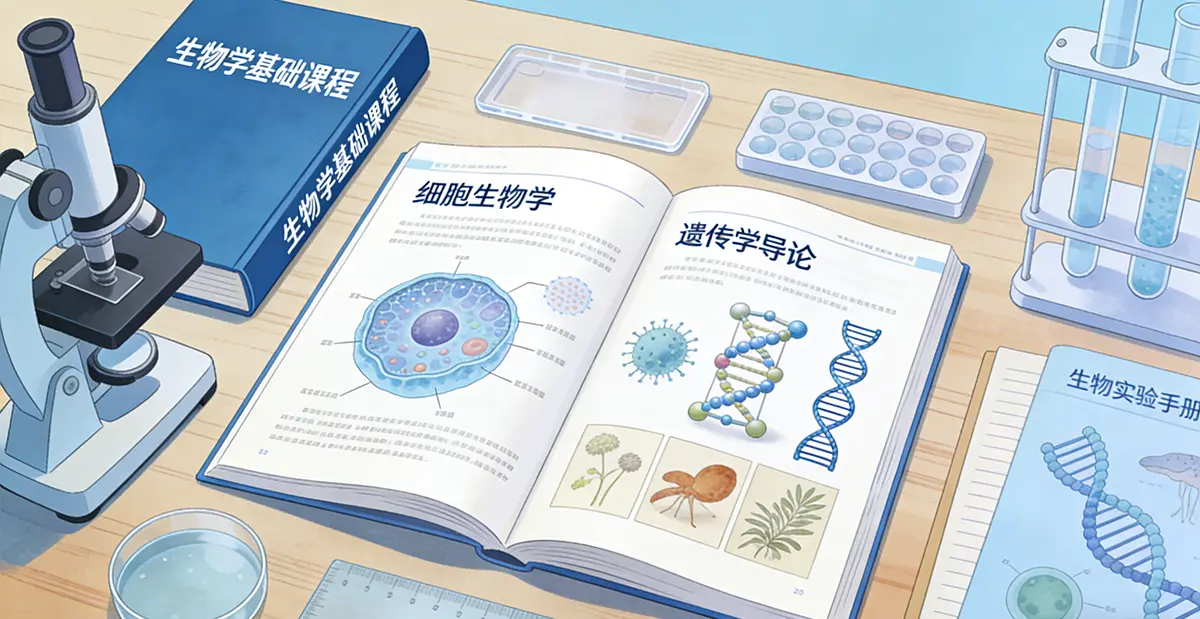
Biology is the natural science that studies the essence of life phenomena and the laws governing their activities. It explores the structure, function, origin, development, evolution, and interactions with the environment of all living organisms—including humans, animals, plants, and microorganisms—across multiple levels from molecules and cells to individuals and ecosystems. While basic medicine focuses on exploring the mechanisms of human diseases, biology encompasses the entire realm of life.

Biology Major Overview: Unraveling the Mysteries of Life
Biology ranks among the fastest-growing disciplines of the 21st century. It not only seeks answers to fundamental questions about life—such as “How did life originate?” and “How do species evolve?”—but also provides theoretical foundations for applied fields including medicine, agriculture, environmental science, and biotechnology.
Its core missions include:
- Discovery: Exploring previously unknown life forms and phenomena on Earth.
- Understanding: Elucidating the intrinsic mechanisms of life processes (e.g., development, genetics, metabolism, immunity).
- Integration: Connecting discoveries at microscopic levels (e.g., molecular, cellular) with phenomena at macroscopic levels (e.g., individuals, populations).
- Conservation and Application: Providing scientific foundations for protecting biodiversity, addressing food security, improving human health, and ensuring environmental sustainability.
Core Courses in International Institutions
The biology curriculum emphasizes comprehensive coverage from macro to micro scales, incorporating extensive laboratory training to cultivate scientific thinking and practical skills. Course structures typically progress through the following stages:
| Course Stage | Core Course Examples | Learning Objectives |
| Macro Biology | General Biology, Botany, Zoology, Microbiology, Ecology, Evolutionary Biology | Establish a holistic understanding of life's diversity and interrelationships. |
| Microbiology | Cell Biology, Biochemistry, Molecular Biology, Genetics | Deepen understanding of the material basis of life processes and the transmission and expression of genetic information. |
| Physiology and Development | Plant Physiology, Animal Physiology, Developmental Biology | Investigate how organisms execute vital functions and develop from a single cell into complete individuals. |
| Interdisciplinary & Tools | Bioinformatics, Biostatistics, Genomics, Proteomics, Biophysics | Acquire quantitative analysis, data mining, and multidisciplinary skills essential for modern biological research. |
| Research Practice | Biological Experiments, Fieldwork, Literature Review & Discussion, Independent Research Projects | Master experimental techniques through hands-on experience and cultivate the ability to pose and solve scientific questions. |
Advanced Study Pathways in Biology Major
Biology undergraduates typically do not enter core R&D positions directly; the vast majority pursue further education. Master's or doctoral research specializations are highly diversified, spanning nearly all life science domains:
- Molecular Biology & Biochemistry: Investigates the structure and function of DNA, RNA, and proteins at the molecular level, along with the chemical basis of life processes such as metabolic pathways and signal transduction.
- Cell Biology: Investigates cellular structure, function, dynamic behaviors (e.g., division, migration, apoptosis), and their regulatory mechanisms.
- Genetics and Genomics: Studies gene structure and function, transmission and evolution of genetic information, gene expression regulation, and genome-wide analysis.
- Developmental Biology: Investigates how multicellular organisms develop from a fertilized egg into complex, fully formed individuals, and the regulatory networks governing organ formation.
- Neurobiology: Studies the structure, function, and development of the nervous system, and how it regulates behavior, learning, and memory—a frontier field in unraveling the mysteries of the brain.
- Ecology and Evolutionary Biology: Examines interactions between organisms and their environments, the formation and extinction of species, and the maintenance and conservation of biodiversity.
- Botany: Studies plant classification, structure, physiology, genetics, evolution, and interactions with the environment.
- Zoology: Studies animal classification, behavior, physiology, evolution, and conservation.
- Microbiology: Studies the physiology, genetics, ecology, and roles of microorganisms (bacteria, archaea, viruses, fungi, etc.) in the environment, industry, and medicine.
- Bioinformatics and Computational Biology: Develop and apply computational methods (such as algorithms and machine learning) to analyze massive biological datasets (e.g., genomic sequences, protein structures) and uncover biological patterns from the data.
- Integrative Biology/Systems Biology: Adopt a holistic perspective to integrate multidimensional data, construct mathematical models, and study the dynamic behavior and regulatory mechanisms of complex biological systems.
International Career Paths and Positions
Biology graduates possess strong scientific literacy and experimental skills, making them adaptable across diverse fields including research, education, industry, and public affairs.
| Industry Sector | Common Positions | Brief Job Responsibilities |
| Research & Academia | Postdoctoral Researcher, Research Assistant, University Professor, Research Institute Scientist | Conduct fundamental or applied biological research at universities, national laboratories, or research institutes to explore life's mysteries, publish academic papers, and mentor the next generation of scientists. |
| Biotechnology and Pharmaceuticals | R&D Scientist, Bioinformatics Analyst, Quality Control Specialist, Production Technical Support | Participate in drug target discovery, cell line development, biopharmaceutical production, and gene sequencing services at biotech companies or major pharmaceutical firms. |
| Environmental and Ecological Conservation | Ecological Surveyor, Environmental Consultant, Protected Area Manager | Conduct biodiversity surveys and assessments, environmental impact evaluations, and ecological restoration project design at environmental agencies, consulting firms, or NGOs. |
| Agriculture and Food | Breeding Scientist, Plant Protection Specialist, Food Safety Inspector | Work in agricultural research institutes, seed companies, or large farms to engage in crop genetic improvement, pest and disease control, and agricultural product quality testing. |
| Government & Public Services | Policy Analyst, Science Education Specialist, Inspection & Quarantine Officer | Work in ministries of science and technology, environmental protection bureaus, customs, natural history museums, science centers, etc., to develop science and technology policies, promote science literacy, and conduct entry/exit animal and plant quarantine. |
| Science Communication & Education | Science Journalists, Science Writers, K-12 Science Teachers | Work in media outlets, publishing houses, and educational institutions to write and disseminate science news and popular science articles, or engage in foundational biology education. |
| Consulting & Finance | Life Sciences Industry Consultants, Technical Due Diligence Analysts | Work in management consulting firms or investment institutions to provide specialized scientific analysis for biotechnology investments or corporate strategy. |
International Employment Rates and Trends
Employment Rates and Salaries: Employment prospects for biology majors are highly correlated with academic qualifications.
- Bachelor's Degree: The job market is relatively broad, but positions directly involved in core R&D are limited. Graduates often enter roles such as laboratory technical support, sales, education, or entry-level government positions. In the U.S., the median annual salary for biologists is approximately $85,000 (2020 data), but starting salaries for bachelor's graduates are relatively low, around $40,000 - $50,000.
- Master's/PhD: Employment prospects significantly improve, particularly in R&D, research, and high-end technical roles. The U.S. Bureau of Labor Statistics projects overall employment growth for all biological scientists at 5% (below average), but growth for biochemists and biophysicists could reach 11% (well above average). Unemployment rates for PhD graduates are extremely low (around 1.2%).
Industry Trends:
- The Era of “Omics” and Big Data: Technologies like genomics, proteomics, and metabolomics have become standard in biological research, generating massive datasets. Demand is surging for bioinformatics and computational biology professionals who can harness this data and analyze it using AI.
- Synthetic Biology Explosion: Synthetic biology is transitioning from fundamental research to large-scale industrialization. It represents a paradigm shift from “understanding” life to “engineering” life, driving countless innovations in medicine, materials, energy, food, and beyond.
- Interdisciplinary Collaboration as the Future: Biology is deeply converging with physics, chemistry, computer science, and engineering. Cross-disciplinary fields like biophysics, chemical biology, bioengineering, and neuroscience are the most dynamic areas for scientific discovery and talent demand.
- Global challenges drive research: Global challenges like climate change, biodiversity loss, emerging infectious diseases, and food security will continue to propel research in ecology, evolutionary biology, environmental microbiology, and related fields.
- Open science and teamwork: Modern biological research increasingly relies on large-scale, interdisciplinary, and transnational team collaboration. Future biologists must possess strong communication and collaboration skills.
Ideal Candidates and Core Competencies in Biology Major
If you possess the following traits, you may thrive in the field of biology:
- Inborn curiosity: You hold awe and wonder for the world of life, constantly seeking answers—from the name of the bird outside your window to why leaves change color, or even how microorganisms survive.
- Patience and meticulous observation: Biological research often demands prolonged observation, documentation, and repeated experiments. You relish the process of discovering the microscopic world under a microscope and can record data with unwavering precision.
- Strong memory and comprehension: Biology demands memorizing numerous terms, classifications, and processes, but more crucially, understanding their connections and underlying logic.
- Critical thinking and problem-solving skills: When faced with an unknown scientific question, you can formulate reasonable hypotheses and design experiments to test them.
- Respect for nature and life: You hold a deep reverence for all forms of life and are committed to contributing to their protection and enhancement.
Core Competencies: Your core value lies in scientific literacy for exploring and understanding life phenomena. This encompasses not only solid biological knowledge but also systematic scientific thinking, rigorous experimental skills, and data analysis capabilities. You will become a vital link connecting fundamental discoveries to applied innovations, providing new knowledge to address humanity's health, environmental, and food challenges.

Leading Global Institutions
(Selected Schools - Listed in no particular order)
Based on the 2025 QS World University Rankings by Subject and the Shanghai Ranking's Global Top Disciplines, the world's leading institutions in biology are as follows:(Some universities are shown - ranking is not in order)
| Country/Region | Representative Institutions |
| United States | Harvard University, Massachusetts Institute of Technology, Stanford University, University of California, Berkeley, California Institute of Technology, Johns Hopkins University, Yale University |
| United Kingdom | University of Cambridge, University of Oxford, Imperial College London, University College London, University of Edinburgh |
| Continental Europe | ETH Zurich, EPFL, University of Heidelberg, Ludwig Maximilian University of Munich, Karolinska Institute |
| Singapore | National University of Singapore, Nanyang Technological University |
| China | Tsinghua University, Peking University, Shanghai Jiao Tong University, Fudan University, Zhejiang University, University of Science and Technology of China |
| Canada | University of Toronto, University of British Columbia, McGill University |
| Australia | University of Melbourne, University of Queensland, University of Sydney |
Recommended Study Paths for Biology Major
1. Undergraduate Phase: Build a Strong Foundation and Explore Broadly
- Core: Master all core foundational courses (General Biology, Cell Biology, Genetics, Biochemistry, Ecology, etc.) to construct a comprehensive framework of biological knowledge. Simultaneously, ensure proficiency in Chemistry (especially Organic Chemistry) and Mathematics/Statistics to lay a solid foundation for future development.
- Practical Experience: Enter a lab early! Starting in your sophomore or junior year, proactively reach out to mentors whose work interests you to participate in lab work or independent research projects. Through hands-on experience, understand the true nature of scientific research and identify your genuine passion. Utilize summer field internships to experience the wonders of biodiversity.
2. Master's Phase: Focus Your Direction, Deepen Your Training
- Goal: Select a specific field aligned with your interests (e.g., neurobiology, plant development, bioinformatics) for in-depth study. Complete a high-quality master's thesis, systematically mastering the entire research process from literature review and experimental design to data collection and paper writing.
- Development: Master a core technique (e.g., confocal microscopy, flow cytometry, Python/R analysis) or tool (e.g., bioinformatics databases). Attend academic conferences, present posters, and hone your ability to communicate research findings.
3. Doctoral & Postdoctoral Stages: Tackle Frontiers, Become an Independent Investigator
- Positioning: This is the essential path to becoming a scientist. You will select a highly challenging scientific question and conduct systematic, in-depth research over 4-6 years. The goal is to make original scientific discoveries and publish papers as first author in high-impact academic journals. After completing your PhD, you will typically undertake 1-2 postdoctoral fellowships to further expand your research scope, accumulate achievements, and prepare for applying to independent faculty positions or roles at top research institutions.
- Future: Biology PhD/postdoctoral graduates form the core talent pool for universities, research institutes, and R&D centers of major biotechnology/pharmaceutical companies. They bear the responsibility of advancing the frontiers of life sciences and translating fundamental discoveries into practical applications.
- The Previous Passage:Human Biology(Hum. Biol.)_人体生物学
- The Next Passage:Laboratory Animal Science(Lab. Anim. Sci.)_实验动物学

Human Geography Major_Geography(Geog.)_人文地理
The Human Geography Major explores the complex relationships between human activities and space, cul···

Atmospheric Sciences(Atmos. Sci.)_大气科学
Atmospheric science is the study of phenomena and evolutionary patterns within Earth's atmospher···

Earth Sciences(Earth Sci.)_地球科学
The Earth Science major focuses on studying the Earth system and its interactions, providing a scien···
Ocean Sciences(Ocean Sci.)_海洋科学
PbootCMS是全新内核且永久开源免费的PHP企业网站开发建设管理系统,是一套高效、简洁、 强悍的可免费商用的···

